Chinese herbal formulas by pattern
Receding Gums and Loose Teeth
In Chinese medicine, gums that pull back and teeth that loosen are mostly a Kidney problem, not a toothbrush problem. The gums belong to the Stomach channel and the teeth belong to the Kidney, so the formula depends on which of three pictures you show. Match the picture first. The right formula for the wrong picture makes things worse.
Think of gums as the soil around a tree root. Lost soil does not come back from watering, but you can stop the erosion and feed the root. That is what these formulas do: stop the slide, calm the gum, and feed the bone the teeth sit in.
Which of the three pictures is yours?
Most people fit one of these. Read all three before you choose, because the first one is loud and the second one is quiet, and they need opposite formulas.
-
1
Hot, red, swollen gums that bleed, with bad breath
- Gums that are red and puffy and bleed when brushed
- Breath that is sour or foul
- Thirst for cold drinks, hungry all the time
- A toothache that throbs and likes cold
- A red tongue with a thick yellow coat
Pattern: Stomach Fire. Formula: Qing Wei San 清胃散.
This is full heat, and the fuel is usually diet: sugar, spicy and fried food, alcohol, late eating. Cut the fuel while you take the formula. It is a short course. Stop when the gums are pink and the tongue coat is thin.
-
2
Gums that shrink slowly, loose teeth, a dry mouth at night, a sore low back, and tiredness
- Recession that crept in over years, with no swelling
- A tooth or two that wiggles a little
- Waking at night with a dry mouth
- A low back that aches in the morning
- Night sweats, warm palms and soles, red cheeks in the afternoon
- A red tongue with little or no coat, often cracked
Pattern: Kidney Yin Deficiency with Empty Heat. Formula: Zhi Bai Di Huang Wan 知柏地黄丸.
This is the most common picture behind recession. The dry mouth at night means there is some heat, so start with Zhi Bai Di Huang Wan rather than plain Liu Wei Di Huang Wan, and add Gu Sui Bu, the bone mender, with Niu Xi to carry the formula down to the teeth. When the night sweats stop and a thin white coat returns to the tongue, step down to plain Liu Wei. Kidney tonics are slow. Plan on three months, not three weeks.
-
3
Pale gums that ooze a little, with tiredness, poor sleep, and worry
- Gums, lips, and face that look pale
- A slow pale ooze rather than bright bleeding
- Tired after eating, poor appetite, loose stools
- Light sleep, dream-filled nights, a mind that will not stop
- A pale tongue with a thin white coat
Pattern: Heart and Spleen Deficiency. Formula: Gui Pi Tang 归脾汤.
This is weak qi and blood. The Spleen cannot hold the blood in the gum and cannot make enough of it. Build it back with warm cooked food, regular meals, rest, and the formula. Expect the gums to turn pink over one to three months.
Daily care that goes with any of the three
The formula does the deep work. These habits stop you undoing it every morning.
- Tap your upper and lower teeth together lightly thirty-six times on waking, then swirl your tongue around the gums and swallow. This is the old Kidney practice for firming teeth.
- Swish a tablespoon of sesame oil for ten minutes, spit it in the trash, then rinse with warm salt water.
- Brush with a soft brush in small circles, with no pressure. Most recession is self-inflicted with a hard brush and a sawing motion.
- Rub a drop of sesame oil into the gums with a fingertip for one minute, from the gum down toward the tooth. Blood flow is what firms a gum.
- Rinse twice a day with strong cooled green tea, or a sage and myrrh tea. Both tighten the gum and quiet the germs.
- Chew on the other side for two months. A loose tooth needs rest, like a sprained ankle.
- Sleep before eleven. Yin is rebuilt at night, and no formula replaces the hours.
- Cut alcohol and late coffee. Both heat and dry the body, and both make the snoring that dries the mouth worse.
- If you snore or wake with a dry mouth, side sleeping, a saline nose rinse, and a humidifier help the formula do its job.
- Feed the Kidney: black sesame, black beans, walnuts, goji, eggs, seaweed, and bone broth.
What should change, and when
- Bleeding and soreness settle in two to four weeks.
- Your tongue is the gauge. Red with little coat means stay on the cooling formula. When a thin white coat comes back, step down to the plain base formula.
- Gums firm over three months. Take a smartphone photo in the same light once a month, lip pulled back, and compare.
- A loose tooth wiggles less by month three. Press it sideways with a clean fingertip once a month and note the change.
- The night dry mouth and the morning back ache fade as the Kidney refills.
- Stay on the Kidney formula six months. Recession that took years to arrive takes seasons to stop.
What herbs do not do for receding gums
Herbs firm the gum, calm the heat, and feed the bone the teeth sit in. They do not regrow gum that is already gone, and they do not reach a tooth that has lost its bone. A tooth that moves up and down, not just sideways, or that weeps pus or gives a bad taste from one spot, is past what a formula can hold. The old doctors knew that line too, and they pulled the tooth.
Herbs in this library linked to Receding Gums and Loose Teeth
Single herbs, with the evidence label each link carries. Traditional means classic use, research means modern studies, clinical means practitioner-facing relevance.
Herb Monograph
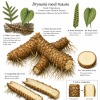
Rhizome of Heartleaf Drynaria
Gu Sui Bu · Rhizoma Drynariae
Open monograph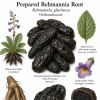
Herb Monograph
Prepared Rehmannia Root
Shu Di Huang · 熟地黄 · Radix Rehmanniae Praeparata
Open monograph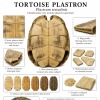
Herb Monograph
Tortoise Plastron
Gui Ban · 龟板 · Plastrum Testudinis
Open monograph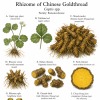
Herb Monograph
Rhizome of Chinese Goldthread
Huang Lian · 黄连 · Rhizoma Coptidis
Open monograph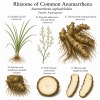
Herb Monograph
Rhizome of Common Anamarrhena
Zhi Mu · 知母 · Rhizoma Anemarrhenae
Open monograph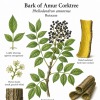
Herb Monograph
Bark of Amur Corktree
Huang Bai · 黄柏 · Cortex Phellodendri
Open monograph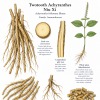
Herb Monograph
Niu Xi Root
Niu Xi · 牛膝 · Radix Achyranthis Bidentatae
Open monograph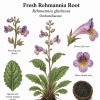
Herb Monograph
Fresh Rehmannia Root
Sheng Di Huang · 生地黄 · Radix Rehmanniae
Open monograph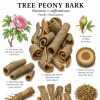
Herb Monograph
Tree Peony Bark
Mu Dan Pi · 牡丹皮 · Cortex Moutan
Open monograph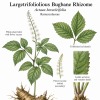
Herb Monograph
Largetrifoliolious Bugbane Rhizome
Sheng Ma · 升麻 · Rhizoma Cimicifugae
Open monograph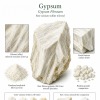
Herb Monograph
Gypsum
Shi Gao · 石膏 · Gypsum Fibrosum
Open monographRelated pages
- How to read a herbal monograph The names, TCM properties, research, and safety sections on every herb page.
Sources
- Maciocia, The Foundations of Chinese Medicine, 3rd edition Kidney and teeth, Stomach channel and gums, pattern differentiation.
- Bensky, Scheid, Ellis and Barolet, Chinese Herbal Medicine: Formulas and Strategies, 2nd edition Qing Wei San, Zhi Bai Di Huang Wan, Gui Pi Tang.
- Bensky, Clavey and Stoger, Chinese Herbal Medicine: Materia Medica, 3rd edition Gu Sui Bu for loose teeth; Niu Xi as a downward guide.
Important Note
This page explains classic Chinese medicine thinking so you can recognize your own picture, read a formula label, and ask a qualified practitioner a sharper question. It is education, not a prescription, and it does not replace care from someone who can examine you.