Fresh Ginger
- Chinese
- 生姜
- Pinyin
- Sheng Jiang
- Latin
- Rhizoma Zingiberis Recens
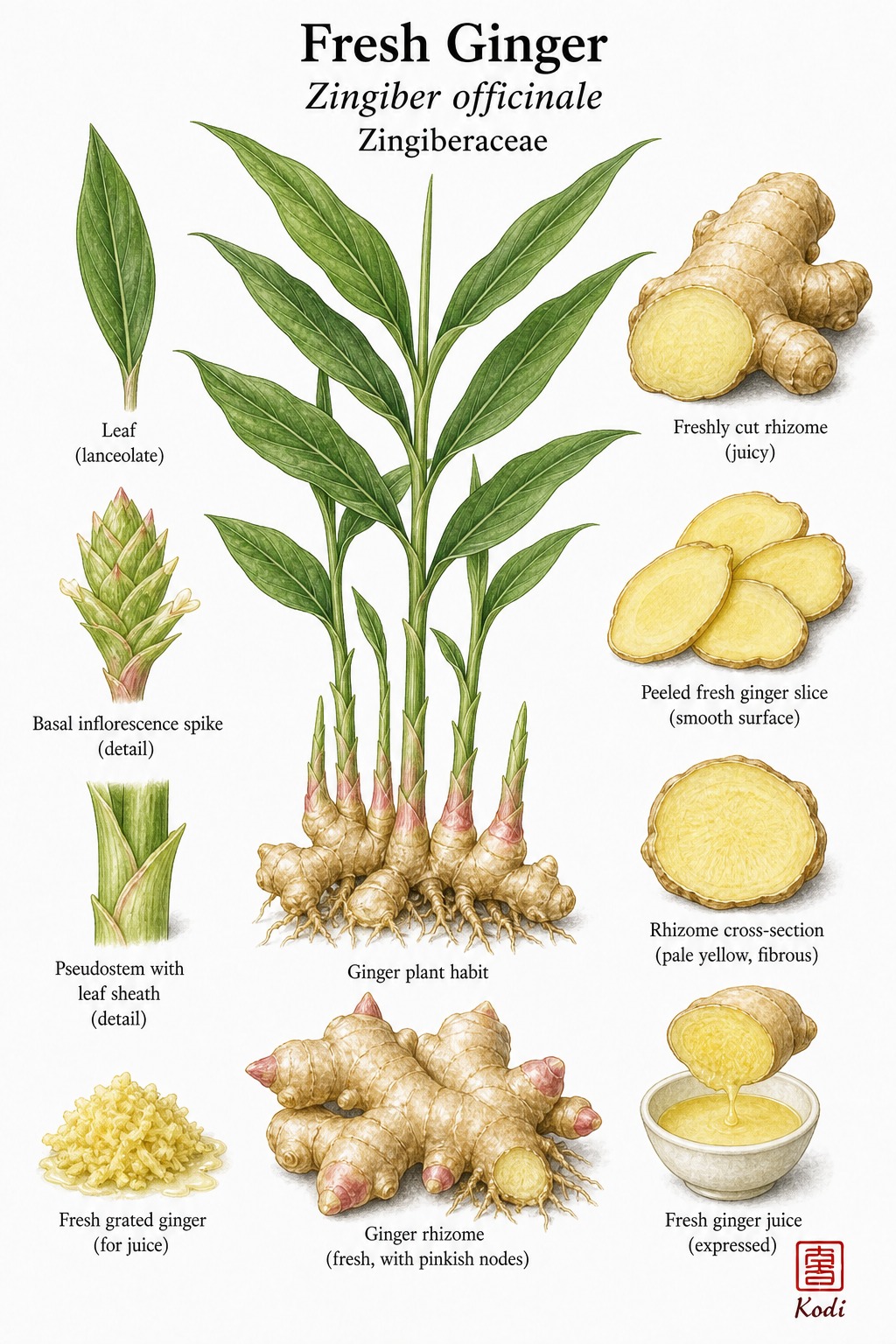
Known in TCM as Sheng Jiang (生姜), this pungent, warm herb enters the Lung, Spleen, and Stomach. Traditionally, it releases exterior wind-cold - Sheng Jiang is used in early cold patterns with chills, mild fever, headache, and aversion to cold, most often applied for common cold, nausea, and cough. Modern research has identified 6-Gingerol among its active constituents.
Part used: Rhizome
Also Known As
Latin: Rhizoma Zingiberis Recens | Pinyin: Sheng Jiang | Chinese: 生姜
TCM Properties
- Taste
- pungent
- Temperature
- warm
- Channels
- Lung, Spleen, Stomach
Traditional Use
Primary Actions
- Releases exterior wind-cold - Sheng Jiang is used in early cold patterns with chills, mild fever, headache, and aversion to cold.
- Warms the middle and stops nausea or vomiting - it is a classic choice for cold in the Stomach, rebellious qi, and formula support when digestion is weak.
- Warms the Lung and transforms thin phlegm - traditional use includes cough or wheezing with watery sputum and cold-fluid obstruction.
- Reduces the toxicity of certain herbs and foods - classical use specifically highlights Ban Xia, Tian Nan Xing, and food-toxin settings such as fish or crab.
Secondary Actions
- Fresh ginger is lighter and more dispersing than dried ginger, which is hotter and more focused on deeper interior cold.
- Culinary ginger and concentrated supplement extracts are not automatically interchangeable from a safety standpoint.
Classic Formulas
- Xiao Chai Hu Tang - classic Shao Yang formula in which Sheng Jiang harmonizes the Stomach and supports the middle.
- Ban Xia Hou Po Tang - classic phlegm-qi formula where Sheng Jiang helps descend rebellious qi and arrest vomiting.
- Xiao Jian Zhong Tang - middle-burner deficiency-cold formula using Sheng Jiang to warm the Stomach and harmonize the nutritive and defensive qi.
Classical References
- TCM Wiki describes Sheng Jiang as pungent and warm, entering the Lung, Spleen, and Stomach to disperse wind-cold, warm the middle, stop vomiting, and warm the Lung to stop cough.
- Ming Yi Bie Lu is cited as an early textual source for Sheng Jiang.
Modern Research
Active Compounds
- 6-Gingerol - the signature pungent phenolic of fresh ginger
- 6-Shogaol - heat-processed derivative also relevant to medicinal pharmacology
- Galanolactone - linked to antiemetic discussion through 5-HT3 antagonism
- Zingerone and sesquiterpene volatile oils such as zingiberene - supportive aromatic constituents
Studied Effects
- A 2026 systematic review linked ginger supplementation with improvements in several cardiovascular biomarkers, reinforcing ongoing interest in metabolic and anti-inflammatory effects (PMID 41195902).
- A 2022 systematic review found ginger may improve dyslipidemia and inflammatory markers more consistently than blood pressure outcomes (PMID 36184251).
- A meta-analysis reported favorable effects of ginger supplementation on oxidative stress parameters, supporting broader antioxidant interest (PMID 33458848).
- Older pharmacology work also documented antiemetic activity consistent with Sheng Jiang's longstanding gastrointestinal reputation (PMID 12410541).
PubMed References
- Ginger (Zingiber Officinale) Supplementation and Biomarkers of Cardiovascular Disease - A Systematic Review. (2026)
- The efficacy of Zingiber officinale on dyslipidaemia, blood pressure, and inflammation as cardiovascular risk factors: A systematic review. (2022)
- Effect of ginger (Zingiber officinale) supplementation on oxidative stress parameters: A systematic review and meta-analysis. (2021)
- Anxiolytic and antiemetic activity of Zingiber officinale. (2002)
Safety & Interactions
Contraindications
- Strong heat syndromes or fluid dryness without cold
- Perioperative use of concentrated ginger supplements
- Bleeding disorders or gallstones in the context of high-dose supplement use
Cautions
- MSK notes that concentrated ginger supplements may increase bleeding risk, especially around surgery or with anticoagulants and NSAIDs.
- Clinical supplement data should not be assumed equivalent to small culinary or formula doses of fresh Sheng Jiang.
- High-dose supplement use during pregnancy or lactation remains controversial; traditional culinary or formula use is not the same as concentrated extract use.
Drug Interactions
- NSAIDs such as diclofenac or ibuprofen - possible increased bleeding risk.
- Anticoagulants or antiplatelet drugs - possible increased bleeding risk through platelet effects.
- Hypoglycemics or insulin - possible additive glucose-lowering effect.
- Tacrolimus - ginger increased plasma levels in preclinical work.
- Cyclosporine - concomitant use reduced blood concentrations in vivo.
Conditions
Frequently Asked Questions
What is Fresh Ginger used for?
Fresh Ginger is traditionally used to Releases exterior wind-cold - Sheng Jiang is used in early cold patterns with chills, mild fever, headache, and aversion to cold., Warms the middle and stops nausea or vomiting - it is a classic choice for cold in the Stomach, rebellious qi, and formula support when digestion is weak., Warms the Lung and transforms thin phlegm - traditional use includes cough or wheezing with watery sputum and cold-fluid obstruction., Reduces the toxicity of certain herbs and foods - classical use specifically highlights Ban Xia, Tian Nan Xing, and food-toxin settings such as fish or crab.. Research has investigated its effects on: A 2026 systematic review linked ginger supplementation with improvements in several cardiovascular biomarkers, reinforcing ongoing interest in metabolic and anti-inflammatory effects (PMID 41195902).; A 2022 systematic review found ginger may improve dyslipidemia and inflammatory markers more consistently than blood pressure outcomes (PMID 36184251)..
What are other names for Fresh Ginger?
Fresh Ginger is also known as Zingiberis. In TCM: 生姜 (Sheng Jiang); Rhizoma Zingiberis Recens.
Is Fresh Ginger safe during pregnancy?
The safety of Fresh Ginger during pregnancy has not been established. Consult a qualified healthcare provider before use.
What are the contraindications for Fresh Ginger?
Fresh Ginger should not be used in: Strong heat syndromes or fluid dryness without cold; Perioperative use of concentrated ginger supplements; Bleeding disorders or gallstones in the context of high-dose supplement use. Consult a qualified healthcare provider before use.
Does Fresh Ginger interact with any medications?
Fresh Ginger may interact with: NSAIDs such as diclofenac or ibuprofen - possible increased bleeding risk.; Anticoagulants or antiplatelet drugs - possible increased bleeding risk through platelet effects.; Hypoglycemics or insulin - possible additive glucose-lowering effect.; Tacrolimus - ginger increased plasma levels in preclinical work.. Always inform your healthcare provider of any herbal supplements you are taking.