Yellow Azalea Flower
- Chinese
- 闹羊花
- Pinyin
- Nao Yang Hua
- Latin
- Flos Rhododendri Mollis
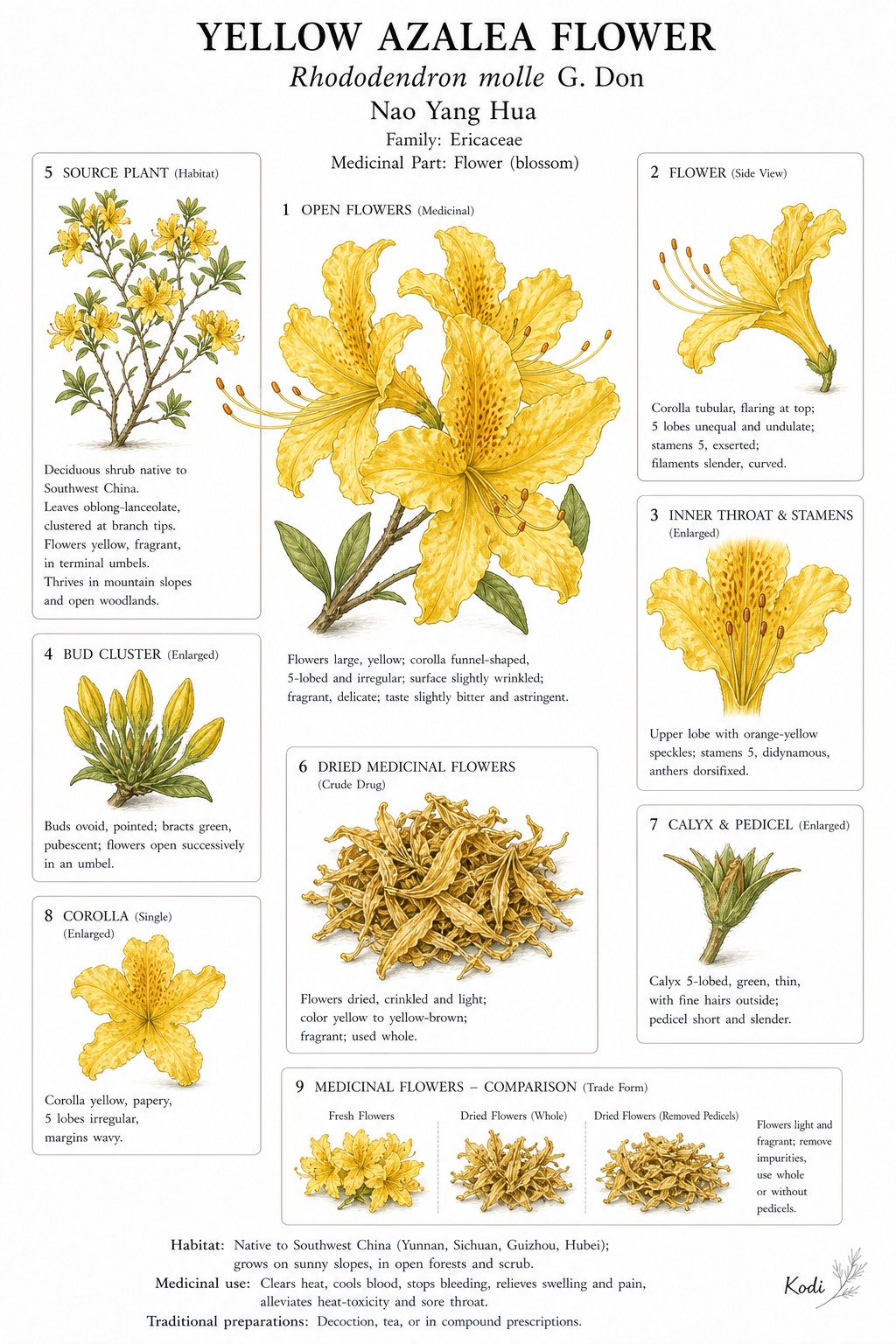
Known in TCM as Nao Yang Hua (闹羊花), this acrid, warm herb enters the Liver. Traditionally, it dispels wind-damp and relieves pain ... Nao Yang Hua is a strongly toxic historical herb used for painful obstruction, cold-damp joint pain, and certain severe stubborn pain patterns, most often applied for rheumatism, joint pain, and headache. Modern research has identified Grayanoids among its active constituents.
Part used: Flower
Also Known As
Latin: Flos Rhododendri Mollis | Pinyin: Nao Yang Hua | Chinese: 闹羊花
TCM Properties
- Taste
- acrid
- Temperature
- warm
- Channels
- Liver
Traditional Use
Primary Actions
- Dispels wind-damp and relieves pain ... Nao Yang Hua is a strongly toxic historical herb used for painful obstruction, cold-damp joint pain, and certain severe stubborn pain patterns.
- Moves blood and reduces swelling ... traditional use also extends to traumatic pain and localized swelling where a drastic toxic herb was judged necessary.
- Requires safety-first interpretation ... this is not a routine flower tea or ornamental azalea page, but a toxic medicinal lane with a narrow historical use window.
Secondary Actions
- The herb is known for efficacy-toxicity duality, and modern discussion repeatedly emphasizes that its analgesic promise and poisoning risk travel together.
- Even within Rhododendron medicine, Nao Yang Hua should be kept clinically distinct from milder ornamental or food-adjacent azalea associations.
Classic Formulas
- Wind-damp pain combinations in small guarded doses ... usually as an adjunct rather than a stand-alone daily herb.
- External-use powders or washes for painful swelling ... traditional route choices often reflect awareness of the herb's toxicity.
- Historical pain and trauma prescriptions for severe stubborn patterns ... a narrow lane that should not be generalized to casual home use.
Classical References
- Traditional materia medica describes Nao Yang Hua as acrid, warm, and highly toxic, entering the Liver to dispel wind-damp and relieve pain.
- Older indications include abdominal pain, headache, rheumatic pain, and traumatic swelling, but always under the shadow of significant toxicity.
Modern Research
Active Compounds
- Grayanoids ... the major diterpenoid toxin group responsible for both analgesic interest and poisoning risk
- Triterpenes and flavonoids ... supportive constituents discussed in species-level reviews
- Volatile and resin-like fractions ... additional contributors to species chemistry
- Diterpenoid-rich fractions ... central to modern pharmacology and toxicology work
Studied Effects
- A 2018 review summarized the phytochemistry, pharmacology, and toxicology of Rhododendron molle and framed the species as a classic example of a medicinal with meaningful efficacy but substantial poisoning risk (PMID 30047461).
- A 2022 systematic review of grayanoids as analgesics concluded that these compounds have considerable antinociceptive activity but are tightly linked to toxicity, making the therapeutic window a central problem rather than a side note (PMID 35948141).
- A 2015 study isolated antinociceptive grayanoids from Rhododendron molle and demonstrated analgesic activity in laboratory testing, illustrating why the species remains pharmacologically interesting despite its hazards (PMID 26599832).
PubMed References
Safety & Interactions
Contraindications
- Pregnancy
- Children
- Cardiovascular disease, bradycardia, hypotension, or conduction disorders
- Unsupervised internal use under any circumstance
Cautions
- Nao Yang Hua is highly toxic and can cause dangerous neurologic, gastrointestinal, and cardiovascular effects.
- Modern interest in grayanoids as analgesics does not make the crude flower safe for self-treatment.
- External use is also not automatically safe, especially on broken skin or in large areas.
Drug Interactions
- Cardioactive drugs or agents that affect heart rate and blood pressure ... potential for serious additive toxicity
- Sedatives or central nervous system depressants ... possible additive impairment or masking of toxicity
Conditions
- Rheumatism Traditional ★★★☆☆ JSON
- Joint Pain Traditional ★★★☆☆ JSON
- Headache Traditional ★★☆☆☆ JSON
- Traumatic Injury Traditional ★★☆☆☆ JSON
Frequently Asked Questions
What is Yellow Azalea Flower used for?
Yellow Azalea Flower is traditionally used to Dispels wind-damp and relieves pain ... Nao Yang Hua is a strongly toxic historical herb used for painful obstruction, cold-damp joint pain, and certain severe stubborn pain patterns., Moves blood and reduces swelling ... traditional use also extends to traumatic pain and localized swelling where a drastic toxic herb was judged necessary., Requires safety-first interpretation ... this is not a routine flower tea or ornamental azalea page, but a toxic medicinal lane with a narrow historical use window.. Research has investigated its effects on: A 2018 review summarized the phytochemistry, pharmacology, and toxicology of Rhododendron molle and framed the species as a classic example of a medicinal with meaningful efficacy but substantial poisoning risk (PMID 30047461).; A 2022 systematic review of grayanoids as analgesics concluded that these compounds have considerable antinociceptive activity but are tightly linked to toxicity, making the therapeutic window a central problem rather than a side note (PMID 35948141)..
What are other names for Yellow Azalea Flower?
Yellow Azalea Flower is also known as Nao Yang Hua, Rhododendron molle Flower, Azalea Flower Medicament. In TCM: 闹羊花 (Nao Yang Hua); Flos Rhododendri Mollis.
Is Yellow Azalea Flower safe during pregnancy?
Yellow Azalea Flower is not recommended during pregnancy.
What are the contraindications for Yellow Azalea Flower?
Yellow Azalea Flower should not be used in: Pregnancy; Children; Cardiovascular disease, bradycardia, hypotension, or conduction disorders; Unsupervised internal use under any circumstance. Consult a qualified healthcare provider before use.
Does Yellow Azalea Flower interact with any medications?
Yellow Azalea Flower may interact with: Cardioactive drugs or agents that affect heart rate and blood pressure ... potential for serious additive toxicity; Sedatives or central nervous system depressants ... possible additive impairment or masking of toxicity. Always inform your healthcare provider of any herbal supplements you are taking.