Padauk Heartwood
- Chinese
- 紫檀
- Pinyin
- Zi Tan
- Latin
- Lignum Pterocarpi Indici
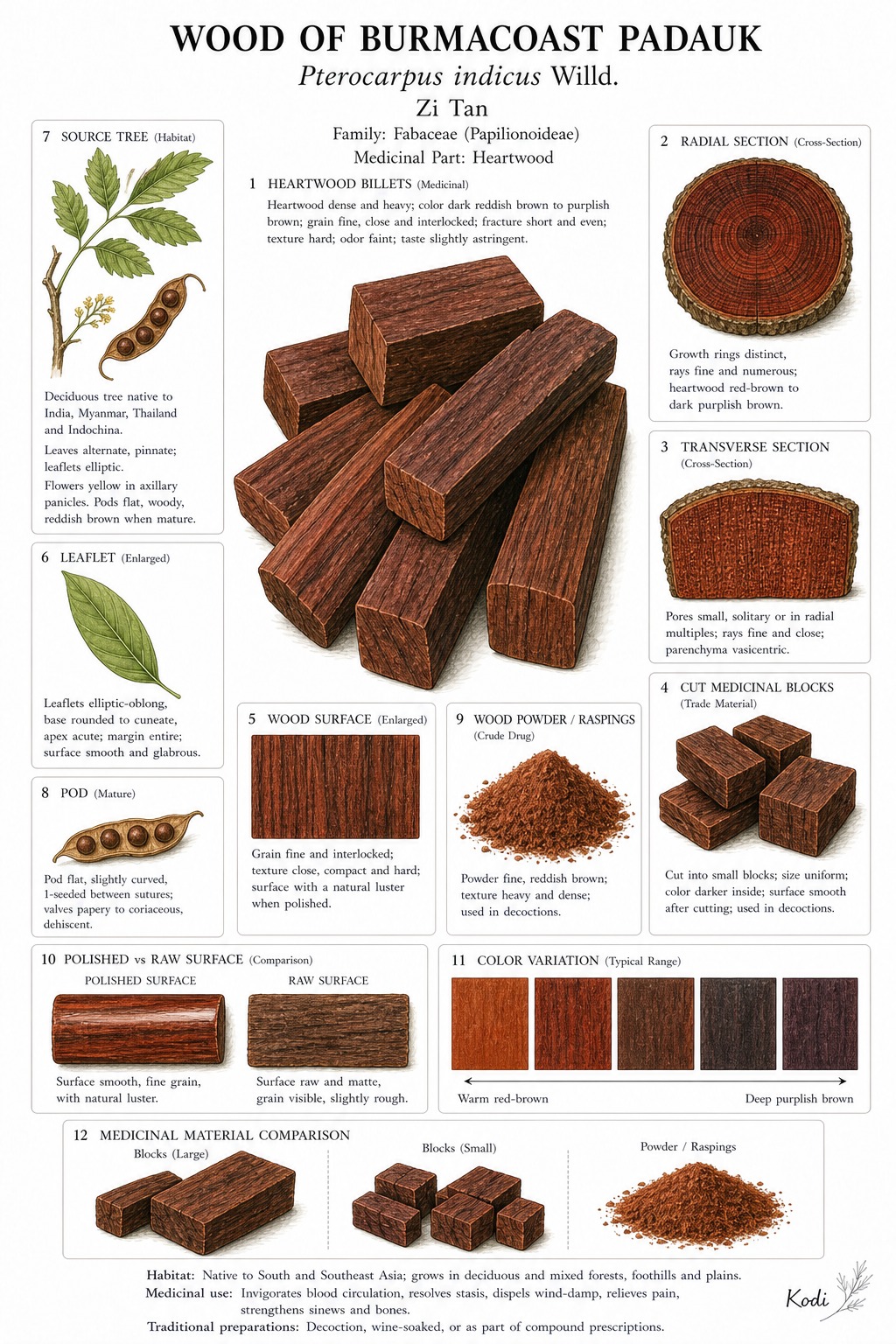
Known in TCM as Zi Tan (紫檀), this salty, neutral herb enters the Liver. Traditionally, it dispels blood stasis and relieves pain ... Zi Tan is traditionally used for headache, heart-abdominal pain, traumatic injury, and lingering blood stasis discomfort, most often applied for traumatic injury, blood stasis, and headache. Modern research has identified Flavonoids among its active constituents.
Part used: Heartwood
Also Known As
Latin: Lignum Pterocarpi Indici | Pinyin: Zi Tan | Chinese: 紫檀
TCM Properties
- Taste
- salty
- Temperature
- neutral
- Channels
- Liver
Traditional Use
Primary Actions
- Dispels blood stasis and relieves pain ... Zi Tan is traditionally used for headache, heart-abdominal pain, traumatic injury, and lingering blood stasis discomfort.
- Stops bleeding and reduces swelling ... older use includes wound bleeding, toxic swellings, and external injury where powdered or rubbed wood is applied locally.
- Keeps the denser billet-and-grain lane ... compared with the paired aromatic chip record, this page follows the heavier heartwood presentation and more astringent pain-relief framing.
Secondary Actions
- This page should stay distinct from `wood-of-burmacoast-padauk` ... the two records intentionally preserve separate trade-form identities rather than collapsing all padauk-derived material into one vague wood page.
- Chinese commerce can blur `Zi Tan` with other rosewood or red-sandalwood materials, so the local illustration workflow deliberately anchored both pages to authenticated Pterocarpus indicus handling.
Classic Formulas
- Regional trauma and pain powders ... where Zi Tan is used for stasis pain, swelling, or bleeding rather than as a major mainstream formula herb.
- External application traditions for wounds and swellings ... reflecting the denser heartwood's local-use lane.
- Modified pain and blood-stasis combinations with Ru Xiang, Mo Yao, or Yan Hu Suo ... practical pairing logic when fixed pain is the main problem.
Classical References
- Chinese materia medica references describe Zi Tan as salty and neutral, entering the Liver to dispel stasis, stop bleeding, relieve pain, detoxify, and reduce swelling.
- Because the medicinal lane is relatively minor and nomenclature can drift, conservative sourcing and identity notes are more important here than for ordinary high-volume herbs.
Modern Research
Active Compounds
- Flavonoids and isoflavonoids ... major phytochemical classes discussed for Pterocarpus species
- Angolensin and related heartwood phenolics ... notable recent compounds from Pterocarpus indicus heartwood
- Tannin-rich fractions ... plausible contributors to astringent and topical-use discussion
- Phenolic acids and related wood metabolites ... supportive anti-inflammatory and antioxidant constituents
Studied Effects
- A 2021 review of the genus Pterocarpus summarized anti-inflammatory, antimicrobial, and metabolic research themes across the group, providing the broadest indexed modern context for Zi Tan-style wood records (PMID 34116190).
- A 2025 study showed that angolensin isolated from Pterocarpus indicus heartwood attenuated LPS-induced sickness behavior in mice and exhibited favorable CNS safety profiles, illustrating ongoing laboratory interest in heartwood-derived compounds (PMID 40430027).
- An older Chinese paper introduced Pterocarpus indicus as a medicinal plant in China and noted use of its red exudate as an astringent, one of the few indexed clues linking the species to traditional medicinal handling (PMID 12572429).
PubMed References
Safety & Interactions
Contraindications
- Active bleeding without clear trauma or stasis rationale
- Unclear wood identity from ambiguous commercial sources
Cautions
- This is a niche medicinal wood lane with limited modern clinical evidence and meaningful risk of botanical-name confusion in trade.
- Laboratory studies on isolated heartwood compounds do not establish routine oral safety for self-treatment.
Conditions
- Traumatic Injury Traditional ★★☆☆☆ JSON
- Blood Stasis Traditional ★★☆☆☆ JSON
- Headache Traditional ★☆☆☆☆ JSON
- Abdominal Pain Traditional ★☆☆☆☆ JSON
Frequently Asked Questions
What is Padauk Heartwood used for?
Padauk Heartwood is traditionally used to Dispels blood stasis and relieves pain ... Zi Tan is traditionally used for headache, heart-abdominal pain, traumatic injury, and lingering blood stasis discomfort., Stops bleeding and reduces swelling ... older use includes wound bleeding, toxic swellings, and external injury where powdered or rubbed wood is applied locally., Keeps the denser billet-and-grain lane ... compared with the paired aromatic chip record, this page follows the heavier heartwood presentation and more astringent pain-relief framing.. Research has investigated its effects on: A 2021 review of the genus Pterocarpus summarized anti-inflammatory, antimicrobial, and metabolic research themes across the group, providing the broadest indexed modern context for Zi Tan-style wood records (PMID 34116190).; A 2025 study showed that angolensin isolated from Pterocarpus indicus heartwood attenuated LPS-induced sickness behavior in mice and exhibited favorable CNS safety profiles, illustrating ongoing laboratory interest in heartwood-derived compounds (PMID 40430027)..
What are other names for Padauk Heartwood?
Padauk Heartwood is also known as Zi Tan, Burmacoast Padauk Wood, Pterocarpus indicus Heartwood. In TCM: 紫檀 (Zi Tan); Lignum Pterocarpi Indici.
Is Padauk Heartwood safe during pregnancy?
The safety of Padauk Heartwood during pregnancy has not been established. Consult a qualified healthcare provider before use.
What are the contraindications for Padauk Heartwood?
Padauk Heartwood should not be used in: Active bleeding without clear trauma or stasis rationale; Unclear wood identity from ambiguous commercial sources. Consult a qualified healthcare provider before use.