Padauk Heartwood Chips
- Chinese
- 紫檀香
- Pinyin
- Zi Tan Xiang
- Latin
- Lignum Pterocarpi Indici
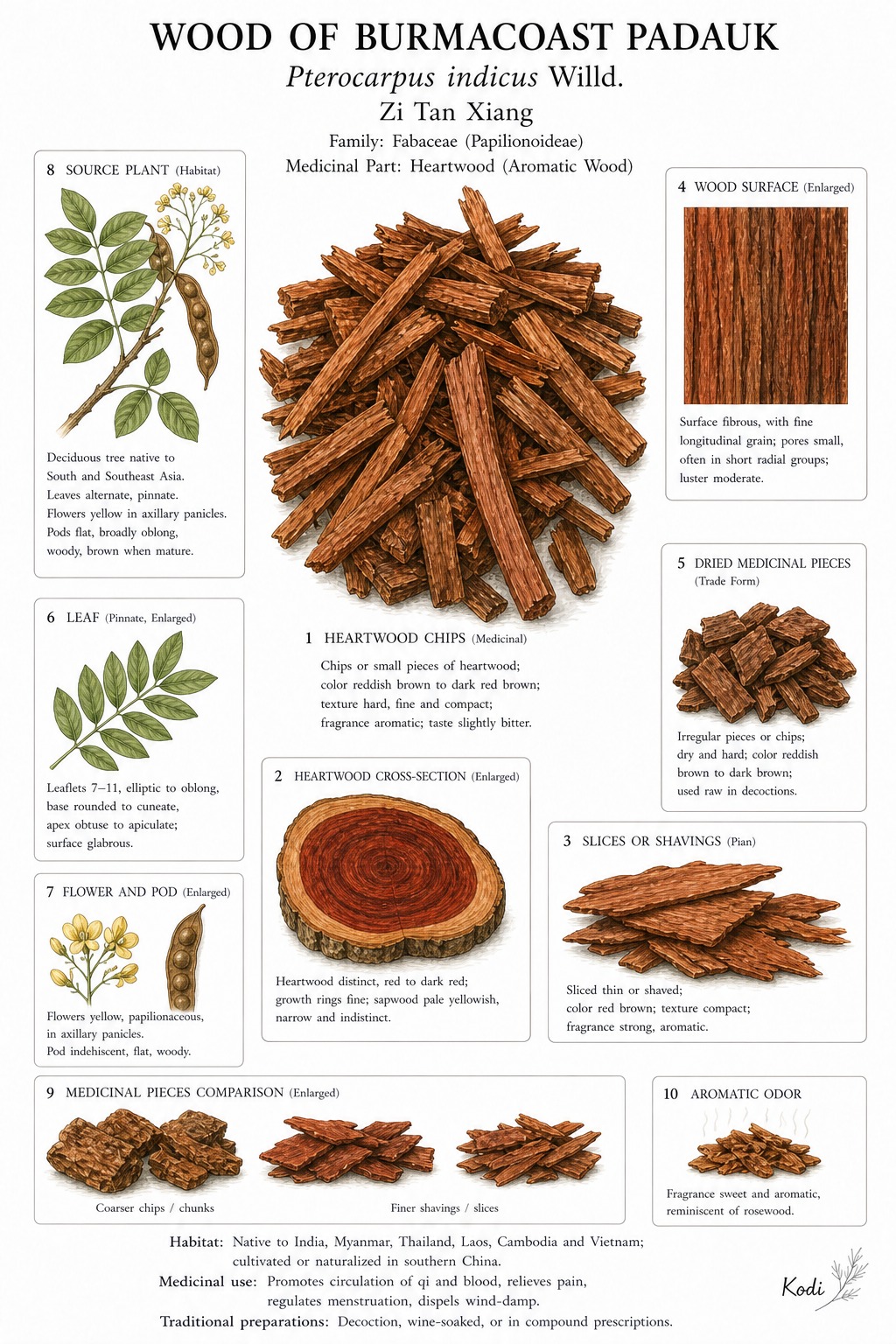
Known in TCM as Zi Tan Xiang (紫檀香), this acrid, warm herb enters the Spleen, Stomach, and Lung. Traditionally, it moves qi and relieves pain ... this narrower aromatic wood lane is used for focal chest or abdominal discomfort when stagnation and cold are part of the presentation, most often applied for abdominal pain, chest pain, and blood stasis. Modern research has identified Flavonoids among its active constituents.
Part used: Heartwood
Also Known As
Latin: Lignum Pterocarpi Indici | Pinyin: Zi Tan Xiang | Chinese: 紫檀香
TCM Properties
- Taste
- acrid
- Temperature
- warm
- Channels
- Spleen, Stomach, Lung
Traditional Use
Primary Actions
- Moves qi and relieves pain ... this narrower aromatic wood lane is used for focal chest or abdominal discomfort when stagnation and cold are part of the presentation.
- Warms the middle and opens constrained movement ... traditional handling leans more toward aromatic wood shavings and chips than toward dense carved heartwood blocks.
- Represents a small trade-form lane within padauk and red-sandalwood commerce ... it is better understood as a specialty aromatic medicament than as a core mainstream Chinese herb.
Secondary Actions
- This page should stay distinct from the paired `wood-of-burmacoast-padauk-2` record ... both use Pterocarpus indicus in the local illustration and import workflow, but this lane preserves the more aromatic chip-and-shaving identity.
- English-language nomenclature around `Zi Tan Xiang` is not fully standardized, and some sources use the name for related red-sandalwood woods, so authenticated supply matters.
Classic Formulas
- Modified qi-stagnation and cold-pain prescriptions ... traditional use is more often as a supporting aromatic wood than as the sovereign herb of a famous formula.
- Combinations with Mu Xiang, Xiang Fu, or Yan Hu Suo ... common logic when pain reflects stagnation and impaired movement rather than deficiency alone.
- Small patent and regional dispensing traditions using fragrant heartwood chips ... reflecting a narrower trade lane than the better-known mainstream aromatic woods.
Classical References
- Modern Chinese and regional materia medica references describe Zi Tan Xiang as an aromatic warming wood used to regulate qi, warm the middle, and relieve pain.
- The present record is intentionally conservative because wood nomenclature in commerce can blur aromatic red-sandalwood and padauk identities.
Modern Research
Active Compounds
- Flavonoids and isoflavonoids ... major phytochemical classes discussed across the Pterocarpus genus
- Angolensin and related heartwood phenolics ... relevant to recent Pterocarpus indicus anti-inflammatory work
- Tannins and phenolic acids ... supportive constituents in wood and exudate pharmacology
- Terpenoid and fatty-acid fractions ... broader contributors to genus-level bioactivity reports
Studied Effects
- A 2021 review of the genus Pterocarpus summarized ethnopharmacology, phytochemistry, and scientific evidence across the genus, including anti-inflammatory and antimicrobial themes relevant to padauk heartwood records (PMID 34116190).
- A 2025 study found that angolensin isolated from Pterocarpus indicus heartwood showed anti-neuroinflammatory activity in laboratory models and a favorable central-nervous-system safety profile in mice, although that evidence remains preclinical (PMID 40430027).
- An older Chinese report introduced Pterocarpus indicus as a medicinal plant in China and noted astringent use of the red exudate, highlighting how limited and regionally specific the indexed literature still is for this medicinal lane (PMID 12572429).
PubMed References
Safety & Interactions
Contraindications
- Heat patterns without cold or qi stagnation
- Unverified wood material from ambiguous commerce channels
Cautions
- This is a niche wood-medicine lane with less standardized sourcing than mainstream materia medica items.
- Modern studies on heartwood extracts or isolated compounds do not translate directly to ordinary chip decoction use.
Conditions
- Abdominal Pain Traditional ★★☆☆☆ JSON
- Chest Pain Traditional ★★☆☆☆ JSON
- Blood Stasis Traditional ★☆☆☆☆ JSON
- Poor Appetite Traditional ★☆☆☆☆ JSON
Frequently Asked Questions
What is Padauk Heartwood Chips used for?
Padauk Heartwood Chips is traditionally used to Moves qi and relieves pain ... this narrower aromatic wood lane is used for focal chest or abdominal discomfort when stagnation and cold are part of the presentation., Warms the middle and opens constrained movement ... traditional handling leans more toward aromatic wood shavings and chips than toward dense carved heartwood blocks., Represents a small trade-form lane within padauk and red-sandalwood commerce ... it is better understood as a specialty aromatic medicament than as a core mainstream Chinese herb.. Research has investigated its effects on: A 2021 review of the genus Pterocarpus summarized ethnopharmacology, phytochemistry, and scientific evidence across the genus, including anti-inflammatory and antimicrobial themes relevant to padauk heartwood records (PMID 34116190).; A 2025 study found that angolensin isolated from Pterocarpus indicus heartwood showed anti-neuroinflammatory activity in laboratory models and a favorable central-nervous-system safety profile in mice, although that evidence remains preclinical (PMID 40430027)..
What are other names for Padauk Heartwood Chips?
Padauk Heartwood Chips is also known as Zi Tan Xiang, Aromatic Padauk Heartwood, Pterocarpus indicus Heartwood Chips. In TCM: 紫檀香 (Zi Tan Xiang); Lignum Pterocarpi Indici.
Is Padauk Heartwood Chips safe during pregnancy?
The safety of Padauk Heartwood Chips during pregnancy has not been established. Consult a qualified healthcare provider before use.
What are the contraindications for Padauk Heartwood Chips?
Padauk Heartwood Chips should not be used in: Heat patterns without cold or qi stagnation; Unverified wood material from ambiguous commerce channels. Consult a qualified healthcare provider before use.