Wild Chrysanthemum Flower
- Chinese
- 野菊花
- Pinyin
- Ye Ju Hua
- Latin
- Flos Chrysanthemi Indici
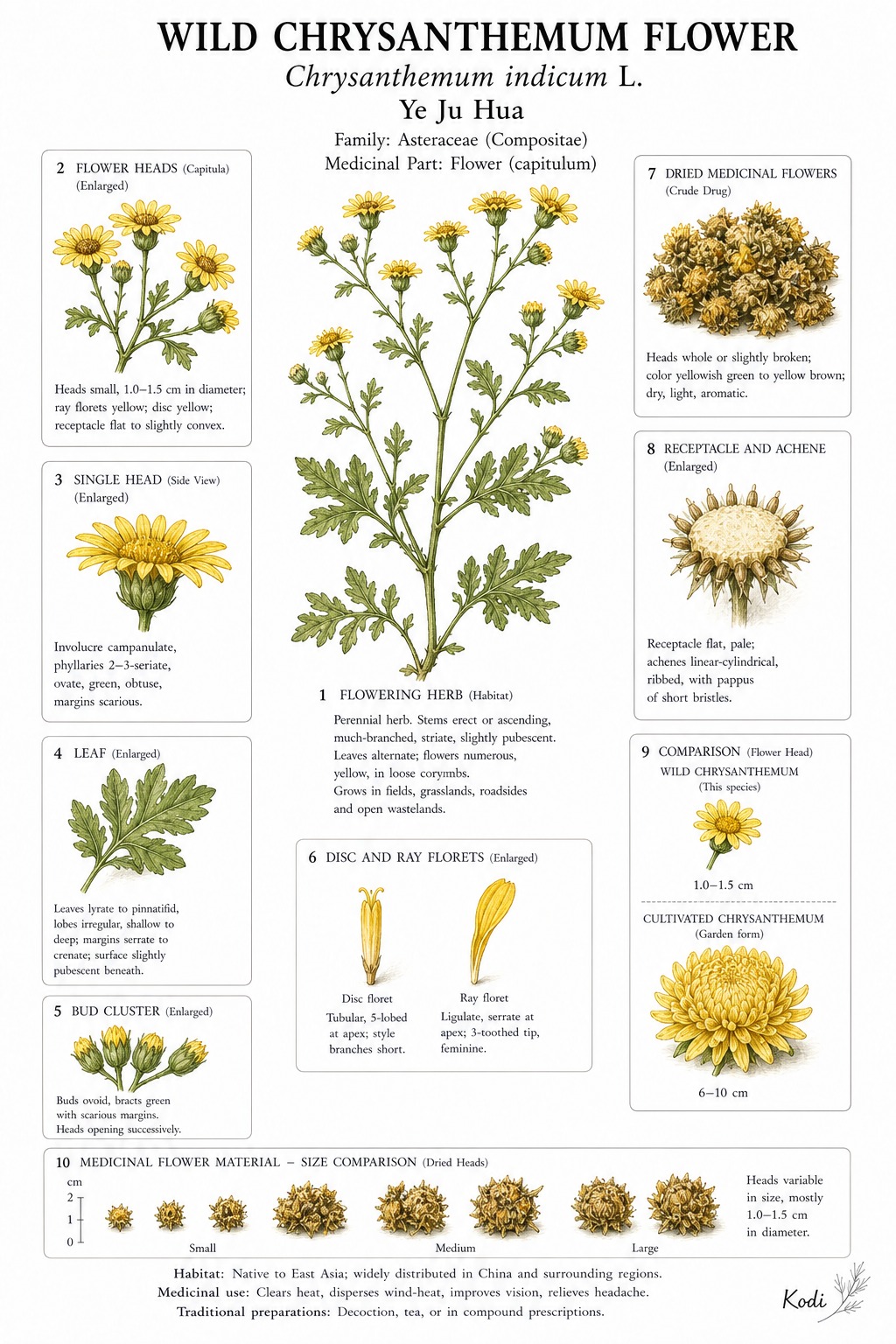
Known in TCM as Ye Ju Hua (野菊花), this bitter and acrid, slightly cold herb enters the Liver and Lung. Traditionally, it clears heat and resolves toxicity ... Ye Ju Hua is a classic flower for boils, carbuncles, throat swelling, and hot inflamed eyes or skin, most often applied for sore throat, abscess, and conjunctivitis. Modern research has identified Flavonoids among its active constituents.
Part used: Flower
Also Known As
Latin: Flos Chrysanthemi Indici | Pinyin: Ye Ju Hua | Chinese: 野菊花
TCM Properties
- Taste
- bitter, acrid
- Temperature
- slightly cold
- Channels
- Liver, Lung
Traditional Use
Primary Actions
- Clears heat and resolves toxicity ... Ye Ju Hua is a classic flower for boils, carbuncles, throat swelling, and hot inflamed eyes or skin.
- Disperses wind-heat ... it is used for fever, headache, red eyes, and sore throat when upper-body heat is prominent.
- Calms the Liver and improves the eyes ... especially in red painful eyes or dizziness linked to rising heat.
Secondary Actions
- This page should stay on the smaller wild-flower lane and not be flattened into cultivated `Ju Hua` flower records, even though both belong to the broader chrysanthemum medicinal family.
- Ye Ju Hua usually carries a stronger heat-toxin and swelling-reduction emphasis than the gentler cultivated chrysanthemum tea lane.
Classic Formulas
- Wu Wei Xiao Du Yin ... classic toxin-clearing formula where Ye Ju Hua joins Jin Yin Hua, Pu Gong Ying, Zi Hua Di Ding, and Tian Kui Zi for acute suppurative swellings.
- Upper-body heat and eye formulas with Sang Ye or Ju Hua ... traditional logic when wind-heat and red painful eyes overlap.
- Heat-toxin pairings with Pu Gong Ying, Lian Qiao, or Ban Lan Gen ... common strategy for swollen throat, furuncle, and inflammatory skin patterns.
Classical References
- Traditional materia medica describes Ye Ju Hua as bitter, acrid, and slightly cold, entering the Liver and Lung to clear heat, resolve toxicity, and relieve swelling.
- Its long-standing role in boils, sore throat, scrofula, and inflamed eyes distinguishes it from the milder beverage-like cultivated chrysanthemum lane.
Modern Research
Active Compounds
- Flavonoids such as linarin, luteolin derivatives, and acacetin-type compounds ... major flower constituents discussed in Chrysanthemum indicum research
- Sesquiterpenes and volatile oils ... supportive contributors to anti-inflammatory and antimicrobial interest
- Phenolic acids and antioxidant polyphenols ... common markers in flower-extract studies
- Total flavonoid fractions ... a recurring experimental focus in modern pharmacology
Studied Effects
- A 2020 review summarized the botany, phytochemistry, and pharmacology of Chrysanthemum indicum, reinforcing the plant's broad anti-inflammatory, antimicrobial, and antioxidant research profile (PMID 32431180).
- A 2023 study found that water extract of Chrysanthemum indicum flower reduced capsaicin-induced systemic low-grade inflammation in mice by modulating gut microbiota and short-chain fatty acids, offering a plausible modern correlate while remaining preclinical (PMID 36904069).
- A 2023 study reported that total flavonoids of Chrysanthemum indicum reduced inflammation and apoptosis in acute-pancreatitis associated injury models, again showing strong laboratory interest but not direct proof for clinical self-treatment (PMID 36709296).
PubMed References
- Chrysanthemum indicum L.: A Comprehensive Review of its Botany, Phytochemistry and Pharmacology. (2020)
- Water Extract of Chrysanthemum indicum L. Flower Inhibits Capsaicin-Induced Systemic Low-Grade Inflammation by Modulating Gut Microbiota and Short-Chain Fatty Acids. (2023)
- Total flavonoids of Chrysanthemum indicum L inhibit acute pancreatitis through suppressing apoptosis and inflammation. (2023)
Safety & Interactions
Contraindications
- Marked middle-jiao cold without heat, toxin, or inflamed-swelling features
- Known hypersensitivity to chrysanthemum or other Asteraceae plants
Cautions
- Most modern evidence is preclinical and species-level rather than direct clinical proof for every classical indication.
- Wild chrysanthemum should not be confused with ornamental florist varieties or with unrelated topical chrysanthemum products.
Conditions
- Sore Throat Traditional ★★★☆☆ JSON
- Abscess Traditional ★★★☆☆ JSON
- Conjunctivitis Traditional ★★☆☆☆ JSON
- Headache Traditional ★★☆☆☆ JSON
Frequently Asked Questions
What is Wild Chrysanthemum Flower used for?
Wild Chrysanthemum Flower is traditionally used to Clears heat and resolves toxicity ... Ye Ju Hua is a classic flower for boils, carbuncles, throat swelling, and hot inflamed eyes or skin., Disperses wind-heat ... it is used for fever, headache, red eyes, and sore throat when upper-body heat is prominent., Calms the Liver and improves the eyes ... especially in red painful eyes or dizziness linked to rising heat.. Research has investigated its effects on: A 2020 review summarized the botany, phytochemistry, and pharmacology of Chrysanthemum indicum, reinforcing the plant's broad anti-inflammatory, antimicrobial, and antioxidant research profile (PMID 32431180).; A 2023 study found that water extract of Chrysanthemum indicum flower reduced capsaicin-induced systemic low-grade inflammation in mice by modulating gut microbiota and short-chain fatty acids, offering a plausible modern correlate while remaining preclinical (PMID 36904069)..
What are other names for Wild Chrysanthemum Flower?
Wild Chrysanthemum Flower is also known as Ye Ju Hua, Chrysanthemum indicum Flower, Indian Chrysanthemum Flower. In TCM: 野菊花 (Ye Ju Hua); Flos Chrysanthemi Indici.
Is Wild Chrysanthemum Flower safe during pregnancy?
The safety of Wild Chrysanthemum Flower during pregnancy has not been established. Consult a qualified healthcare provider before use.
What are the contraindications for Wild Chrysanthemum Flower?
Wild Chrysanthemum Flower should not be used in: Marked middle-jiao cold without heat, toxin, or inflamed-swelling features; Known hypersensitivity to chrysanthemum or other Asteraceae plants. Consult a qualified healthcare provider before use.