White Sesame Seed
- Chinese
- 芝麻
- Pinyin
- Zhi Ma
- Latin
- Semen Sesami
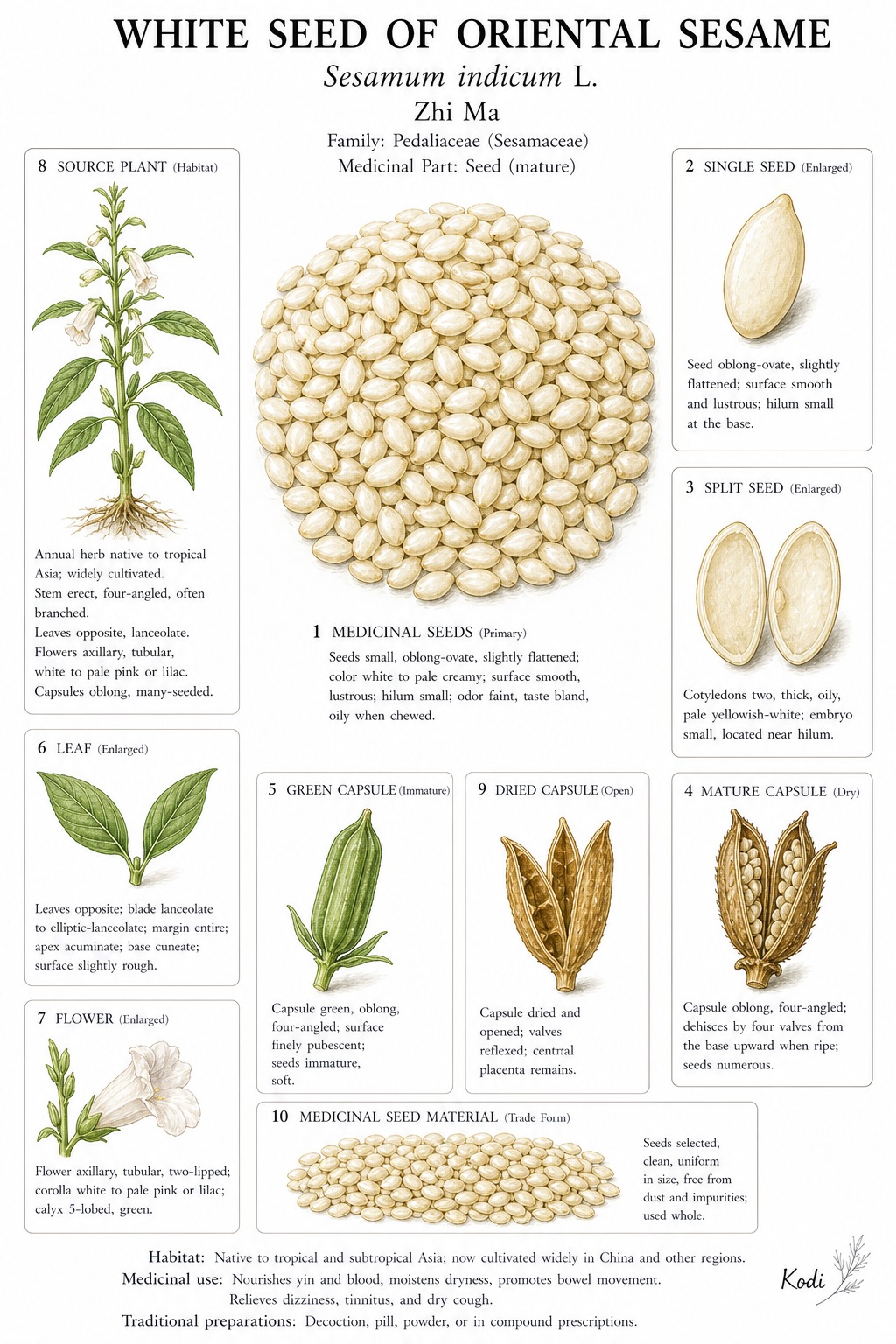
Known in TCM as Zhi Ma (芝麻), this sweet, neutral herb enters the Liver, Kidney, and Large Intestine. Traditionally, it moistens dryness and lubricates the intestines ... white sesame seed is a gentle food-medicine lane for dry constipation and depletion-related dryness, most often applied for constipation, dry cough, and dizziness. Modern research has identified Sesamin among its active constituents.
Part used: Seed
Also Known As
Latin: Semen Sesami | Pinyin: Zhi Ma | Chinese: 芝麻
TCM Properties
- Taste
- sweet
- Temperature
- neutral
- Channels
- Liver, Kidney, Large Intestine
Traditional Use
Primary Actions
- Moistens dryness and lubricates the intestines ... white sesame seed is a gentle food-medicine lane for dry constipation and depletion-related dryness.
- Gently nourishes blood and yin ... it is used more for gradual support and moistening than for the stronger color-associated Kidney emphasis carried by black sesame.
- Supports dryness-prone skin, throat, and convalescent depletion through dietetic use ... the seed often belongs more to medicinal food practice than to aggressive decoction strategy.
Secondary Actions
- This page should stay distinct from the already-live `black-sesame` record and sesame-oil lanes ... all share core seed chemistry, but the traditional emphasis here is the lighter white-seed presentation rather than the classic black-seed tonic reputation.
- Older references may use `Hu Ma` or `Zhi Ma` broadly for sesame, so commerce and translation can blur white and black lanes unless the seed color and intended use are stated clearly.
Classic Formulas
- Medicinal-food porridges and pastes ... the most typical traditional use when lubrication and nourishment are needed without harsh purgation.
- Dryness-relieving combinations with honey, walnut, or mulberry products ... common household and food-therapy logic for constipation and fluid depletion.
- Adaptations of sesame-containing moistening formulas ... used when a gentler seed lane is preferred over the more strongly tonic black-sesame presentation.
Classical References
- Traditional sesame use centers on moistening and gentle nourishment, with black sesame carrying the stronger later reputation for deep Liver-Kidney and hair-benefiting tonification.
- White sesame is therefore best read as a food-medicine moistening lane and not simply as an inferior duplicate of Hei Zhi Ma.
Modern Research
Active Compounds
- Sesamin and sesamolin ... the best known sesame lignans linked to antioxidant and metabolic research
- Sesamol and related phenolic antioxidants ... relevant to anti-inflammatory and food-stability interest
- Oleic and linoleic acids ... major nutritive oil components that help explain the seed's moistening profile
- Tocopherols and phytosterols ... supportive cardiometabolic and antioxidant constituents
Studied Effects
- A 2022 comprehensive review summarized sesame's nutritional value, phytochemical composition, health benefits, food development, and industrial applications, giving the broadest modern overview for white and mixed-color sesame seeds alike (PMID 36235731).
- A 2021 meta-analysis of randomized trials found that sesame consumption significantly reduced some inflammatory biomarkers, especially interleukin-6, although effects were not uniformly strong across all markers (PMID 34760018).
- A review of sesame seed lignans described sesamin-family compounds as potent physiologic modulators with antioxidant and functional-food relevance, helping explain why sesame remains attractive in modern preventive nutrition research (PMID 21114470).
PubMed References
- Sesame (Sesamum indicum L.): A Comprehensive Review of Nutritional Value, Phytochemical Composition, Health Benefits, Development of Food, and Industrial Applications. (2022)
- Effects of Sesame Consumption on Inflammatory Biomarkers in Humans: A Systematic Review and Meta-Analysis of Randomized Controlled Trials. (2021)
- Sesame seed lignans: potent physiological modulators and possible ingredients in functional foods & nutraceuticals. (2011)
Safety & Interactions
Contraindications
- Loose stool or diarrhea from Spleen deficiency without dryness
- Pronounced phlegm-damp stagnation with poor tolerance for rich oily seeds
Cautions
- People with sesame allergy should avoid medicinal as well as culinary use.
- Whole white sesame seed, tahini-like paste, and concentrated sesame-oil products are not interchangeable in dose or digestive burden.
Conditions
Frequently Asked Questions
What is White Sesame Seed used for?
White Sesame Seed is traditionally used to Moistens dryness and lubricates the intestines ... white sesame seed is a gentle food-medicine lane for dry constipation and depletion-related dryness., Gently nourishes blood and yin ... it is used more for gradual support and moistening than for the stronger color-associated Kidney emphasis carried by black sesame., Supports dryness-prone skin, throat, and convalescent depletion through dietetic use ... the seed often belongs more to medicinal food practice than to aggressive decoction strategy.. Research has investigated its effects on: A 2022 comprehensive review summarized sesame's nutritional value, phytochemical composition, health benefits, food development, and industrial applications, giving the broadest modern overview for white and mixed-color sesame seeds alike (PMID 36235731).; A 2021 meta-analysis of randomized trials found that sesame consumption significantly reduced some inflammatory biomarkers, especially interleukin-6, although effects were not uniformly strong across all markers (PMID 34760018)..
What are other names for White Sesame Seed?
White Sesame Seed is also known as White Sesame, Oriental Sesame Seed, Sesamum indicum Seed. In TCM: 芝麻 (Zhi Ma); Semen Sesami.
Is White Sesame Seed safe during pregnancy?
The safety of White Sesame Seed during pregnancy has not been established. Consult a qualified healthcare provider before use.
What are the contraindications for White Sesame Seed?
White Sesame Seed should not be used in: Loose stool or diarrhea from Spleen deficiency without dryness; Pronounced phlegm-damp stagnation with poor tolerance for rich oily seeds. Consult a qualified healthcare provider before use.