White Hyacinth Bean
- Chinese
- 白扁豆
- Pinyin
- Bai Bian Dou
- Latin
- Semen Lablab Album
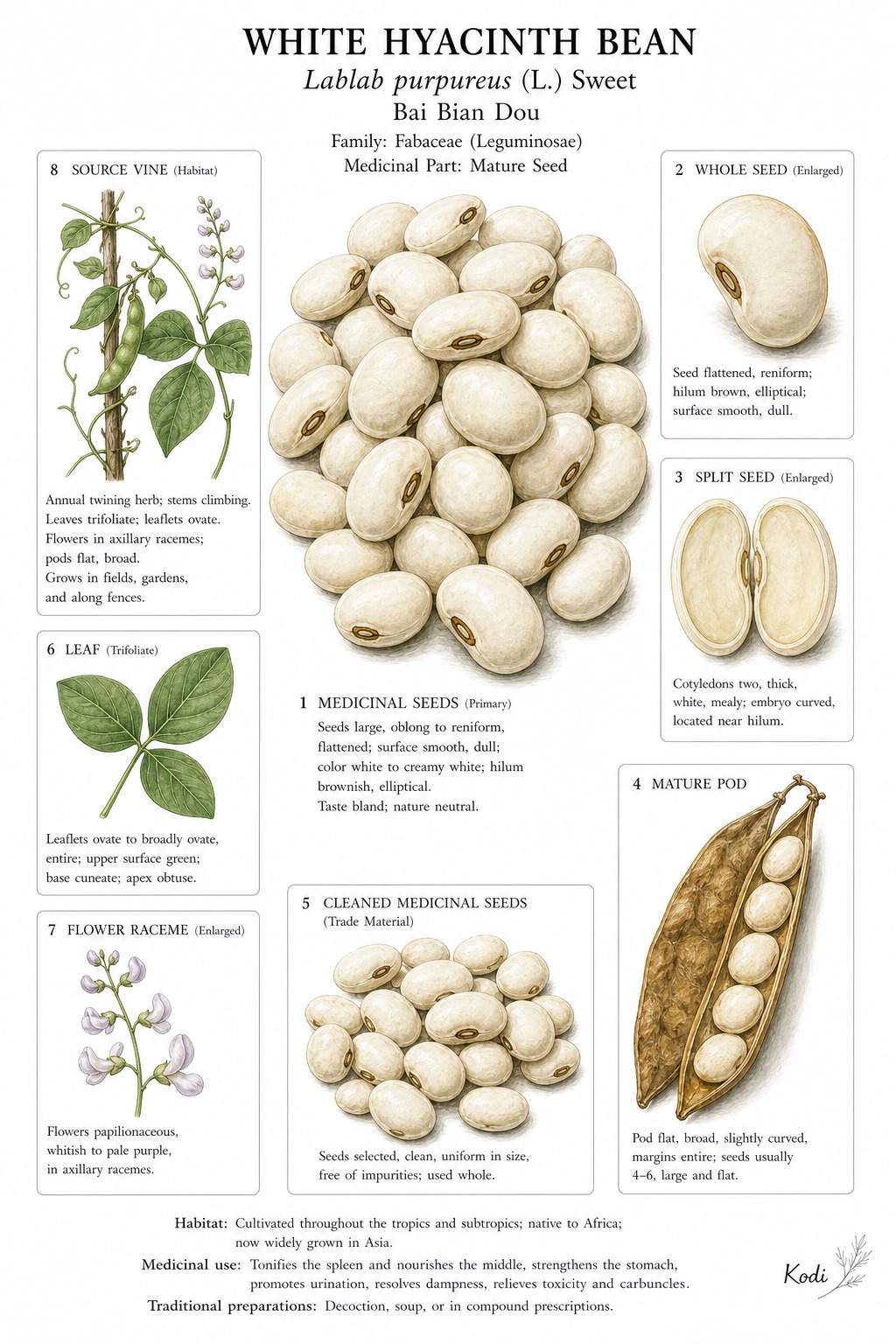
Known in TCM as Bai Bian Dou (白扁豆), this sweet, slightly warm herb enters the Spleen and Stomach. Traditionally, it strengthens the Spleen and transforms dampness ... Bai Bian Dou is a gentle seed medicinal for loose stool, poor appetite, fatigue, and sluggish digestion with damp heaviness, most often applied for diarrhea, poor appetite, and digestive weakness. Modern research has identified Triterpene among its active constituents.
Part used: Seed
Also Known As
Latin: Semen Lablab Album | Pinyin: Bai Bian Dou | Chinese: 白扁豆
TCM Properties
- Taste
- sweet
- Temperature
- slightly warm
- Channels
- Spleen, Stomach
Traditional Use
Primary Actions
- Strengthens the Spleen and transforms dampness ... Bai Bian Dou is a gentle seed medicinal for loose stool, poor appetite, fatigue, and sluggish digestion with damp heaviness.
- Relieves summer-damp and harmonizes the middle ... it is chosen when humid weather or spoiled food leads to vomiting, diarrhea, chest oppression, and abdominal discomfort.
- Stops diarrhea and helps with damp leukorrhea ... especially when chronic digestive weakness allows dampness to linger.
Secondary Actions
- This page keeps the more specific white-seed medicinal lane and should not be flattened into the broader already-live `hyacinth-bean` page, even though both come from the same Lablab seed tradition.
- Processing still matters here ... raw seed leans more toward summer-damp and detoxifying discussion, while stir-fried seed is more centered on Spleen support and diarrhea control.
Classic Formulas
- Xiang Ru San ... classic summer-damp formula context where Bai Bian Dou helps harmonize the middle and stop vomiting or diarrhea.
- Shen Ling Bai Zhu San ... digestive-deficiency pattern in which white hyacinth bean supports the middle and checks chronic damp diarrhea.
- Pairings with Huo Xiang, Shan Yao, or Bai Zhu ... common strategies when poor appetite and loose stool reflect weak transport with dampness.
Classical References
- Traditional materia medica describes Bai Bian Dou as sweet and slightly warm, entering the Spleen and Stomach to strengthen the Spleen, transform dampness, and relieve summer-heat.
- Compared with the flower, pod, or more generic bean references, the white seed is the medicinal lane most associated with tonifying the middle.
Modern Research
Active Compounds
- Triterpene glycosides ... a major phytochemical focus in Dolichos lablab seed research
- Fatty acids such as linoleic and oleic acid ... part of the seed's medicinal-food profile
- Lectins and storage proteins ... relevant to both raw-seed toxicity and bioactivity research
- Polyphenols and trigonelline-related compounds ... supportive antioxidant and processing-sensitive constituents
Studied Effects
- A 2025 seed study identified terpenoid glycosides from Dolichos lablab with in vitro anti-inflammatory activity, reinforcing that the white seed lane has modern pharmacologic interest beyond simple nutrition (PMID 40333725).
- A 2019 phytochemical paper characterized triterpene glycosides from Dolichos lablab seeds, expanding the seed-specific chemistry base for Bai Bian Dou (PMID 31155567).
- A 2014 processing study showed that preparation conditions alter the polyphenol content and antioxidant capacity of Dolichos lablab, which fits the traditional importance placed on how the seed is handled before use (PMID 24425975).
PubMed References
Safety & Interactions
Contraindications
- Severe dry constipation without dampness
- Marked heat or inflammatory patterns where a gentle Spleen bean is not the right match
Cautions
- Raw or undercooked hyacinth bean contains toxic proteins and lectin-like factors that can cause gastrointestinal distress.
- Prepared medicinal seed and ordinary culinary bean products are not identical in processing, dose, or intended use.
Conditions
- Diarrhea Traditional ★★★★☆ JSON
- Poor Appetite Traditional ★★★☆☆ JSON
- Digestive Weakness Traditional ★★★☆☆ JSON
- Leukorrhea Traditional ★★☆☆☆ JSON
Frequently Asked Questions
What is White Hyacinth Bean used for?
White Hyacinth Bean is traditionally used to Strengthens the Spleen and transforms dampness ... Bai Bian Dou is a gentle seed medicinal for loose stool, poor appetite, fatigue, and sluggish digestion with damp heaviness., Relieves summer-damp and harmonizes the middle ... it is chosen when humid weather or spoiled food leads to vomiting, diarrhea, chest oppression, and abdominal discomfort., Stops diarrhea and helps with damp leukorrhea ... especially when chronic digestive weakness allows dampness to linger.. Research has investigated its effects on: A 2025 seed study identified terpenoid glycosides from Dolichos lablab with in vitro anti-inflammatory activity, reinforcing that the white seed lane has modern pharmacologic interest beyond simple nutrition (PMID 40333725).; A 2019 phytochemical paper characterized triterpene glycosides from Dolichos lablab seeds, expanding the seed-specific chemistry base for Bai Bian Dou (PMID 31155567)..
What are other names for White Hyacinth Bean?
White Hyacinth Bean is also known as White Lablab Seed, Bai Bian Dou, White Dolichos Seed. In TCM: 白扁豆 (Bai Bian Dou); Semen Lablab Album.
Is White Hyacinth Bean safe during pregnancy?
The safety of White Hyacinth Bean during pregnancy has not been established. Consult a qualified healthcare provider before use.
What are the contraindications for White Hyacinth Bean?
White Hyacinth Bean should not be used in: Severe dry constipation without dampness; Marked heat or inflammatory patterns where a gentle Spleen bean is not the right match. Consult a qualified healthcare provider before use.