Valerian Root
- Chinese
- 缬草根
- Pinyin
- Jie Cao Gen
- Latin
- Radix Seu Rhizoma Valerianae
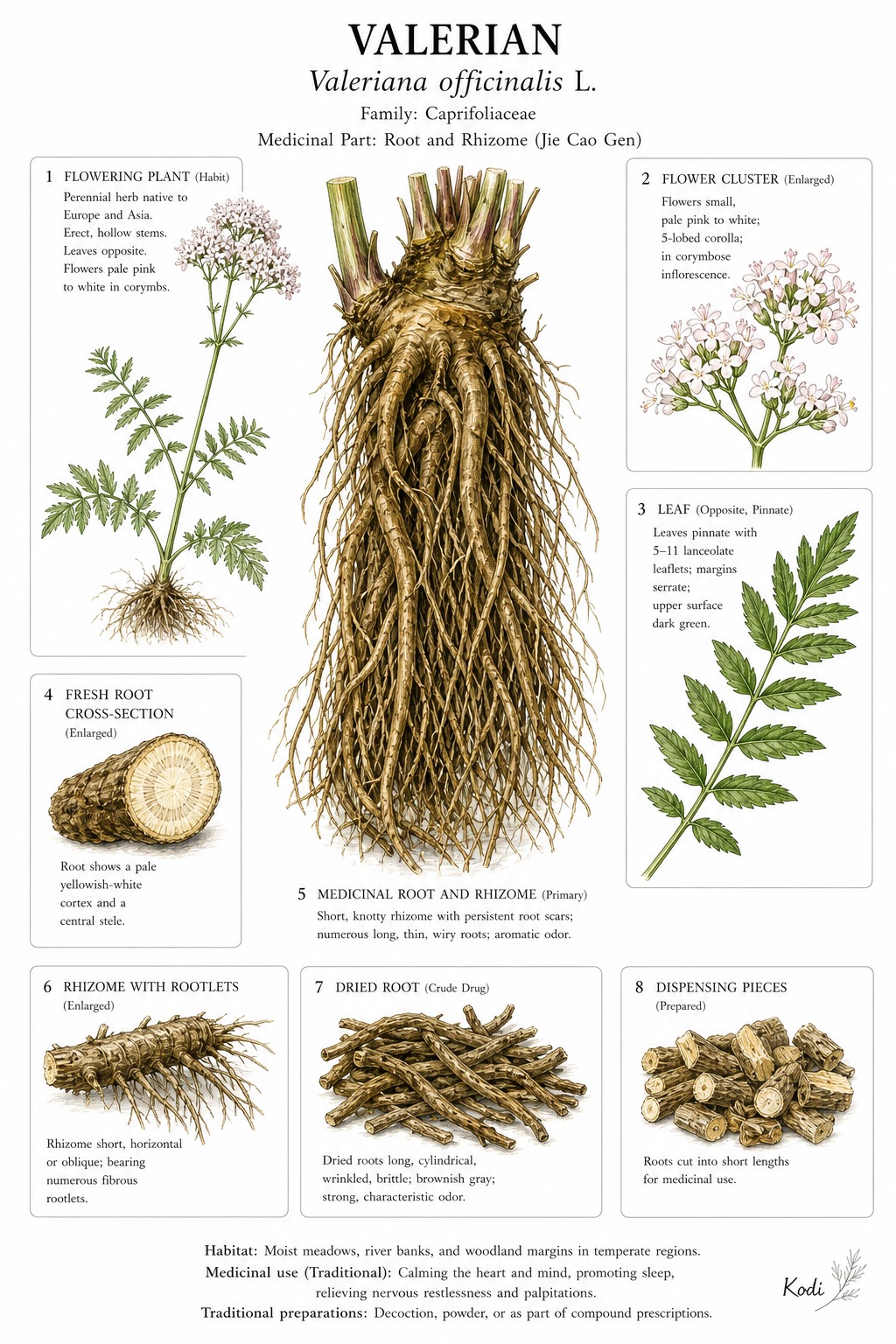
Known in TCM as Jie Cao Gen (缬草根), this pungent and sweet, warm herb enters the Heart and Liver. Traditionally, it calms the spirit and eases restlessness ... Jie Cao Gen is used for insomnia, tension, fright, and sleep disturbed by constraint or overstimulation, most often applied for insomnia, anxiety, and abdominal pain. Modern research has identified Valerenic among its active constituents.
Part used: Root
Also Known As
Latin: Radix Seu Rhizoma Valerianae | Pinyin: Jie Cao Gen | Chinese: 缬草根
TCM Properties
- Taste
- pungent, sweet
- Temperature
- warm
- Channels
- Heart, Liver
Traditional Use
Primary Actions
- Calms the spirit and eases restlessness ... Jie Cao Gen is used for insomnia, tension, fright, and sleep disturbed by constraint or overstimulation.
- Regulates qi and relieves pain ... Chinese herb lists also place it in a qi-moving lane for abdominal discomfort, chest constraint, and cramping tension.
- Relaxes spasm and settles agitation ... traditional handling overlaps with its better-known broader Eurasian reputation as a nervine root.
Secondary Actions
- This is an imported or adopted materia medica lane, so the indexed modern literature on sleep and anxiety is much deeper than the classical Chinese formula record.
- The page should stay on root-and-rhizome medicinal use and not drift into generic supplement marketing or confusion with other aromatic sedative roots.
Classic Formulas
- Calm-spirit combinations with Suan Zao Ren, Ye Jiao Teng, or He Huan Pi ... the most natural TCM pairing context for Jie Cao Gen.
- Qi-regulating pain pairings with Xiang Fu or Chen Pi ... when emotional constraint and abdominal discomfort travel together.
- Gentle bedtime decoction or powder traditions ... a practical modern extension of the spirit-calming lane.
Classical References
- Modern Chinese herb lists describe Jie Cao Gen as pungent, sweet, and warm, entering the Heart and Liver to calm the spirit and regulate qi.
- Compared with stronger mineral sedatives or heavy shell products, valerian works more through aromatic nervine relaxation than through anchoring weight.
Modern Research
Active Compounds
- Valerenic acids and related sesquiterpenes ... the best-known modern marker constituents
- Volatile-oil fractions associated with the root's characteristic odor and nervine profile
- Lignans and iridoid-related compounds explored in broader valerian pharmacology
Studied Effects
- A 2020 systematic review and meta-analysis evaluated valerian root in sleep problems and related disorders, making it the clearest evidence anchor for this monograph's modern lane (PMID 33086877).
- A 2022 review of selected anti-anxiety medicinal plants included Valeriana officinalis among the better-known anxiolytic botanicals in current literature (PMID 33480339).
- A 2025 systematic review and meta-analysis examined Valeriana officinalis for primary dysmenorrhea, showing how modern evidence continues to test the herb beyond sleep alone (PMID 40965071).
PubMed References
Safety & Interactions
Contraindications
- Use before driving or other alertness-dependent tasks
- Concurrent use of strong sedative substances without supervision
Cautions
- Valerian can be calming or sedating, so dose timing matters more than it does for ordinary culinary aromatics.
- Whole-root preparations, extracts, and sleep formulas are not interchangeable in dose or effect.
Drug Interactions
- Sedative-hypnotics, alcohol, or other CNS depressants ... additive drowsiness is possible
Conditions
Frequently Asked Questions
What is Valerian Root used for?
Valerian Root is traditionally used to Calms the spirit and eases restlessness ... Jie Cao Gen is used for insomnia, tension, fright, and sleep disturbed by constraint or overstimulation., Regulates qi and relieves pain ... Chinese herb lists also place it in a qi-moving lane for abdominal discomfort, chest constraint, and cramping tension., Relaxes spasm and settles agitation ... traditional handling overlaps with its better-known broader Eurasian reputation as a nervine root.. Research has investigated its effects on: A 2020 systematic review and meta-analysis evaluated valerian root in sleep problems and related disorders, making it the clearest evidence anchor for this monograph's modern lane (PMID 33086877).; A 2022 review of selected anti-anxiety medicinal plants included Valeriana officinalis among the better-known anxiolytic botanicals in current literature (PMID 33480339)..
What are other names for Valerian Root?
Valerian Root is also known as Valerian, Jie Cao Gen, Valeriana officinalis root. In TCM: 缬草根 (Jie Cao Gen); Radix Seu Rhizoma Valerianae.
Is Valerian Root safe during pregnancy?
The safety of Valerian Root during pregnancy has not been established. Consult a qualified healthcare provider before use.
What are the contraindications for Valerian Root?
Valerian Root should not be used in: Use before driving or other alertness-dependent tasks; Concurrent use of strong sedative substances without supervision. Consult a qualified healthcare provider before use.
Does Valerian Root interact with any medications?
Valerian Root may interact with: Sedative-hypnotics, alcohol, or other CNS depressants ... additive drowsiness is possible. Always inform your healthcare provider of any herbal supplements you are taking.