Malabar Nut Twig and Leaf
- Chinese
- 大驳骨
- Pinyin
- Da Bo Gu
- Latin
- Ramulus et Folium Adhatodae Vasicae
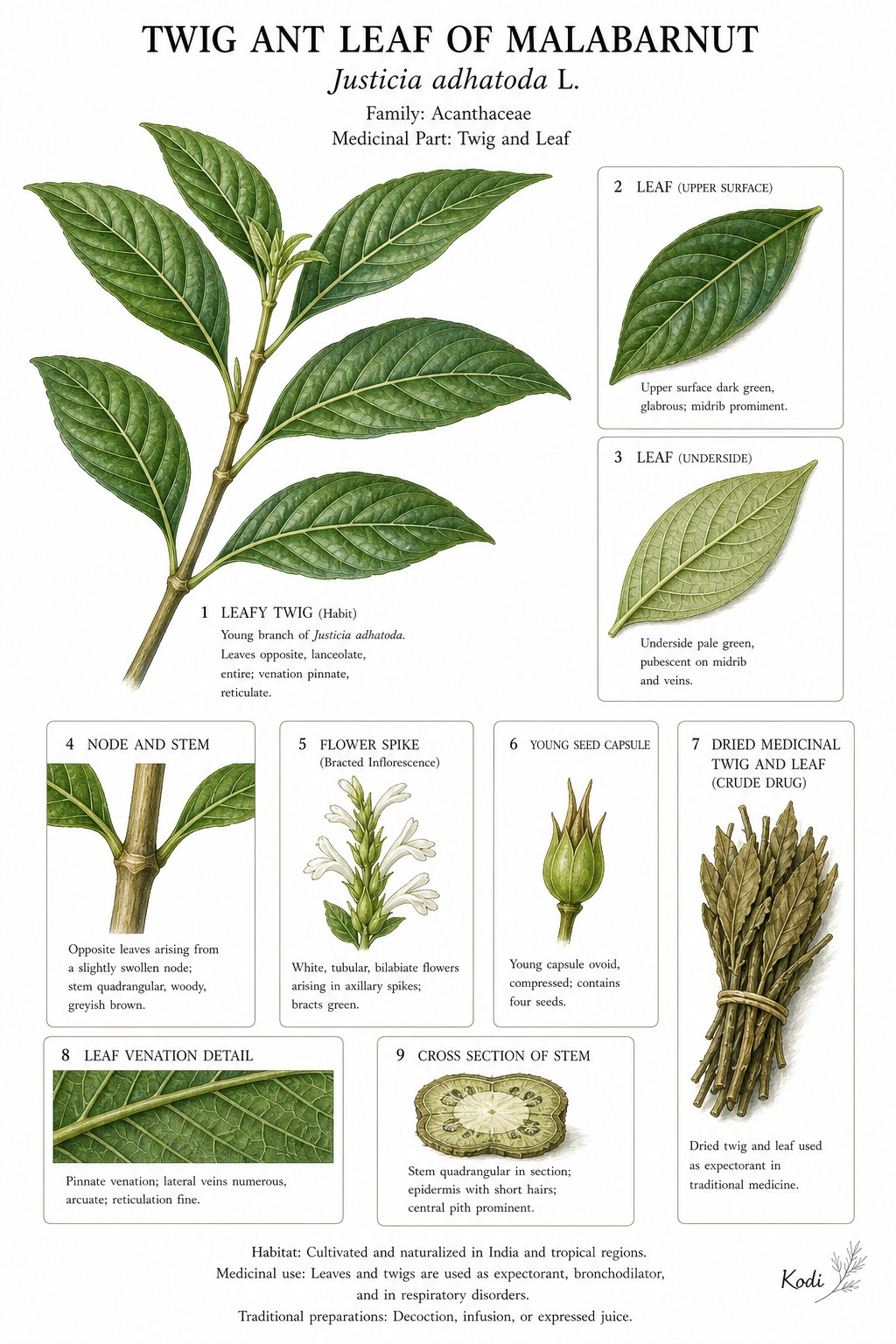
Known in TCM as Da Bo Gu (大驳骨), this pungent, warm herb enters the Spleen. Traditionally, it invigorates blood and relieves pain ... the Da Bo Gu lane in Chinese trade is used for traumatic injury, bruising, and fixed musculoskeletal pain, most often applied for joint pain, rheumatism, and traumatic injury. Modern research has identified Vasicine among its active constituents.
Part used: Twig
Also Known As
Latin: Ramulus et Folium Adhatodae Vasicae | Pinyin: Da Bo Gu | Chinese: 大驳骨
TCM Properties
- Taste
- pungent
- Temperature
- warm
- Channels
- Spleen
Traditional Use
Primary Actions
- Invigorates blood and relieves pain ... the Da Bo Gu lane in Chinese trade is used for traumatic injury, bruising, and fixed musculoskeletal pain.
- Dispels wind-damp and benefits joints and sinews ... regional use includes sore swollen limbs, rheumatic obstruction, and aching that worsens with damp exposure.
- Reduces swelling and supports local recovery ... external washing, hot-compress, and alcohol-soak traditions are part of its practical folk use.
Secondary Actions
- This imported record follows the Chinese Da Bo Gu twig-and-leaf lane rather than collapsing into the broader Ayurvedic respiratory use story of Adhatoda vasica.
- Modern pharmacology on Justicia adhatoda is much stronger for respiratory alkaloids and anti-inflammatory chemistry than for the narrower regional trauma indications preserved in Chinese trade.
Classic Formulas
- Regional traumatic-injury washes and hot compresses ... a common folk handling method for painful limbs and bruising.
- Wind-damp joint-pain combinations with Du Huo, Xu Duan, or other channel-opening herbs ... a practical pain-focused lane.
- Blood-moving plasters and medicated-wine traditions ... documentary context for external or regional use.
Classical References
- Chinese trade summaries describe Da Bo Gu as a warm pungent branch-and-leaf medicine used to quicken blood, relieve pain, and benefit joints and sinews.
- The Chinese Da Bo Gu record is more trauma-focused than the much broader South Asian cough and bronchodilator literature on the same species.
Modern Research
Active Compounds
- Vasicine and vasicinone ... the best-known alkaloids from Justicia adhatoda
- Pyrroloquinazoline alkaloid derivatives ... a major modern chemistry focus
- Leaf flavonoids and related anti-inflammatory secondary metabolites
Studied Effects
- A 2022 systematic ethnobotanical review summarized the broad medicinal history of Adhatoda vasica and is the best starting point for modern source review on this species (PMID 35809281).
- A 2022 study reported anti-inflammatory and analgesic effects from Justicia adhatoda leaf extract in carrageenan and formalin models, which maps more closely to the Chinese pain-relief lane than the usual bronchodilator discussion does (PMID 35763968).
- A 2024 review on pyrrolo-quinazoline derivatives highlighted the depth of current pharmacologic and chemical research around Adhatoda vasica alkaloids (PMID 38379997).
PubMed References
- A systematic ethnobotanical review of Adhatoda vasica (L.), Nees. (2022)
- Anti-inflammatory and analgesic potential of leaf extract of Justicia adhatoda L. (Acanthaceae) in Carrageenan and Formalin-induced models by targeting oxidative stress. (2022)
- Exploring the pharmacological and chemical aspects of pyrrolo-quinazoline derivatives in Adhatoda vasica. (2024)
Safety & Interactions
Contraindications
- Pregnancy
- Active bleeding disorders without clear trauma or stasis context
- Patterns of dryness or heat where a warm blood-moving twig medicine is poorly matched
Cautions
- Chinese Da Bo Gu use is not identical to every South Asian preparation of Adhatoda vasica, so part, processing, and indication all matter.
- Extracts, isolated alkaloids, and crude twig-and-leaf material are not interchangeable in dose or safety.
Conditions
- Joint Pain Traditional ★★★☆☆ JSON
- Rheumatism Traditional ★★★☆☆ JSON
- Traumatic Injury Traditional ★★★☆☆ JSON
- Abdominal Pain Traditional ★★☆☆☆ JSON
Frequently Asked Questions
What is Malabar Nut Twig and Leaf used for?
Malabar Nut Twig and Leaf is traditionally used to Invigorates blood and relieves pain ... the Da Bo Gu lane in Chinese trade is used for traumatic injury, bruising, and fixed musculoskeletal pain., Dispels wind-damp and benefits joints and sinews ... regional use includes sore swollen limbs, rheumatic obstruction, and aching that worsens with damp exposure., Reduces swelling and supports local recovery ... external washing, hot-compress, and alcohol-soak traditions are part of its practical folk use.. Research has investigated its effects on: A 2022 systematic ethnobotanical review summarized the broad medicinal history of Adhatoda vasica and is the best starting point for modern source review on this species (PMID 35809281).; A 2022 study reported anti-inflammatory and analgesic effects from Justicia adhatoda leaf extract in carrageenan and formalin models, which maps more closely to the Chinese pain-relief lane than the usual bronchodilator discussion does (PMID 35763968)..
What are other names for Malabar Nut Twig and Leaf?
Malabar Nut Twig and Leaf is also known as Da Bo Gu, Vasaka twig and leaf, Justicia adhatoda twig and leaf. In TCM: 大驳骨 (Da Bo Gu); Ramulus et Folium Adhatodae Vasicae.
Is Malabar Nut Twig and Leaf safe during pregnancy?
Malabar Nut Twig and Leaf is not recommended during pregnancy.
What are the contraindications for Malabar Nut Twig and Leaf?
Malabar Nut Twig and Leaf should not be used in: Pregnancy; Active bleeding disorders without clear trauma or stasis context; Patterns of dryness or heat where a warm blood-moving twig medicine is poorly matched. Consult a qualified healthcare provider before use.