Fortune Plumyew Twig and Leaf
- Chinese
- 三尖杉
- Pinyin
- San Jian Shan
- Latin
- Ramulus et Folium Cephalotaxi Fortunei
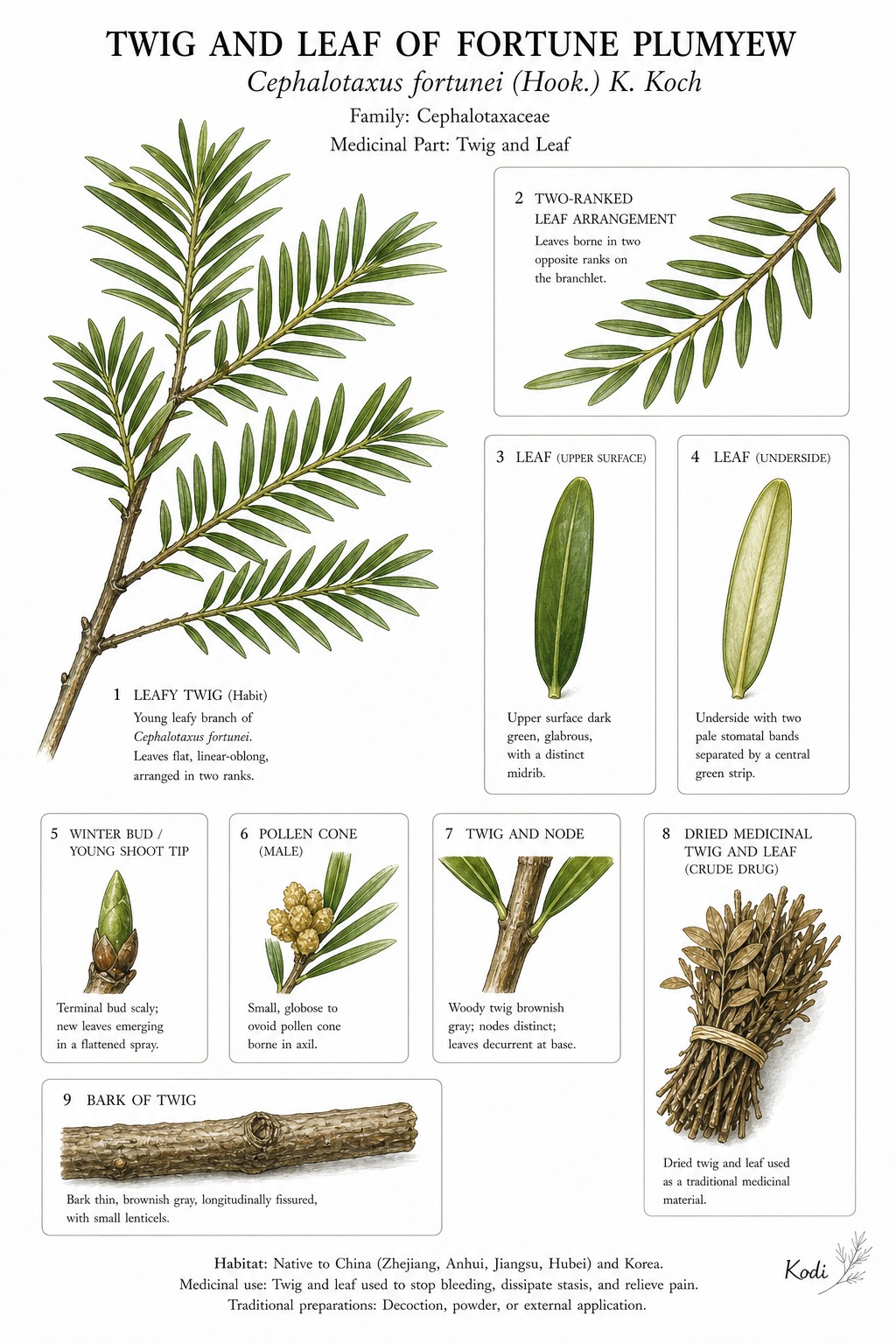
Known in TCM as San Jian Shan (三尖杉), this bitter and astringent, cold herb enters the Liver and Lung. Traditionally, it dispels wind and relieves pain ... regional twig-and-leaf use centers on rheumatic aching, stubborn limb pain, and painful obstruction affecting the channels, most often applied for joint pain, traumatic injury, and abscess. Modern research has identified Cephalotaxine-type among its active constituents.
Part used: Twig
Also Known As
Latin: Ramulus et Folium Cephalotaxi Fortunei | Pinyin: San Jian Shan | Chinese: 三尖杉
TCM Properties
- Taste
- bitter, astringent
- Temperature
- cold
- Channels
- Liver, Lung
Traditional Use
Primary Actions
- Dispels wind and relieves pain ... regional twig-and-leaf use centers on rheumatic aching, stubborn limb pain, and painful obstruction affecting the channels.
- Clears toxic heat and reduces swelling ... folk use extends to inflamed swellings, sores, and painful lesions where heat and toxicity are emphasized.
- Documentary anticancer use exists in later folk and integrative settings ... but this belongs to a tightly supervised toxic-medicine lane, not casual self-treatment.
Secondary Actions
- This page stays on the twig-and-leaf material and should not drift into seed-forward trade, ornamental garden descriptions, or isolated hospital-drug narratives.
- Cephalotaxus plants contain potent cytotoxic alkaloids, so the safety frame here must remain much stricter than for ordinary pain-relief or detox herbs.
Classic Formulas
- Regional wind-damp and traumatic-pain combinations with Xu Duan, Gu Sui Bu, or blood-moving herbs ... a folk musculoskeletal lane.
- Folk swelling and sore applications as decoctions, washes, or poultice-style preparations ... documentary context only.
- Later anticancer decoction traditions ... historical and regional material, not a recommendation for unsupervised use.
Classical References
- Regional materia medica describe San Jian Shan branch-and-leaf material as bitter and astringent and use it for rheumatic pain, swelling, and toxic lesions.
- The same plant group later became important as a source of cephalotaxine-type alkaloids, which sharply changes the safety conversation around modern use.
Modern Research
Active Compounds
- Cephalotaxine-type alkaloids such as harringtonine, homoharringtonine, and related congeners
- Diterpenoids and flavonoids isolated from Cephalotaxus twig fractions
- Other cytotoxic and antiproliferative secondary metabolites discussed across Cephalotaxus medicinal-plant reviews
Studied Effects
- A 2021 review summarized the ethnopharmacology, chemodiversity, and bioactivity of Cephalotaxus medicinal plants and remains the best modern overview for the San Jian Shan lane (PMID 33941338).
- A 2019 study isolated two new compounds from the twigs and leaves of Cephalotaxus fortunei, reinforcing that the medicinal literature is part-specific and not only seed-focused (PMID 30976949).
- A 2020 paper characterized diterpenoids and flavonoids from the twigs of Cephalotaxus fortunei var. alpina, supporting continued chemistry work on aerial woody parts closely related to this record (PMID 32329218).
PubMed References
Safety & Interactions
Contraindications
- Pregnancy
- Children or frail patients without specialist supervision
- Any unsupervised internal use for cancer or chronic disease
Cautions
- Cephalotaxus-derived material is not a casual household herb and has a much narrower safety margin than common folk pain remedies.
- The whole plant and purified oncology drugs derived from this genus are related but not interchangeable in dose, safety, or clinical intent.
- Species and part identification matter because alkaloid content varies across Cephalotaxus materials.
Conditions
- Joint Pain Traditional ★★☆☆☆ JSON
- Traumatic Injury Traditional ★★☆☆☆ JSON
- Abscess Traditional ★☆☆☆☆ JSON
- Cough Traditional ★☆☆☆☆ JSON
Frequently Asked Questions
What is Fortune Plumyew Twig and Leaf used for?
Fortune Plumyew Twig and Leaf is traditionally used to Dispels wind and relieves pain ... regional twig-and-leaf use centers on rheumatic aching, stubborn limb pain, and painful obstruction affecting the channels., Clears toxic heat and reduces swelling ... folk use extends to inflamed swellings, sores, and painful lesions where heat and toxicity are emphasized., Documentary anticancer use exists in later folk and integrative settings ... but this belongs to a tightly supervised toxic-medicine lane, not casual self-treatment.. Research has investigated its effects on: A 2021 review summarized the ethnopharmacology, chemodiversity, and bioactivity of Cephalotaxus medicinal plants and remains the best modern overview for the San Jian Shan lane (PMID 33941338).; A 2019 study isolated two new compounds from the twigs and leaves of Cephalotaxus fortunei, reinforcing that the medicinal literature is part-specific and not only seed-focused (PMID 30976949)..
What are other names for Fortune Plumyew Twig and Leaf?
Fortune Plumyew Twig and Leaf is also known as San Jian Shan, Cephalotaxus twig and leaf, Fortune plumyew. In TCM: 三尖杉 (San Jian Shan); Ramulus et Folium Cephalotaxi Fortunei.
Is Fortune Plumyew Twig and Leaf safe during pregnancy?
Fortune Plumyew Twig and Leaf is not recommended during pregnancy.
What are the contraindications for Fortune Plumyew Twig and Leaf?
Fortune Plumyew Twig and Leaf should not be used in: Pregnancy; Children or frail patients without specialist supervision; Any unsupervised internal use for cancer or chronic disease. Consult a qualified healthcare provider before use.