Fleeceflower Stem
- Chinese
- 首乌藤
- Pinyin
- Shou Wu Teng
- Latin
- Caulis Polygoni Multiflori
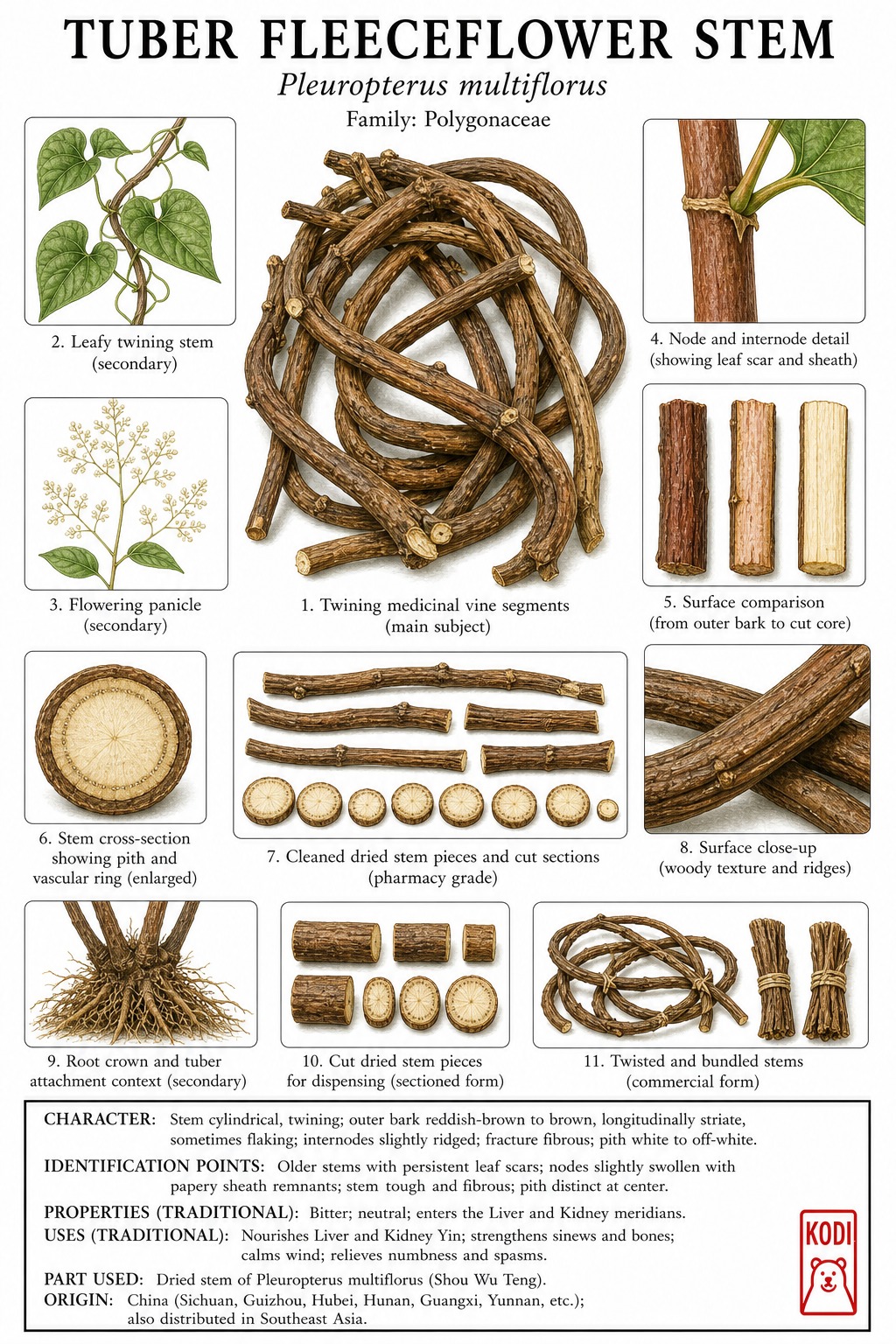
Known in TCM as Shou Wu Teng (首乌藤), this sweet and slightly bitter, neutral herb enters the Heart and Liver. Traditionally, it nourishes blood and calms the spirit ... Shou Wu Teng is used for insomnia, restless sleep, irritability, and deficiency-related agitation, most often applied for insomnia, anxiety, and joint pain. Modern research has identified Stilbene among its active constituents.
Part used: Stem
Also Known As
Latin: Caulis Polygoni Multiflori | Pinyin: Shou Wu Teng | Chinese: 首乌藤
TCM Properties
- Taste
- sweet, slightly bitter
- Temperature
- neutral
- Channels
- Heart, Liver
Traditional Use
Primary Actions
- Nourishes blood and calms the spirit ... Shou Wu Teng is used for insomnia, restless sleep, irritability, and deficiency-related agitation.
- Unblocks the channels and relieves discomfort ... traditional use extends to body aches, numbness, and mild joint or sinew discomfort where nourishment and relaxation are both needed.
- Dispels wind and relieves itching ... the stem is also used for itchy skin and restless wind-related presentations.
Secondary Actions
- This page must stay on the vine-and-node medicinal stem and remain distinct from both raw and prepared He Shou Wu root pages.
- The same plant family identity that gives the stem its calming reputation also brings real hepatotoxicity questions, so this is not a carefree sleep herb.
Classic Formulas
- Night-restlessness formulas with Suan Zao Ren or Bai Zi Ren ... common strategy when sleep is poor and the blood is insufficient to anchor the spirit.
- Wind-itching combinations with Bai Ji Li or Chan Tui ... practical pairing logic when the stem is used for pruritus.
- Channel-relaxing pairings with Ji Xue Teng or Sang Ji Sheng ... used when deficiency and mild obstruction coexist.
Classical References
- Traditional herbology records Shou Wu Teng as a Heart-Liver vine that nourishes blood, calms the spirit, unblocks the channels, and relieves itching.
- Its distinction from He Shou Wu root is fundamental ... the stem is more calming and channel-relaxing, while the root pages carry the heavier tonic and toxicology identity.
Modern Research
Active Compounds
- Stilbene glycosides ... signature Polygonum-family constituents discussed across the stem and root literature
- Anthraquinone-related compounds ... relevant both to pharmacology and to hepatotoxicity concern
- Other processing-sensitive and content-variable constituents ... important because source quality influences both effect and risk
Studied Effects
- A 2026 study identified and verified anti-insomnia compounds from Polygoni Multiflori Caulis, providing a direct modern correlate for the classic sleep-facing use of Shou Wu Teng (PMID 41325769).
- A 2025 study analyzed the relationship between ingredient content and potential hepatotoxicity in Polygoni Multiflori Caulis, showing that the calming stem lane still carries real safety complexity (PMID 39163100).
- A 2022 paper specifically warned of Polygoni Multiflori Caulis-induced liver injury, which is why this page cannot be written as a simple gentle insomnia herb record (PMID 35431961).
PubMed References
- Identification and Verification of the Anti-Insomnia Compounds From Herbal Pair Albiziae Cortex and Polygoni Multiflori Caulis Using Immobilized 5-HT(1A) Receptor Chromatography. (2026)
- Correlation analysis between potential hepatotoxicity and ingredient content of polygoni multiflori caulis. (2025)
- Beware of the Potential Risks for Polygoni Multiflori Caulis-Induced Liver Injury. (2022)
Safety & Interactions
Contraindications
- Active liver disease or unexplained liver-enzyme elevation
- Long-term unsupervised use
Cautions
- Shou Wu Teng belongs to the Polygonum multiflorum family and should not be romanticized as a harmless bedtime vine.
- Authenticated sourcing, dose control, and liver-risk awareness matter here more than with ordinary gentle sleep herbs.
Conditions
Frequently Asked Questions
What is Fleeceflower Stem used for?
Fleeceflower Stem is traditionally used to Nourishes blood and calms the spirit ... Shou Wu Teng is used for insomnia, restless sleep, irritability, and deficiency-related agitation., Unblocks the channels and relieves discomfort ... traditional use extends to body aches, numbness, and mild joint or sinew discomfort where nourishment and relaxation are both needed., Dispels wind and relieves itching ... the stem is also used for itchy skin and restless wind-related presentations.. Research has investigated its effects on: A 2026 study identified and verified anti-insomnia compounds from Polygoni Multiflori Caulis, providing a direct modern correlate for the classic sleep-facing use of Shou Wu Teng (PMID 41325769).; A 2025 study analyzed the relationship between ingredient content and potential hepatotoxicity in Polygoni Multiflori Caulis, showing that the calming stem lane still carries real safety complexity (PMID 39163100)..
What are other names for Fleeceflower Stem?
Fleeceflower Stem is also known as Shou Wu Teng, Polygoni Multiflori Caulis, Fleeceflower vine stem. In TCM: 首乌藤 (Shou Wu Teng); Caulis Polygoni Multiflori.
Is Fleeceflower Stem safe during pregnancy?
The safety of Fleeceflower Stem during pregnancy has not been established. Consult a qualified healthcare provider before use.
What are the contraindications for Fleeceflower Stem?
Fleeceflower Stem should not be used in: Active liver disease or unexplained liver-enzyme elevation; Long-term unsupervised use. Consult a qualified healthcare provider before use.