Tiger's Bone
- Chinese
- 虎骨
- Pinyin
- Hu Gu
- Latin
- Os Tigris
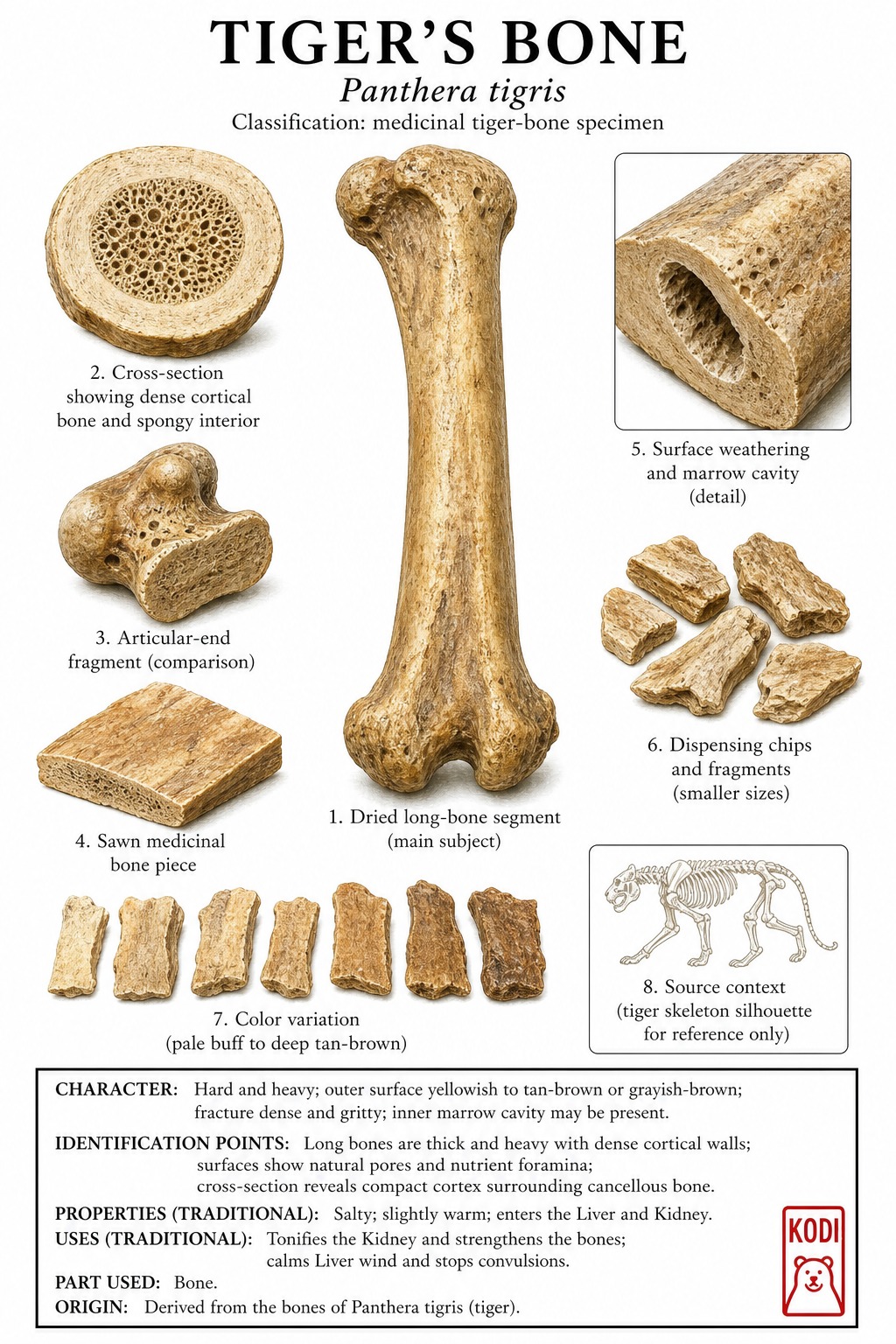
Known in TCM as Hu Gu (虎骨), this pungent, warm herb enters the Liver and Kidney. Traditionally, it historically dispelled wind and alleviated pain ... Hu Gu was classically used for severe wind-damp pain, joint weakness, and chronic obstruction affecting the bones and sinews, most often applied for joint pain, low back pain, and impotence. Modern research has identified Bone among its active constituents.
Part used: Bone
Also Known As
Latin: Os Tigris | Pinyin: Hu Gu | Chinese: 虎骨
TCM Properties
- Taste
- pungent
- Temperature
- warm
- Channels
- Liver, Kidney
Traditional Use
Primary Actions
- Historically dispelled wind and alleviated pain ... Hu Gu was classically used for severe wind-damp pain, joint weakness, and chronic obstruction affecting the bones and sinews.
- Historically strengthened bones and supported deep deficiency ... older records describe it for weakness of the low back, knees, and skeletal framework.
- Historically relieved convulsion and contracture ... some traditional indication lists include tremor, spasm, or limb contracture.
Secondary Actions
- This record is historical and documentary only ... modern legality, conservation, and ethics override the old medicinal trade completely.
- It should be read alongside substitution, wildlife-protection, and fraud-detection concerns rather than as a use-promoting monograph.
Classic Formulas
- Historical Hu Gu Jiu and related medicated-wine traditions ... used for wind-damp pain and skeletal weakness.
- Old bone-and-sinew strengthening powders or pills ... a legacy lane rather than a viable modern practice.
- Historical animal-medicine pain formulas ... now relevant mainly as context for substitution and conservation discussion.
Classical References
- Traditional herbology described Hu Gu as pungent and warm, entering the Liver and Kidney to dispel wind, stop pain, strengthen bones, and relieve convulsion.
- Modern conservation law and endangered-species protection override the historical use record.
Modern Research
Active Compounds
- Bone mineral and collagen matrix discussed mainly in historical analysis
- Species-identification markers used in forensic and authentication work
- Trade and consumer-behavior data that now dominate the modern literature more than therapeutic chemistry
Studied Effects
- A 2003 review on animal products in traditional Chinese medicine discussed both environmental impact and health hazards, making clear why tiger bone belongs in a conservation-first modern framing (PMID 12801499).
- A forensic study developed a highly sensitive species-specific PCR test for tiger bone DNA, reflecting how authentication and law-enforcement needs displaced routine medicinal use long ago (PMID 12084490).
- A 2016 study on consumption and protection of wild animals used in traditional medicine underscored the persistent demand-side pressures that make substitution and wildlife protection central modern issues (PMID 26930487).
PubMed References
- Use of animal products in traditional Chinese medicine: environmental impact and health hazards. (2003)
- An extremely sensitive species-specific ARMS PCR test for the presence of tiger bone DNA. (2002)
- Perception, Price and Preference: Consumption and Protection of Wild Animals Used in Traditional Medicine. (2016)
Safety & Interactions
Contraindications
- Pregnancy
- Blood deficiency with excessive fire
- Any attempted modern sourcing or clinical use of genuine tiger material
Cautions
- Tiger-derived medicinals are illegal, unethical, and incompatible with modern conservation practice.
- Any contemporary legitimate discussion should center on wildlife protection, laboratory identification, and historical context.
- Validated legal substitutes should be used for musculoskeletal or wind-damp treatment goals.
Conditions
- Joint Pain Traditional ★★★☆☆ JSON
- Low Back Pain Traditional ★★☆☆☆ JSON
- Impotence Traditional ★☆☆☆☆ JSON
- Facial Paralysis Traditional ★☆☆☆☆ JSON
Frequently Asked Questions
What is Tiger's Bone used for?
Tiger's Bone is traditionally used to Historically dispelled wind and alleviated pain ... Hu Gu was classically used for severe wind-damp pain, joint weakness, and chronic obstruction affecting the bones and sinews., Historically strengthened bones and supported deep deficiency ... older records describe it for weakness of the low back, knees, and skeletal framework., Historically relieved convulsion and contracture ... some traditional indication lists include tremor, spasm, or limb contracture.. Research has investigated its effects on: A 2003 review on animal products in traditional Chinese medicine discussed both environmental impact and health hazards, making clear why tiger bone belongs in a conservation-first modern framing (PMID 12801499).; A forensic study developed a highly sensitive species-specific PCR test for tiger bone DNA, reflecting how authentication and law-enforcement needs displaced routine medicinal use long ago (PMID 12084490)..
What are other names for Tiger's Bone?
Tiger's Bone is also known as Tiger bone, Tigris. In TCM: 虎骨 (Hu Gu); Os Tigris.
Is Tiger's Bone safe during pregnancy?
Tiger's Bone is not recommended during pregnancy.
What are the contraindications for Tiger's Bone?
Tiger's Bone should not be used in: Pregnancy; Blood deficiency with excessive fire; Any attempted modern sourcing or clinical use of genuine tiger material. Consult a qualified healthcare provider before use.