Tangerine Leaf
- Chinese
- 橘叶
- Pinyin
- Ju Ye
- Latin
- Folium Citri Tangerinae
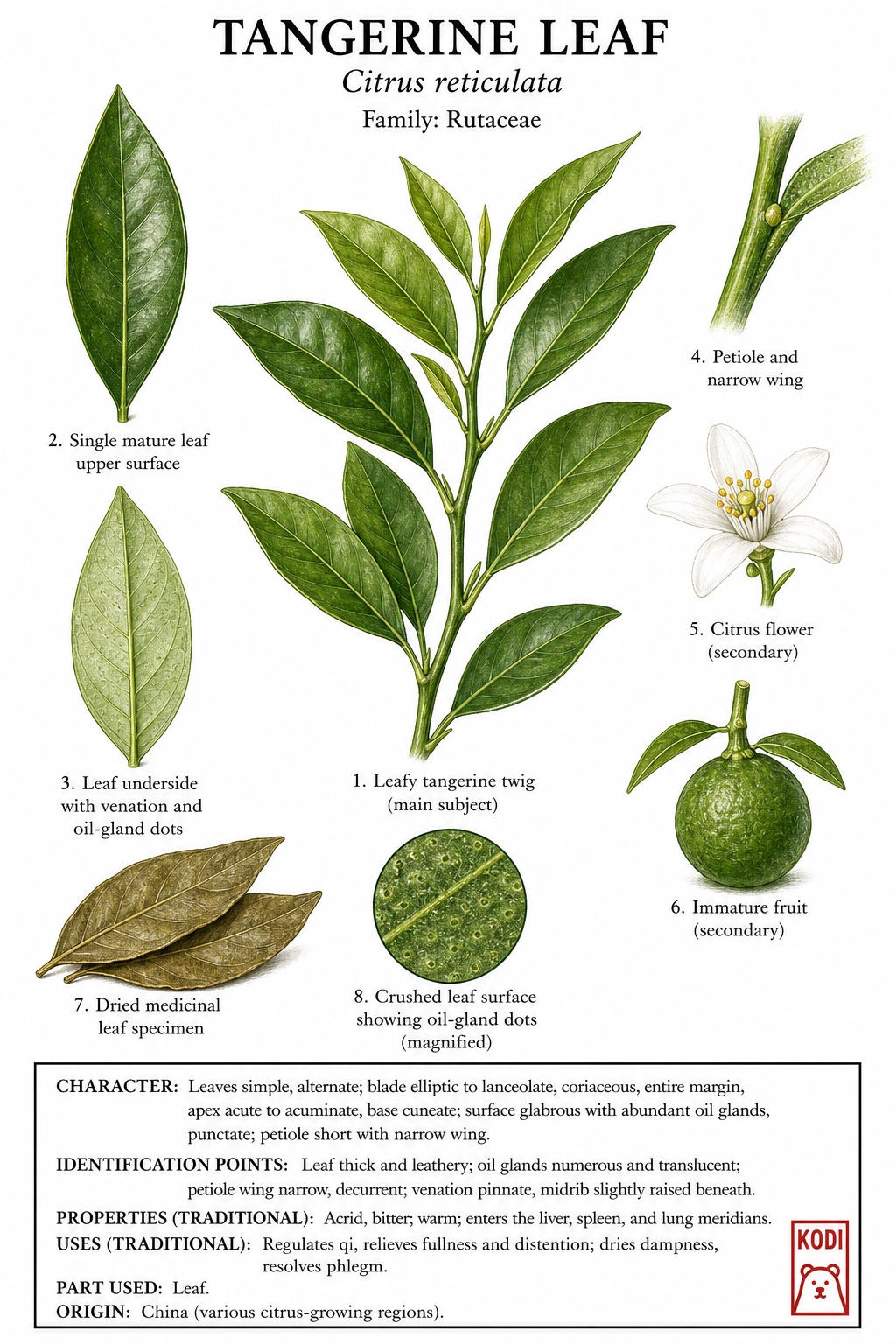
Known in TCM as Ju Ye (橘叶), this bitter and pungent, neutral herb enters the Liver. Traditionally, it soothes the Liver and resolves swelling ... Ju Ye is used when constrained Liver qi produces breast-region fullness, swelling, or tenderness, most often applied for mastitis, chest pain, and liver qi stagnation. Modern research has identified Leaf among its active constituents.
Part used: Leaf
Also Known As
Latin: Folium Citri Tangerinae | Pinyin: Ju Ye | Chinese: 橘叶
TCM Properties
- Taste
- bitter, pungent
- Temperature
- neutral
- Channels
- Liver
Traditional Use
Primary Actions
- Soothes the Liver and resolves swelling ... Ju Ye is used when constrained Liver qi produces breast-region fullness, swelling, or tenderness.
- Promotes the circulation of qi and relieves pain ... traditional use includes hypochondriac discomfort, chest or abdominal fullness, and hernia-type pain from constrained movement.
- Resolves phlegm and dissipates nodular congestion ... older use includes cough, breast abscess, and pulmonary abscess contexts where phlegm and qi constraint combine.
Secondary Actions
- This is a narrow leaf medicine, not a general citrus-foliage page, and it should stay distinct from peel and seed records in the same family.
- Ju Ye is more Liver-and-swelling focused than the peel pages and more superficial than the pain-nodule seed page.
Classic Formulas
- Ju Ye with Chai Hu or Xiang Fu ... traditional soothing-Liver pairing for rib-side discomfort and qi constraint.
- Fresh-leaf poultice or juice application for breast swelling ... a practical external route preserved in materia medica notes.
- Cough and abscess-support pairings ... used when qi stagnation and phlegm make swelling or obstruction more prominent.
Classical References
- Traditional herbology describes Ju Ye as bitter, pungent, and neutral, entering the Liver to move qi and resolve swelling.
- Its classic indication list includes hernia, chest and abdominal fullness, cough, acute mastitis, pulmonary abscess, and hypochondriac pain.
Modern Research
Active Compounds
- Leaf flavonoids and phenolic antioxidants
- Volatile citrus-leaf aromatic compounds
- Broader antioxidant secondary metabolites seen across Citrus reticulata tissues
Studied Effects
- A 2024 study on Citrus reticulata leaves reported antioxidant and anticholinergic extract potential using green-solvent biorefinery methods, giving at least some modern leaf-specific chemistry support to Ju Ye source material (PMID 38870823).
- Metabolome and transcriptome work in Citrus reticulata tissues showed marked antioxidant-capacity differences across organs, including leaves, helping explain why leaf chemistry remains a distinct subfield from peel chemistry (PMID 38397841).
- Direct indexed clinical research on Ju Ye as a stand-alone TCM leaf medicine remains sparse, so modern claims should stay conservative.
PubMed References
- Biorefinery approach with green solvents for the valorization of Citrus reticulata leaves to obtain antioxidant and anticholinergic extracts. (2024)
- Metabolome and Transcriptome Analysis Revealed the Basis of the Difference in Antioxidant Capacity in Different Tissues of Citrus reticulata 'Ponkan'. (2024)
Safety & Interactions
Contraindications
- Patterns without Liver-qi stagnation, swelling, or constrained movement
Cautions
- Modern medicinal evidence is limited and much thinner than the peel literature in the same citrus family.
- Breast pain, breast masses, or pulmonary abscess symptoms should not be self-treated on the basis of a traditional herb page alone.
Conditions
- Mastitis Traditional ★★★☆☆ JSON
- Chest Pain Traditional ★★☆☆☆ JSON
- Liver Qi Stagnation Traditional ★★☆☆☆ JSON
- Cough Traditional ★☆☆☆☆ JSON
Frequently Asked Questions
What is Tangerine Leaf used for?
Tangerine Leaf is traditionally used to Soothes the Liver and resolves swelling ... Ju Ye is used when constrained Liver qi produces breast-region fullness, swelling, or tenderness., Promotes the circulation of qi and relieves pain ... traditional use includes hypochondriac discomfort, chest or abdominal fullness, and hernia-type pain from constrained movement., Resolves phlegm and dissipates nodular congestion ... older use includes cough, breast abscess, and pulmonary abscess contexts where phlegm and qi constraint combine.. Research has investigated its effects on: A 2024 study on Citrus reticulata leaves reported antioxidant and anticholinergic extract potential using green-solvent biorefinery methods, giving at least some modern leaf-specific chemistry support to Ju Ye source material (PMID 38870823).; Metabolome and transcriptome work in Citrus reticulata tissues showed marked antioxidant-capacity differences across organs, including leaves, helping explain why leaf chemistry remains a distinct subfield from peel chemistry (PMID 38397841)..
What are other names for Tangerine Leaf?
Tangerine Leaf is also known as Ju Ye, Citrus leaf, Citri. In TCM: 橘叶 (Ju Ye); Folium Citri Tangerinae.
Is Tangerine Leaf safe during pregnancy?
The safety of Tangerine Leaf during pregnancy has not been established. Consult a qualified healthcare provider before use.
What are the contraindications for Tangerine Leaf?
Tangerine Leaf should not be used in: Patterns without Liver-qi stagnation, swelling, or constrained movement. Consult a qualified healthcare provider before use.