Sweet Wormwood Seed
- Chinese
- 青蒿子
- Pinyin
- Qing Hao Zi
- Latin
- Semen Artemisiae
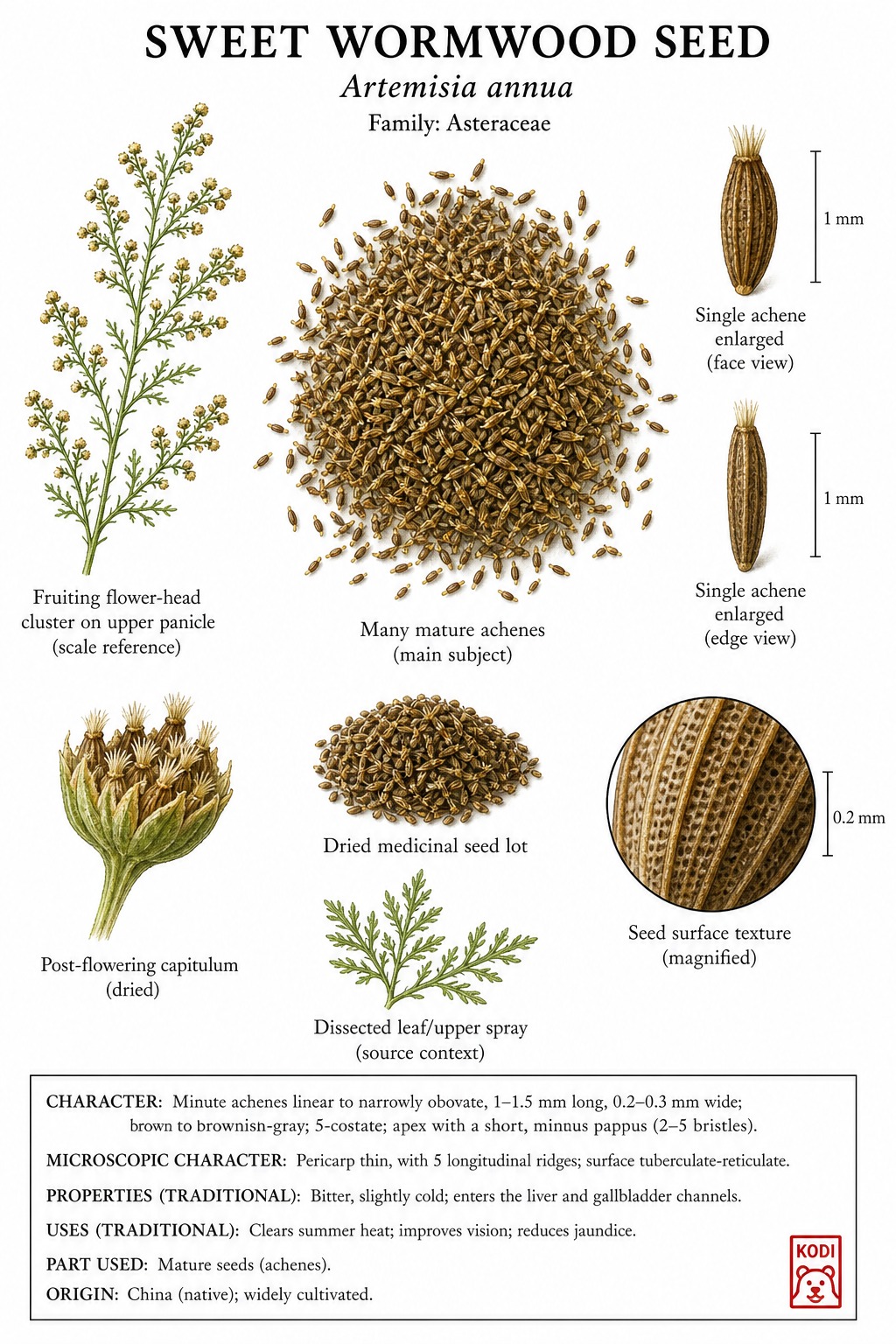
Known in TCM as Qing Hao Zi (青蒿子), this bitter and pungent, cold herb enters the Liver, Bladder, and Kidney. Traditionally, it clears heat and relieves deficiency fever ... Qing Hao Zi is a narrower fruit record traditionally used for overwork fever and lingering internal heat, most often applied for fever, dysentery, and scabies. Modern research has identified Variable among its active constituents.
Part used: Seed
Also Known As
Latin: Semen Artemisiae | Pinyin: Qing Hao Zi | Chinese: 青蒿子
TCM Properties
- Taste
- bitter, pungent
- Temperature
- cold
- Channels
- Liver, Bladder, Kidney
Traditional Use
Primary Actions
- Clears heat and relieves deficiency fever ... Qing Hao Zi is a narrower fruit record traditionally used for overwork fever and lingering internal heat.
- Improves the eyes ... older records describe seed or fruit powder use for heat-dryness affecting vision and red or uncomfortable eyes.
- Kills parasites and relieves toxic skin irritation ... regional use includes scabies, rubella-like eruptions, sores, and other superficial toxic conditions.
Secondary Actions
- This page stays on the ripened fruit or seed lane of Artemisia annua and should not be collapsed into the broader aerial-herb Qing Hao page.
- Indexed modern medicinal research is much thinner for Qing Hao Zi than for the herb, so the monograph remains intentionally conservative.
Classic Formulas
- Qing Jin San style eye-heat powder use ... a traditional fruit-powder application for dryness and accumulated heat affecting the eyes.
- Autumn and winter seed use recorded in older materia medica ... a seasonal counterpart to the spring and summer use of the fresh seedling or herb.
- External washes for sores, scabies, and wind-rash ... practical later-materia-medica use more than famous named prescriptions.
Classical References
- Modern Chinese medicinal-material terminology describes Qing Hao Zi as the fruit of Artemisia annua used for clearing heat, improving vision, and killing parasites.
- Older discussions note autumn and winter use of the fruit or seed, while spring and summer use centers on the aerial herb.
Modern Research
Active Compounds
- Variable seed-level artemisinin and related sesquiterpene lactones
- Seed lipids and sterol-containing fractions
- Phenolic and flavonoid constituents shared in part with the broader Artemisia annua plant
Studied Effects
- Indexed modern literature focused specifically on Qing Hao Zi is sparse, and much of the contemporary Artemisia annua literature still centers on the aerial herb or cultivation science rather than on medicinal seed use.
- A 2012 study found Artemisia annua leaf and seed extracts induced programmed cell death in Leishmania donovani, offering one direct but still preclinical example of seed-including pharmacology (PMID 22956747).
- Because most evidence is indirect or preclinical, this record stays narrower than the better-established Qing Hao herb page.
PubMed References
Safety & Interactions
Contraindications
- Cold-deficiency digestive patterns without heat signs
Cautions
- Do not substitute this seed record for evidence-based antimalarial treatment.
- Modern medicinal evidence is limited and much thinner than the literature on Artemisia annua herb or purified artemisinin derivatives.
Conditions
Frequently Asked Questions
What is Sweet Wormwood Seed used for?
Sweet Wormwood Seed is traditionally used to Clears heat and relieves deficiency fever ... Qing Hao Zi is a narrower fruit record traditionally used for overwork fever and lingering internal heat., Improves the eyes ... older records describe seed or fruit powder use for heat-dryness affecting vision and red or uncomfortable eyes., Kills parasites and relieves toxic skin irritation ... regional use includes scabies, rubella-like eruptions, sores, and other superficial toxic conditions.. Research has investigated its effects on: Indexed modern literature focused specifically on Qing Hao Zi is sparse, and much of the contemporary Artemisia annua literature still centers on the aerial herb or cultivation science rather than on medicinal seed use.; A 2012 study found Artemisia annua leaf and seed extracts induced programmed cell death in Leishmania donovani, offering one direct but still preclinical example of seed-including pharmacology (PMID 22956747)..
What are other names for Sweet Wormwood Seed?
Sweet Wormwood Seed is also known as Artemisia annua fruit, Qinghaozi, Sweet wormwood fruit. In TCM: 青蒿子 (Qing Hao Zi); Semen Artemisiae.
Is Sweet Wormwood Seed safe during pregnancy?
The safety of Sweet Wormwood Seed during pregnancy has not been established. Consult a qualified healthcare provider before use.
What are the contraindications for Sweet Wormwood Seed?
Sweet Wormwood Seed should not be used in: Cold-deficiency digestive patterns without heat signs. Consult a qualified healthcare provider before use.