Japanese Stemona Root
- Chinese
- 百部
- Pinyin
- Bai Bu
- Latin
- Radix Stemonae
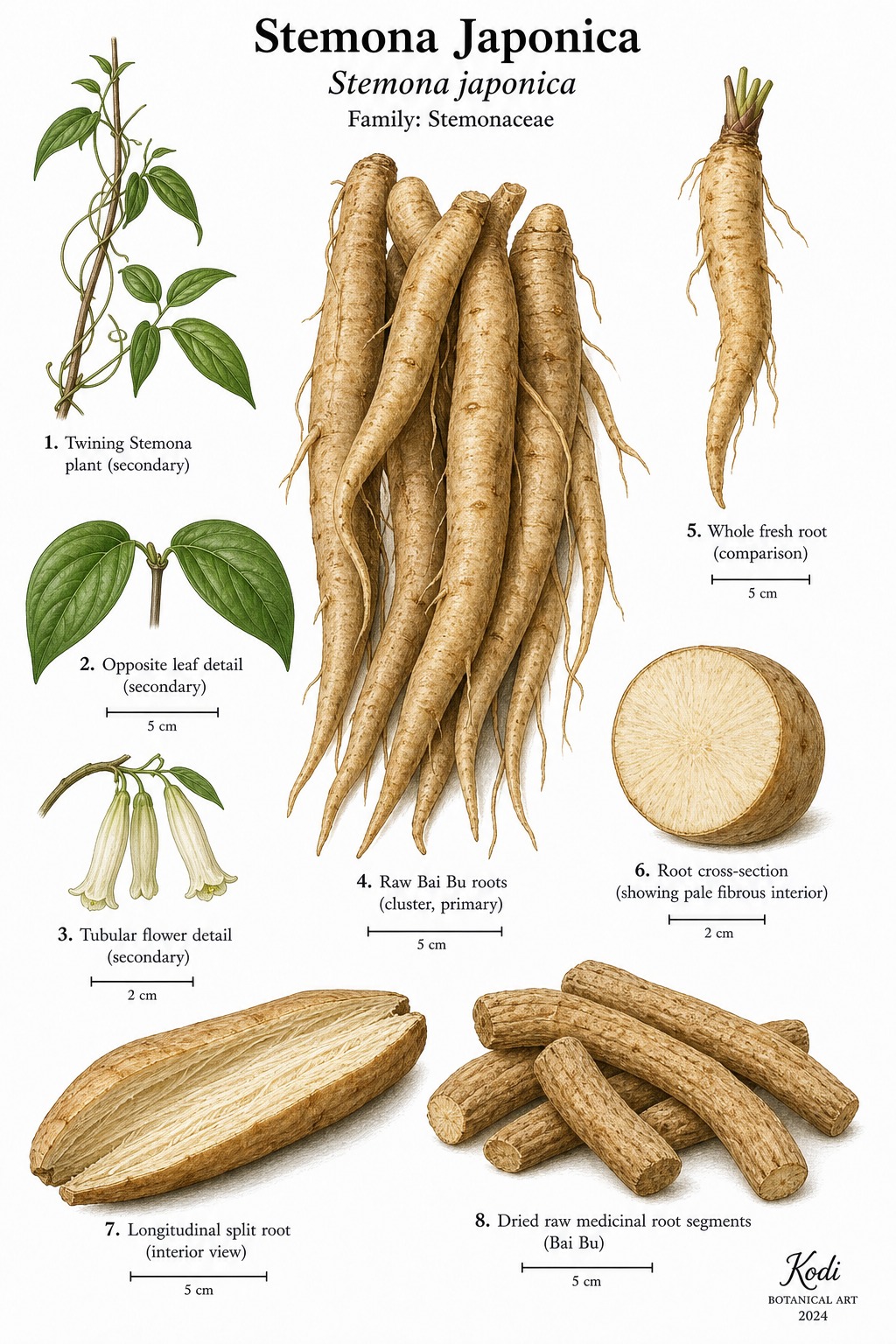
Known in TCM as Bai Bu (百部), this bitter and sweet, slightly warm herb enters the Lung. Traditionally, it moistens the Lung and stops cough ... raw Bai Bu is used for chronic cough, lingering dry cough, and certain stubborn cough patterns with weakness or dryness, most often applied for cough, dry cough, and productive cough. Modern research has identified Stemona among its active constituents.
Part used: Root
Also Known As
Latin: Radix Stemonae | Pinyin: Bai Bu | Chinese: 百部
TCM Properties
- Taste
- bitter, sweet
- Temperature
- slightly warm
- Channels
- Lung
Traditional Use
Primary Actions
- Moistens the Lung and stops cough ... raw Bai Bu is used for chronic cough, lingering dry cough, and certain stubborn cough patterns with weakness or dryness.
- Kills parasites and lice ... the raw root lane keeps the classic external-use and anti-parasitic identity more visibly than the prepared cough-facing sibling.
- Addresses both internal cough use and external infestation traditions ... the raw page should not be flattened into the gentler prepared form.
Secondary Actions
- This page stays raw-root-forward and distinct from `prepared-root-of-japanese-stemona`, which is darker, cleaner, and more narrowly internal-use-facing.
- Compared with the prepared form, raw Bai Bu keeps more of the older pest-killing and external-use identity.
Classic Formulas
- Bai Bu Wan lineage ... classical antitussive use of Bai Bu for chronic or stubborn cough.
- External powders and washes for lice or parasite-related skin problems ... a classic raw-root lane.
- Cough pairings with Zi Wan and Jie Geng ... common logic when moistening and downward Lung regulation are both needed.
Classical References
- Traditional Chinese medicine places Bai Bu in the Lung system for stopping cough while also preserving an older insecticidal and parasite-killing identity.
- The raw herb is broader and rougher in character than the prepared pharmacy form.
Modern Research
Active Compounds
- Stemona alkaloids
- Maistemonine-class alkaloids
- Additional antitussive and anti-inflammatory root fractions
Studied Effects
- A 2021 review summarized the traditional uses, phytochemistry, and pharmacology of Stemona species, reinforcing Bai Bu's long cough-relieving role across the Stemona medicinal family (PMID 32726680).
- A 2010 study reported antitussive and central respiratory depressant effects of Stemona tuberosa, providing a modern correlate for Bai Bu's longstanding cough-suppressing use (PMID 20219659).
- A 2023 paper identified anti-inflammatory maistemonine-class alkaloids from Stemona japonica, adding direct species-level support for the raw Japanese Stemona lane (PMID 36913154).
PubMed References
Safety & Interactions
Cautions
- High doses or poor-quality Stemona material may cause nausea, vomiting, headache, or central nervous system effects.
- Evidence for the raw root lane is often drawn from the broader Stemona medicinal family rather than one standardized Japanese Stemona product.
Conditions
- Cough Traditional ★★★★☆ JSON
- Dry Cough Traditional ★★★☆☆ JSON
- Productive Cough Traditional ★★☆☆☆ JSON
- Intestinal Parasites Traditional ★★☆☆☆ JSON
Frequently Asked Questions
What is Japanese Stemona Root used for?
Japanese Stemona Root is traditionally used to Moistens the Lung and stops cough ... raw Bai Bu is used for chronic cough, lingering dry cough, and certain stubborn cough patterns with weakness or dryness., Kills parasites and lice ... the raw root lane keeps the classic external-use and anti-parasitic identity more visibly than the prepared cough-facing sibling., Addresses both internal cough use and external infestation traditions ... the raw page should not be flattened into the gentler prepared form.. Research has investigated its effects on: A 2021 review summarized the traditional uses, phytochemistry, and pharmacology of Stemona species, reinforcing Bai Bu's long cough-relieving role across the Stemona medicinal family (PMID 32726680).; A 2010 study reported antitussive and central respiratory depressant effects of Stemona tuberosa, providing a modern correlate for Bai Bu's longstanding cough-suppressing use (PMID 20219659)..
What are other names for Japanese Stemona Root?
Japanese Stemona Root is also known as Stemona japonica, Raw Bai Bu, Stemona root. In TCM: 百部 (Bai Bu); Radix Stemonae.
Is Japanese Stemona Root safe during pregnancy?
The safety of Japanese Stemona Root during pregnancy has not been established. Consult a qualified healthcare provider before use.