Lilac Daphne Stem
- Chinese
- 芫花条
- Pinyin
- Yuan Hua Tiao
- Latin
- Caulis Genkwa
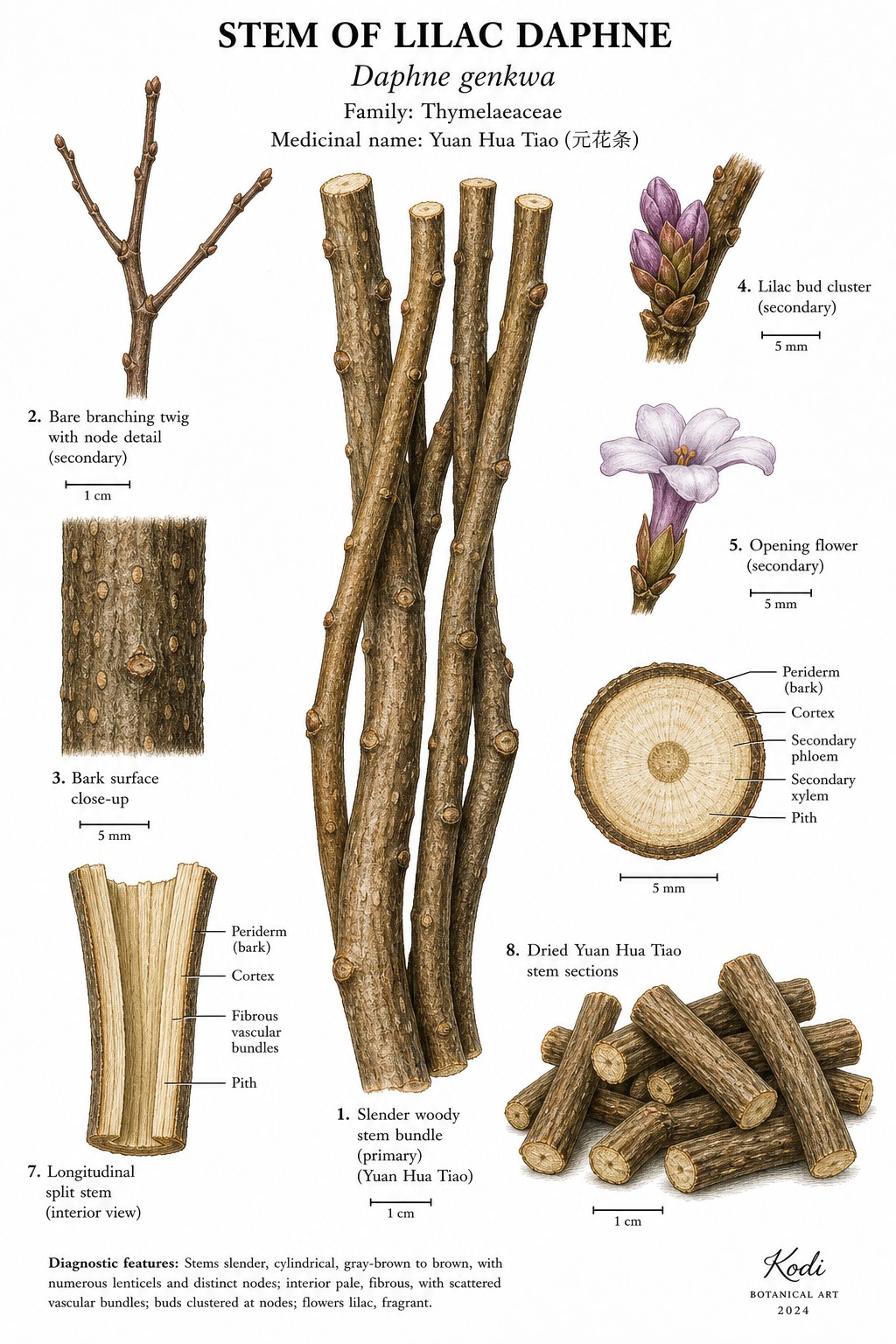
Known in TCM as Yuan Hua Tiao (芫花条), this pungent and bitter, warm herb enters the Lung, Large Intestine, and Kidney. Traditionally, it drastically drives out retained fluid in older herbology ... Yuan Hua Tiao is a harsh purgative historical lane used for stubborn water retention and chest-abdominal accumulations, most often applied for edema, cough, and asthma. Modern research has identified Daphnane among its active constituents.
Part used: Stem
Also Known As
Latin: Caulis Genkwa | Pinyin: Yuan Hua Tiao | Chinese: 芫花条
TCM Properties
- Taste
- pungent, bitter
- Temperature
- warm
- Channels
- Lung, Large Intestine, Kidney
Traditional Use
Primary Actions
- Drastically drives out retained fluid in older herbology ... Yuan Hua Tiao is a harsh purgative historical lane used for stubborn water retention and chest-abdominal accumulations.
- Breaks through phlegm-fluid obstruction ... traditional logic overlaps with the better-known flower-bud lane when cough, wheezing, or fullness reflect retained fluids rather than simple dryness.
- Has an external toxic-clearing lane ... plant material from Daphne genkwa has also been used topically for certain sores, parasites, or chronic skin lesions.
Secondary Actions
- This record stays deliberately conservative because modern standard references focus much more on Genkwa flower buds and root bark than on a standardized stem-only dispensing item.
- The imported stem page is best understood as a historical or regional offshoot of the same toxic Daphne genkwa medicinal family, not as a gentle everyday herb.
Classic Formulas
- Harsh water-draining combinations for severe retained-fluid patterns ... documentary context only and not a casual self-care use lane.
- Phlegm-fluid cough and wheezing formulas built around Genkwa-family material ... relevant as historical background rather than routine recommendation.
- Topical parasite or sore applications ... a secondary traditional route where the plant's irritant potency was used externally.
Classical References
- Older herb glossaries preserve Yuan Hua Tiao as a purging-by-pressure and water-draining lane within the Genkwa medicinal family.
- The major safety fact is that Daphne genkwa material is toxic and strongly downward-directing, so source part and dose matter.
Modern Research
Active Compounds
- Daphnane diterpenes
- Stem sesquiterpenoids
- Flavonoids such as tiliroside and related constituents
Studied Effects
- A 2024 review summarized the ethnopharmacology, phytochemistry, and pharmacology of Daphne genkwa, providing the best broad modern frame for this toxic medicinal plant family even though much of the literature centers on the flower buds (PMID 38906384).
- A stem-focused 2025 constituent paper isolated diverse sesquiterpenoids from the stems of Daphne genkwa, giving direct chemical support for keeping the stem page distinct instead of borrowing only flower-bud chemistry (PMID 38529763).
- A 2022 overview of yuanhuacin and related daphnane diterpenes highlights the potent anti-inflammatory and anticancer interest of Genkwa compounds, while also underscoring why exaggerated safety claims would be inappropriate (PMID 35204693).
PubMed References
- Daphne genkwa: Ethnopharmacology, phytochemistry and pharmacology of an important traditional Chinese medicine. (2024)
- Target isolation of diverse sesquiterpenoid from the stems of Daphne genkwa based on molecular networking. (2025)
- Yuanhuacin and Related Anti-Inflammatory and Anticancer Daphnane Diterpenes from Genkwa Flos-An Overview. (2022)
Safety & Interactions
Contraindications
- Pregnancy
- Frailty, dehydration, or weak digestion
- Use without trained supervision
Cautions
- Daphne genkwa is a toxic plant family and this stem page should be treated as a historical high-risk record, not a casual modern recommendation.
- Most modern data come from flower buds or broader whole-plant chemistry rather than standardized stem-only clinical preparations.
- Classical incompatibility discussions around Gan Cao and related dispensing cautions still matter when documenting Genkwa-family material.
Conditions
Frequently Asked Questions
What is Lilac Daphne Stem used for?
Lilac Daphne Stem is traditionally used to Drastically drives out retained fluid in older herbology ... Yuan Hua Tiao is a harsh purgative historical lane used for stubborn water retention and chest-abdominal accumulations., Breaks through phlegm-fluid obstruction ... traditional logic overlaps with the better-known flower-bud lane when cough, wheezing, or fullness reflect retained fluids rather than simple dryness., Has an external toxic-clearing lane ... plant material from Daphne genkwa has also been used topically for certain sores, parasites, or chronic skin lesions.. Research has investigated its effects on: A 2024 review summarized the ethnopharmacology, phytochemistry, and pharmacology of Daphne genkwa, providing the best broad modern frame for this toxic medicinal plant family even though much of the literature centers on the flower buds (PMID 38906384).; A stem-focused 2025 constituent paper isolated diverse sesquiterpenoids from the stems of Daphne genkwa, giving direct chemical support for keeping the stem page distinct instead of borrowing only flower-bud chemistry (PMID 38529763)..
What are other names for Lilac Daphne Stem?
Lilac Daphne Stem is also known as Daphne genkwa stem, Genkwa stem, Yuan Hua twig lane. In TCM: 芫花条 (Yuan Hua Tiao); Caulis Genkwa.
Is Lilac Daphne Stem safe during pregnancy?
Lilac Daphne Stem is not recommended during pregnancy.
What are the contraindications for Lilac Daphne Stem?
Lilac Daphne Stem should not be used in: Pregnancy; Frailty, dehydration, or weak digestion; Use without trained supervision. Consult a qualified healthcare provider before use.