Starch
- Chinese
- 淀粉
- Pinyin
- Dian Fen
- Latin
- Amylum
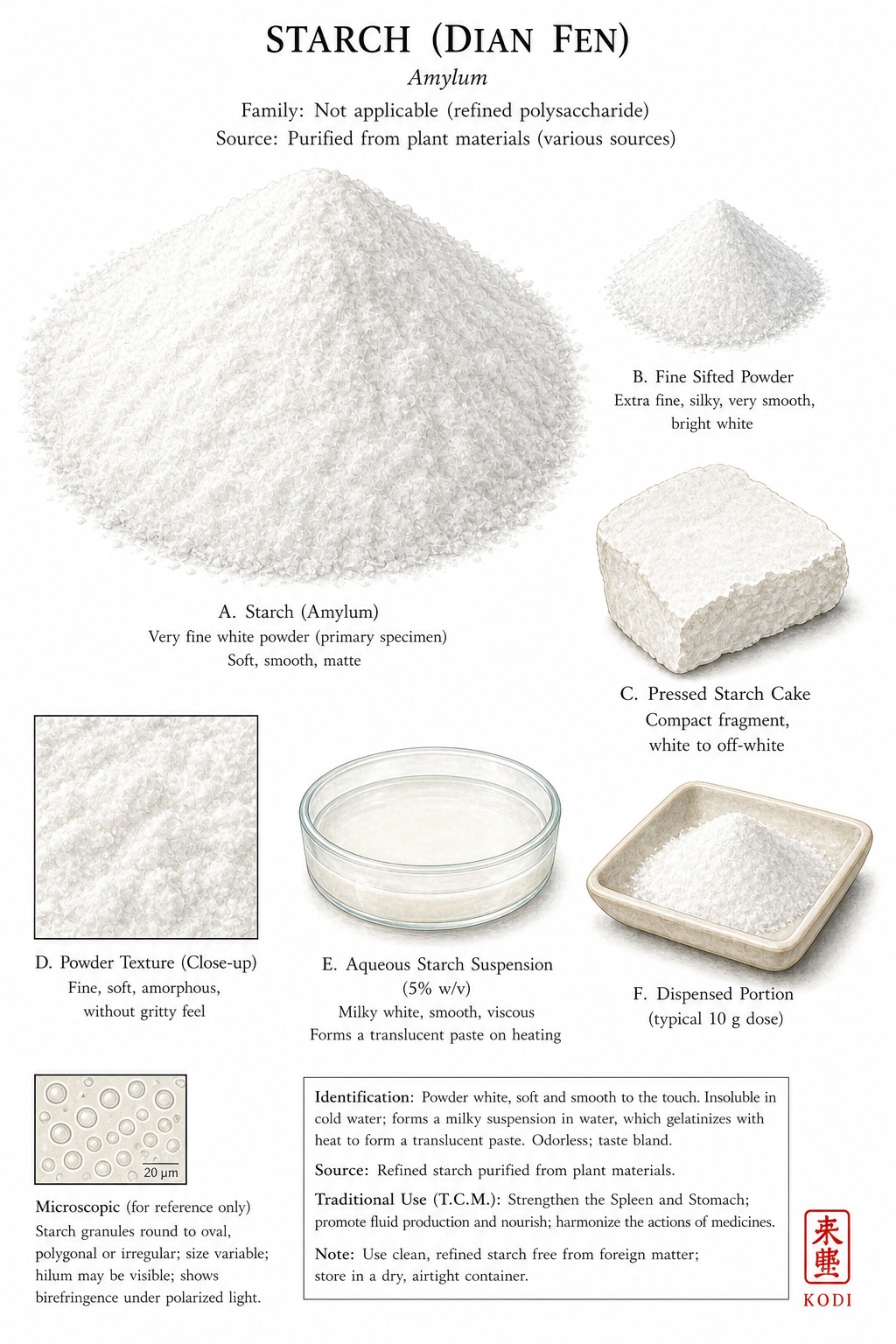
Known in TCM as Dian Fen (淀粉), this sweet, neutral herb enters the Spleen and Stomach. Traditionally, it acts mainly as a neutral medicinal starch powder or pharmacy adjunct rather than as a strong stand-alone herb. Modern research has identified Amylose among its active constituents.
Part used: Starch
Also Known As
Latin: Amylum | Pinyin: Dian Fen | Chinese: 淀粉
TCM Properties
- Taste
- sweet
- Temperature
- neutral
- Channels
- Spleen, Stomach
Traditional Use
Primary Actions
- Acts mainly as a neutral medicinal starch powder or pharmacy adjunct rather than as a strong stand-alone herb.
- Provides a soothing, absorbent base in topical powder traditions for minor superficial irritation, rubbing, or moisture control.
- Occupies a boundary between food material, excipient, and small-scale medicinal support rather than carrying a major classical therapeutic identity of its own.
Secondary Actions
- This record should stay on generic medicinal starch and not be overcommitted to a single crop source such as wheat, rice, potato, or corn.
- Because indexed herb-specific research is extremely limited, the page is intentionally documentary and conservative.
Classic Formulas
- Topical powder-base use for mild irritant or weeping lesions ... practical pharmacy logic rather than a famous named formula lane.
- Pill and powder excipient use ... one of the main historical reasons medicinal starch was stocked.
- Simple soothing paste traditions from food-medicine overlap ... the most realistic low-intensity use context.
Classical References
- Later materia medica treat Dian Fen more as a medicinal material or excipient than as a major headline herb.
- Its significance is practical and pharmaceutical rather than pharmacologically dramatic.
Modern Research
Active Compounds
- Amylose
- Amylopectin
Studied Effects
- Modern discussion of amylum is largely physicochemical and pharmaceutical rather than focused on a distinct TCM herb evidence base.
- Because no strong verified PubMed herb-specific line was identified for Dian Fen itself, the modern section remains intentionally restrained.
Safety & Interactions
Contraindications
- Known allergy or contamination concern tied to the source starch material
Cautions
- A soothing starch powder is not a substitute for proper treatment of infected wounds, deep burns, or progressive rashes.
- Source material and purity matter because the name describes a broad material class rather than one standardized plant.
Frequently Asked Questions
What is Starch used for?
Starch is traditionally used to Acts mainly as a neutral medicinal starch powder or pharmacy adjunct rather than as a strong stand-alone herb., Provides a soothing, absorbent base in topical powder traditions for minor superficial irritation, rubbing, or moisture control., Occupies a boundary between food material, excipient, and small-scale medicinal support rather than carrying a major classical therapeutic identity of its own.. Research has investigated its effects on: Modern discussion of amylum is largely physicochemical and pharmaceutical rather than focused on a distinct TCM herb evidence base.; Because no strong verified PubMed herb-specific line was identified for Dian Fen itself, the modern section remains intentionally restrained..
What are other names for Starch?
Starch is also known as Amylum. In TCM: 淀粉 (Dian Fen); Amylum.
Is Starch safe during pregnancy?
Starch is generally considered safe during pregnancy in normal amounts. Therapeutic or concentrated doses should be discussed with a qualified healthcare provider before use.
What are the contraindications for Starch?
Starch should not be used in: Known allergy or contamination concern tied to the source starch material. Consult a qualified healthcare provider before use.