Silkworm Droppings
- Chinese
- 蚕沙
- Pinyin
- Can Sha
- Latin
- Excrementum Bombycis Mori
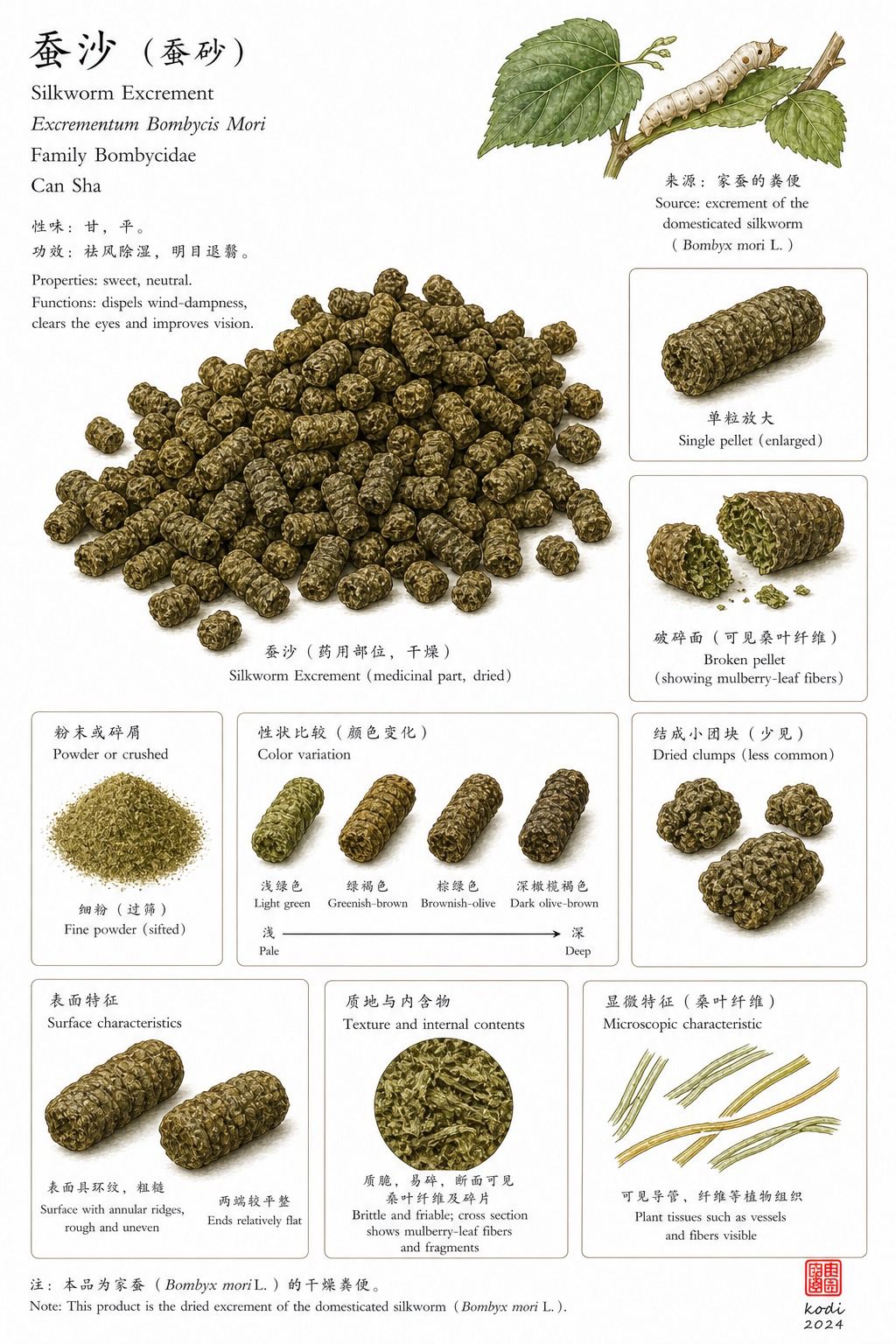
Known in TCM as Can Sha (蚕沙), this pungent and sweet, warm herb enters the Liver, Spleen, and Stomach. Traditionally, it dispels wind-dampness and unblocks the channels for joint pain, heaviness, numbness, and rheumatic painful obstruction, most often applied for joint pain, abdominal pain, and diarrhea. Modern research has identified Chlorophyll among its active constituents.
Part used: Faeces
Also Known As
Latin: Excrementum Bombycis Mori | Pinyin: Can Sha | Chinese: 蚕沙
TCM Properties
- Taste
- pungent, sweet
- Temperature
- warm
- Channels
- Liver, Spleen, Stomach
Traditional Use
Primary Actions
- Dispels wind-dampness and unblocks the channels for joint pain, heaviness, numbness, and rheumatic painful obstruction.
- Harmonizes the Stomach and transforms turbid dampness, especially for abdominal pain, vomiting, diarrhea, and cramping when dampness obstructs the middle burner.
- Activates Blood and frees the collaterals in older use for limb pain, menstrual irregularity, and obstructive discomfort.
- Relieves itching and can be used externally for damp or wind-related skin irritation.
Secondary Actions
- Can Sha is the canonical dried mulberry-fed silkworm-droppings medicine and should not be confused with `Jiang Can`, the stiff silkworm body medicine.
- Traditional sources also recognize `Wan Can Sha` as a related naming lane, but the core material remains the same drug family.
Classic Formulas
- Can Shi Tang and related damp-turbidity digestive formulas ... the classic middle-burner use for vomiting, diarrhea, and leg cramping.
- Wind-damp Bi combinations with Sang Zhi, Fang Ji, or Yi Yi Ren ... the usual joint-and-channel context.
- External washes or warm compresses ... traditional practice for itching, swelling, and damp skin complaints.
Classical References
- Traditional herbology describes Can Sha as pungent, sweet, and warm, entering the Liver, Spleen, and Stomach.
- Classical texts consistently emphasize two main lanes ... wind-damp joint pain and damp-turbidity digestive upset.
- Older commentary also notes that Can Sha is mild and non-toxic, which helps explain its long use in external as well as internal applications.
Modern Research
Active Compounds
- Chlorophyll derivatives and related pigment metabolites
- Flavonoids and megastigmane sesquiterpenes
- Polyphenol-rich fractions derived from mulberry-fed silkworm digestion
Studied Effects
- A 2018 zebrafish study reported skin-depigmenting activity from silkworm droppings, reflecting continued interest in topical bioactivity rather than only internal traditional use (PMID 29356892).
- A 2011 phytochemical study isolated megastigmane sesquiterpenes from silkworm droppings and reported promotion of HO-1 and SIRT1 activity in cell models (PMID 21544718).
- A companion 2011 study isolated flavonoids from silkworm droppings and found heme oxygenase-1 promoting activity, supporting ongoing antioxidant and anti-inflammatory interest in the material (PMID 21462044).
PubMed References
- Skin depigmenting action of silkworm (Bombyx mori L.) droppings in zebrafish. (2018)
- Isolation of megastigmane sesquiterpenes from the silkworm (Bombyx mori L.) droppings and their promotion activity on HO-1 and SIRT1. (2011)
- Flavonoids from silkworm droppings and their promotional activities on heme oxygenase-1. (2011)
Safety & Interactions
Contraindications
- Dry heat or Yin-deficiency patterns without dampness or obstruction
- Use of contaminated or moldy animal byproduct material
Cautions
- Only properly cleaned medicinal material should be used because poor handling can introduce contamination.
- Most modern evidence is preclinical and does not justify broad internal claims beyond the traditional pattern-based uses.
Conditions
- Joint Pain Traditional ★★★☆☆ JSON
- Abdominal Pain Traditional ★★★☆☆ JSON
- Diarrhea Traditional ★★★☆☆ JSON
- Rheumatism Traditional ★★★☆☆ JSON
Frequently Asked Questions
What is Silkworm Droppings used for?
Silkworm Droppings is traditionally used to Dispels wind-dampness and unblocks the channels for joint pain, heaviness, numbness, and rheumatic painful obstruction., Harmonizes the Stomach and transforms turbid dampness, especially for abdominal pain, vomiting, diarrhea, and cramping when dampness obstructs the middle burner., Activates Blood and frees the collaterals in older use for limb pain, menstrual irregularity, and obstructive discomfort., Relieves itching and can be used externally for damp or wind-related skin irritation.. Research has investigated its effects on: A 2018 zebrafish study reported skin-depigmenting activity from silkworm droppings, reflecting continued interest in topical bioactivity rather than only internal traditional use (PMID 29356892).; A 2011 phytochemical study isolated megastigmane sesquiterpenes from silkworm droppings and reported promotion of HO-1 and SIRT1 activity in cell models (PMID 21544718)..
What are other names for Silkworm Droppings?
Silkworm Droppings is also known as Silkworm excrement, Silkworm feces. In TCM: 蚕沙 (Can Sha); Excrementum Bombycis Mori.
Is Silkworm Droppings safe during pregnancy?
The safety of Silkworm Droppings during pregnancy has not been established. Consult a qualified healthcare provider before use.
What are the contraindications for Silkworm Droppings?
Silkworm Droppings should not be used in: Dry heat or Yin-deficiency patterns without dampness or obstruction; Use of contaminated or moldy animal byproduct material. Consult a qualified healthcare provider before use.