White Hibiscus Flower
- Chinese
- 白槿花
- Pinyin
- Bai Jin Hua
- Latin
- Flos Hibisci Syriaci
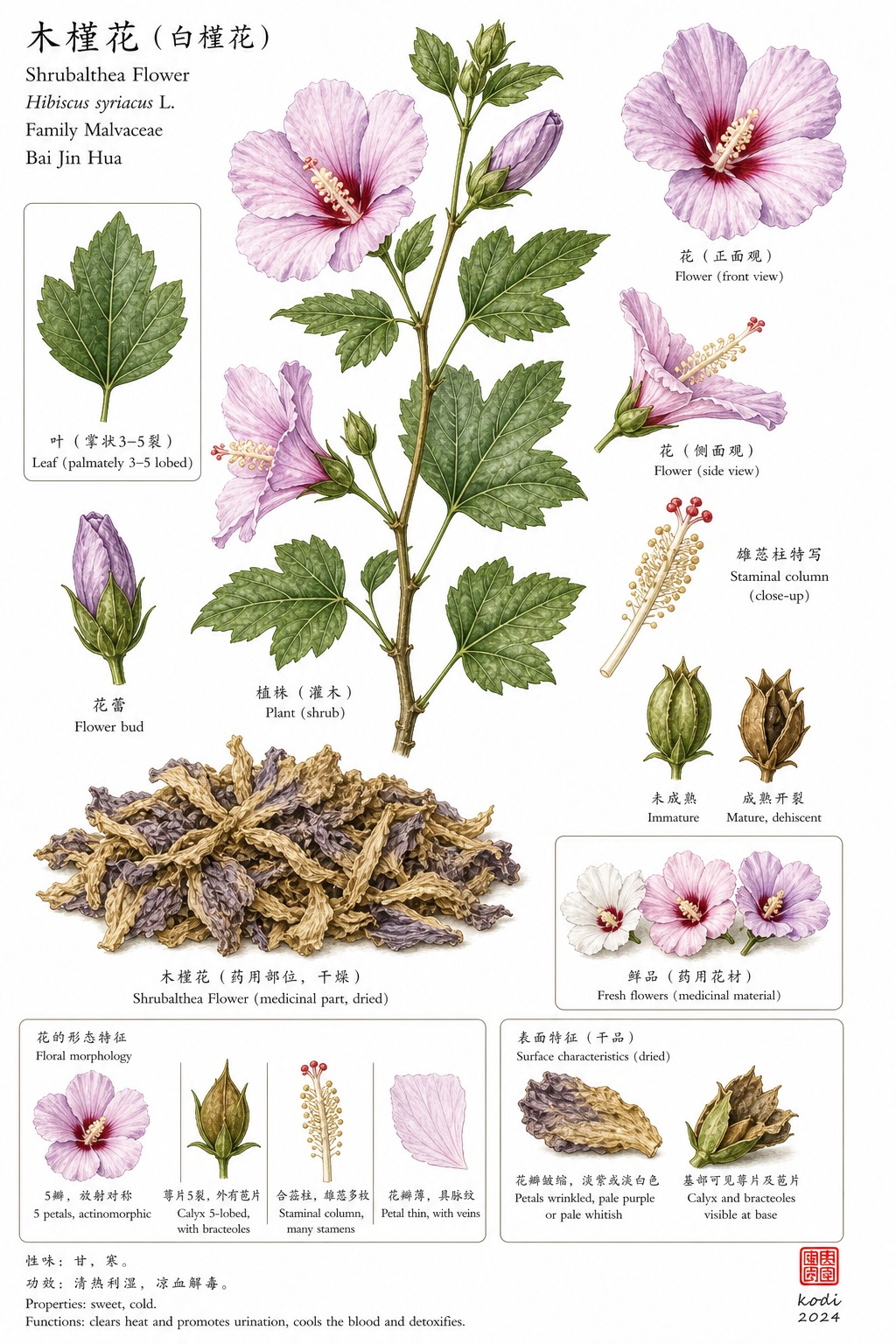
Known in TCM as Bai Jin Hua (白槿花), this sweet and slightly bitter, cool herb enters the Lung and Large Intestine. Traditionally, it clears heat and cools the Blood in traditional flower use, especially for dysenteric disorders, damp-heat leukorrhea, and heat-related intestinal irritation, most often applied for productive cough, hemoptysis, and leukorrhea. Modern research has identified Anthocyanins among its active constituents.
Part used: Flower
Also Known As
Latin: Flos Hibisci Syriaci | Pinyin: Bai Jin Hua | Chinese: 白槿花
TCM Properties
- Taste
- sweet, slightly bitter
- Temperature
- cool
- Channels
- Lung, Large Intestine
Traditional Use
Primary Actions
- Clears heat and cools the Blood in traditional flower use, especially for dysenteric disorders, damp-heat leukorrhea, and heat-related intestinal irritation.
- Relieves cough and benefits the Lung when heat irritates the upper burner, including older use for productive cough, hemoptysis, or lung-abscess-type presentations.
- Dries dampness and reduces discharge in gynecologic folk use, particularly when leukorrhea is associated with heat and damp accumulation.
Secondary Actions
- The `Bai` in Bai Jin Hua points to the white-flower lane within the broader `Mu Jin Hua` hibiscus tradition, which is why some sources emphasize Lung indications more strongly.
- This page stays with Hibiscus syriacus flower use and should not be generalized to unrelated ornamental hibiscus products.
Classic Formulas
- Heat-type cough and hemoptysis pairings with Bai He or Chuan Bei Mu ... the upper-burner interpretation seen in later folk practice.
- Damp-heat intestinal or leukorrhea combinations ... the more lower-burner use pattern of the flower.
- Simple decoctions and washes ... a practical route in regional-use traditions for discharge or inflammatory irritation.
Classical References
- Traditional listings for Mu Jin Hua and Bai Jin Hua describe a hibiscus flower that clears heat, cools Blood, dries dampness, and is used for dysentery, leukorrhea, cough, and sometimes hemoptysis.
- The white-flower lane is often remembered for Lung and discharge indications rather than for strong blood-moving action.
- This remains a minor flower medicinal with more regional and folk-documentation weight than canonical formula prominence.
Modern Research
Active Compounds
- Anthocyanins and related flavonoid pigments from the petals
- Polyphenolic anti-inflammatory constituents
- Antioxidant flower extracts studied in neuroinflammatory and inflammatory models
Studied Effects
- A 2020 study reported that polyphenols from Hibiscus syriacus flower ameliorated neuroinflammatory signaling in an LPS-treated cell model, supporting broader anti-inflammatory interest in the flower (PMID 32688141).
- A 2021 study found that anthocyanins from Hibiscus syriacus petals inhibited NLRP3-inflammasome activation in BV2 microglia cells, adding mechanistic support for anti-inflammatory activity (PMID 33613822).
- Another 2020 study reported that anthocyanins isolated from Hibiscus syriacus attenuated LPS-induced inflammation and endotoxic shock through TLR4/MD2-NF-kB pathway inhibition in preclinical work (PMID 32540784).
PubMed References
- Polyphenols from the flower of Hibiscus syriacus Linn ameliorate neuroinflammation in LPS-treated SH-SY5Y cell. (2020)
- Anthocyanins from Hibiscus syriacus L. Inhibit NLRP3 Inflammasome in BV2 Microglia Cells by Alleviating NF-kB- and ER Stress-Induced Ca(2+) Accumulation and Mitochondrial ROS Production. (2021)
- Anthocyanins isolated from Hibiscus syriacus L. attenuate lipopolysaccharide-induced inflammation and endotoxic shock by inhibiting the TLR4/MD2-mediated NF-kB signaling pathway. (2020)
Safety & Interactions
Contraindications
- Cold deficiency diarrhea without heat or dampness
Cautions
- Modern evidence for Bai Jin Hua remains preclinical and should not be stretched into strong claims for lung abscess, bleeding, or gynecologic disease.
- Persistent hemoptysis, chronic discharge, or bloody diarrhea require formal medical evaluation.
Conditions
- Productive Cough Traditional ★★☆☆☆ JSON
- Hemoptysis Traditional ★★☆☆☆ JSON
- Leukorrhea Traditional ★★★☆☆ JSON
- Dysentery Traditional ★★★☆☆ JSON
Frequently Asked Questions
What is White Hibiscus Flower used for?
White Hibiscus Flower is traditionally used to Clears heat and cools the Blood in traditional flower use, especially for dysenteric disorders, damp-heat leukorrhea, and heat-related intestinal irritation., Relieves cough and benefits the Lung when heat irritates the upper burner, including older use for productive cough, hemoptysis, or lung-abscess-type presentations., Dries dampness and reduces discharge in gynecologic folk use, particularly when leukorrhea is associated with heat and damp accumulation.. Research has investigated its effects on: A 2020 study reported that polyphenols from Hibiscus syriacus flower ameliorated neuroinflammatory signaling in an LPS-treated cell model, supporting broader anti-inflammatory interest in the flower (PMID 32688141).; A 2021 study found that anthocyanins from Hibiscus syriacus petals inhibited NLRP3-inflammasome activation in BV2 microglia cells, adding mechanistic support for anti-inflammatory activity (PMID 33613822)..
What are other names for White Hibiscus Flower?
White Hibiscus Flower is also known as Shrubalthea Flower, Mu Jin Hua, Hibiscus syriacus Flower. In TCM: 白槿花 (Bai Jin Hua); Flos Hibisci Syriaci.
Is White Hibiscus Flower safe during pregnancy?
The safety of White Hibiscus Flower during pregnancy has not been established. Consult a qualified healthcare provider before use.
What are the contraindications for White Hibiscus Flower?
White Hibiscus Flower should not be used in: Cold deficiency diarrhea without heat or dampness. Consult a qualified healthcare provider before use.