Shrub Chastetree Leaf
- Chinese
- 蔓荆叶
- Pinyin
- Man Jing Ye
- Latin
- Folium Viticis
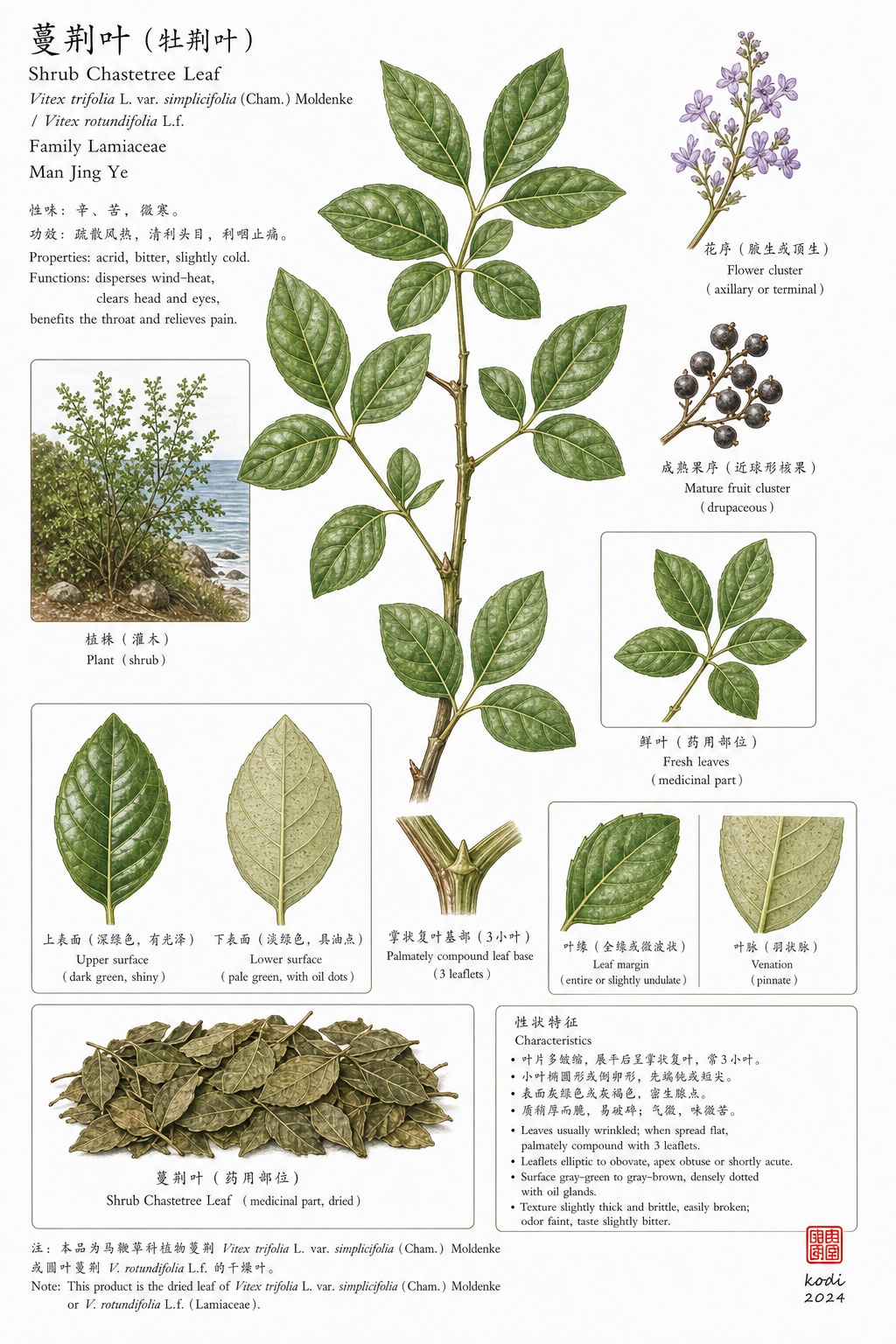
Known in TCM as Man Jing Ye (蔓荆叶), this pungent and bitter, neutral herb enters the Lung, Liver, and Stomach. Traditionally, it releases the exterior and disperses wind, especially in folk and regional use for early wind-cold patterns with body aches, headache, or lingering upper-respiratory obstruction, most often applied for productive cough, wheezing, and upper respiratory infection. Modern research has identified Volatile-oil among its active constituents.
Part used: Leaf
Also Known As
Latin: Folium Viticis | Pinyin: Man Jing Ye | Chinese: 蔓荆叶
TCM Properties
- Taste
- pungent, bitter
- Temperature
- neutral
- Channels
- Lung, Liver, Stomach
Traditional Use
Primary Actions
- Releases the exterior and disperses wind, especially in folk and regional use for early wind-cold patterns with body aches, headache, or lingering upper-respiratory obstruction.
- Transforms phlegm and relieves cough or wheezing when dampness and phlegm burden the Lung.
- Reduces swelling and relieves pain in local-use traditions for bruising, minor traumatic pain, and inflammatory swellings.
Secondary Actions
- This leaf record should stay distinct from `Man Jing Zi`, whose fruit is the better-known head-and-eye herb in mainstream materia medica.
- Published indexed research is much stronger for Vitex fruits and the genus overall than for the leaf as a stand-alone TCM medicinal.
Classic Formulas
- Leaf-decoction and powder traditions for cough, wheezing, and exterior wind patterns ... a more regional-use lane than the famous fruit formulas.
- Combined respiratory use with phlegm-transforming herbs ... the common practical setup when Man Jing Ye is used internally.
- Poultice, wash, or injury-support preparations ... traditional external logic for swelling and pain.
Classical References
- Wikibooks and regional materia medica listings place Man Jing Ye under Folium Viticis and describe it as a wind-dispersing leaf medicine rather than a simple synonym of the fruit.
- Formula and folk-use references connect the leaf with cough, asthma, and wind-cold body pain, showing a different practical emphasis from Man Jing Zi.
- Because source traditions vary, this page stays conservative and reflects the broader Vitex leaf lane instead of overstating a fully standardized pharmacopeial profile.
Modern Research
Active Compounds
- Volatile-oil constituents including cineole- and pinene-related fractions reported from Vitex leaves
- Flavonoids and phenolic compounds studied across Vitex species
- Terpenoid constituents relevant to anti-inflammatory and antimicrobial research
Studied Effects
- A 2023 review of Vitex rotundifolia and Vitex trifolia summarized phytochemistry and pharmacology across the source plants for Man Jing Zi and related leaf-bearing materials, giving the best indexed overview for this record (PMID 36822343).
- Viticis Fructus research remains more robust than stand-alone leaf research, but the broader genus literature supports continuing interest in anti-inflammatory, antimicrobial, and respiratory-relevant plant chemistry (PMID 37810114).
- This record stays conservative because direct indexed TCM clinical literature specific to Man Jing Ye as a separate medicinal leaf is comparatively limited.
PubMed References
Safety & Interactions
Contraindications
- Dry cough from Yin deficiency without phlegm or exterior obstruction
Cautions
- The leaf record is less standardized than the fruit, so commercial products and folk materials should not be assumed equivalent.
- Persistent wheezing, fever, or painful swelling need medical evaluation rather than prolonged self-treatment.
Conditions
- Productive Cough Traditional ★★★☆☆ JSON
- Wheezing Traditional ★★★☆☆ JSON
- Upper Respiratory Infection Traditional ★★☆☆☆ JSON
- Pharyngitis Traditional ★★☆☆☆ JSON
Frequently Asked Questions
What is Shrub Chastetree Leaf used for?
Shrub Chastetree Leaf is traditionally used to Releases the exterior and disperses wind, especially in folk and regional use for early wind-cold patterns with body aches, headache, or lingering upper-respiratory obstruction., Transforms phlegm and relieves cough or wheezing when dampness and phlegm burden the Lung., Reduces swelling and relieves pain in local-use traditions for bruising, minor traumatic pain, and inflammatory swellings.. Research has investigated its effects on: A 2023 review of Vitex rotundifolia and Vitex trifolia summarized phytochemistry and pharmacology across the source plants for Man Jing Zi and related leaf-bearing materials, giving the best indexed overview for this record (PMID 36822343).; Viticis Fructus research remains more robust than stand-alone leaf research, but the broader genus literature supports continuing interest in anti-inflammatory, antimicrobial, and respiratory-relevant plant chemistry (PMID 37810114)..
What are other names for Shrub Chastetree Leaf?
Shrub Chastetree Leaf is also known as Threeleaf Chastetree Leaf, Vitex trifolia Leaf. In TCM: 蔓荆叶 (Man Jing Ye); Folium Viticis.
Is Shrub Chastetree Leaf safe during pregnancy?
The safety of Shrub Chastetree Leaf during pregnancy has not been established. Consult a qualified healthcare provider before use.
What are the contraindications for Shrub Chastetree Leaf?
Shrub Chastetree Leaf should not be used in: Dry cough from Yin deficiency without phlegm or exterior obstruction. Consult a qualified healthcare provider before use.