Shrub Chastetree Fruit
- Chinese
- 蔓荆子
- Pinyin
- Man Jing Zi
- Latin
- Fructus Viticis
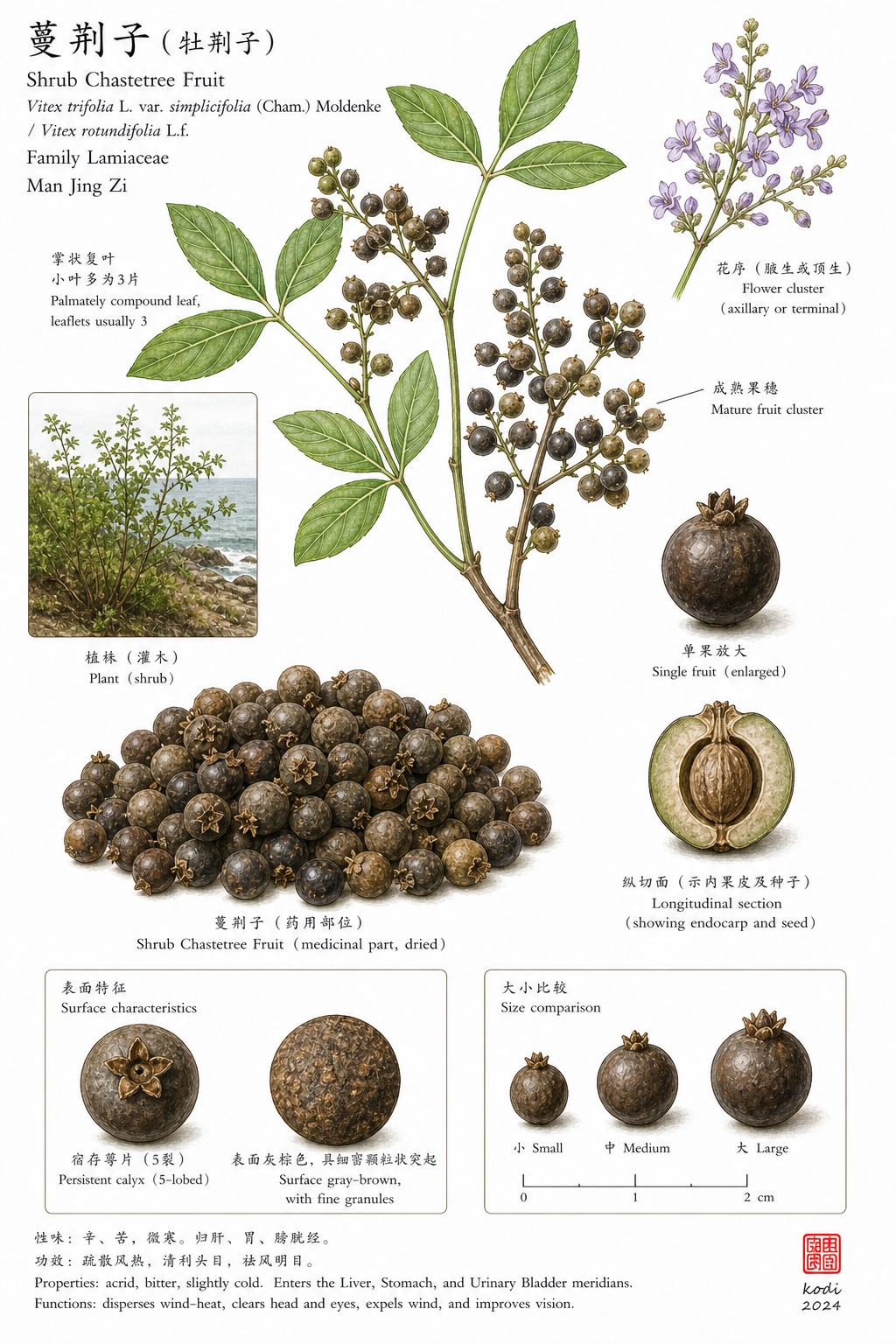
Known in TCM as Man Jing Zi (蔓荆子), this pungent and bitter, slightly cool herb enters the Bladder, Liver, and Stomach. Traditionally, it disperses wind-heat from the head and face, making it a classic herb for headache, head wind, dizziness, and heaviness affecting the upper body, most often applied for headache, migraine, and conjunctivitis. Modern research has identified Flavonoids among its active constituents.
Part used: Fruit
Also Known As
Latin: Fructus Viticis | Pinyin: Man Jing Zi | Chinese: 蔓荆子
TCM Properties
- Taste
- pungent, bitter
- Temperature
- slightly cool
- Channels
- Bladder, Liver, Stomach
Traditional Use
Primary Actions
- Disperses wind-heat from the head and face, making it a classic herb for headache, head wind, dizziness, and heaviness affecting the upper body.
- Clears and benefits the eyes in red, swollen, painful, or tearing eye presentations tied to wind-heat or Liver-channel disturbance.
- Dispels wind and relieves pain, especially for lateral or frontal headache and some damp-obstruction pain patterns reaching the head.
Secondary Actions
- Man Jing Zi is the fruit lane of the Vitex tradition and should stay distinct from `Man Jing Ye`, the more respiratory and folk-use leaf record.
- Its upward, light action explains why the herb is remembered far more for head and eye complaints than for generalized heat clearing.
Classic Formulas
- Wind-heat headache combinations with Bo He, Ju Hua, or Chuan Xiong ... the classic head-and-eye pattern for Man Jing Zi.
- Eye-support formulas with Ju Hua and Jue Ming Zi ... traditional pairings when red painful eyes accompany exterior wind or Liver heat.
- Exterior-release combinations for headache and early upper-respiratory patterns ... especially when the pathogen rises to the head.
Classical References
- Traditional herbology describes Man Jing Zi as pungent, bitter, and slightly cool, entering the Bladder, Liver, and Stomach.
- Its best-known actions are dispersing wind-heat, clearing the head and eyes, and relieving headache.
- Classic sources often note that the herb rises upward and therefore specializes in disorders above the neck.
Modern Research
Active Compounds
- Flavonoids such as casticin and related methoxylated flavones
- Volatile-oil constituents and diterpenoid fractions
- Phenolic and terpenoid compounds studied for anti-inflammatory activity
Studied Effects
- A 2023 review of Viticis Fructus summarized its traditional use for colds, headache, vertigo, and related disorders while also covering modern phytochemistry and pharmacology (PMID 37810114).
- A 2023 review on Vitex rotundifolia and Vitex trifolia surveyed the traditional medicine, phytochemistry, and pharmacology of the two source plants used in the Man Jing Zi tradition (PMID 36822343).
- Pharmacokinetic-network work on absorbed components from Viticis fructus extract explored anti-inflammatory mechanisms and helped bridge classical head-pain use with contemporary laboratory pharmacology (PMID 34139282).
PubMed References
- Traditional use, phytochemistry and pharmacology of Viticis Fructus. (2023)
- Vitex rotundifolia L. f. and Vitex trifolia L.: A review on their traditional medicine, phytochemistry, pharmacology. (2023)
- The network pharmacology integrated with pharmacokinetics to clarify the pharmacological mechanism of absorbed components from Viticis fructus extract. (2021)
Safety & Interactions
Contraindications
- Headache from Blood deficiency without exterior wind or heat
- Marked Yin deficiency dryness without the upper-body wind-heat pattern
Cautions
- Persistent headache, visual change, or neurologic symptoms should not be self-treated as a routine wind-heat pattern.
- Vitex fruit literature is largely preclinical and does not justify broad claims beyond the traditional pattern-based uses.
Conditions
Frequently Asked Questions
What is Shrub Chastetree Fruit used for?
Shrub Chastetree Fruit is traditionally used to Disperses wind-heat from the head and face, making it a classic herb for headache, head wind, dizziness, and heaviness affecting the upper body., Clears and benefits the eyes in red, swollen, painful, or tearing eye presentations tied to wind-heat or Liver-channel disturbance., Dispels wind and relieves pain, especially for lateral or frontal headache and some damp-obstruction pain patterns reaching the head.. Research has investigated its effects on: A 2023 review of Viticis Fructus summarized its traditional use for colds, headache, vertigo, and related disorders while also covering modern phytochemistry and pharmacology (PMID 37810114).; A 2023 review on Vitex rotundifolia and Vitex trifolia surveyed the traditional medicine, phytochemistry, and pharmacology of the two source plants used in the Man Jing Zi tradition (PMID 36822343)..
What are other names for Shrub Chastetree Fruit?
Shrub Chastetree Fruit is also known as Vitex Fruit, Viticis Fructus. In TCM: 蔓荆子 (Man Jing Zi); Fructus Viticis.
Is Shrub Chastetree Fruit safe during pregnancy?
The safety of Shrub Chastetree Fruit during pregnancy has not been established. Consult a qualified healthcare provider before use.
What are the contraindications for Shrub Chastetree Fruit?
Shrub Chastetree Fruit should not be used in: Headache from Blood deficiency without exterior wind or heat; Marked Yin deficiency dryness without the upper-body wind-heat pattern. Consult a qualified healthcare provider before use.