Liang Mian Zhen Root
- Chinese
- 两面针
- Pinyin
- Liang Mian Zhen
- Latin
- Zanthoxyli Radix
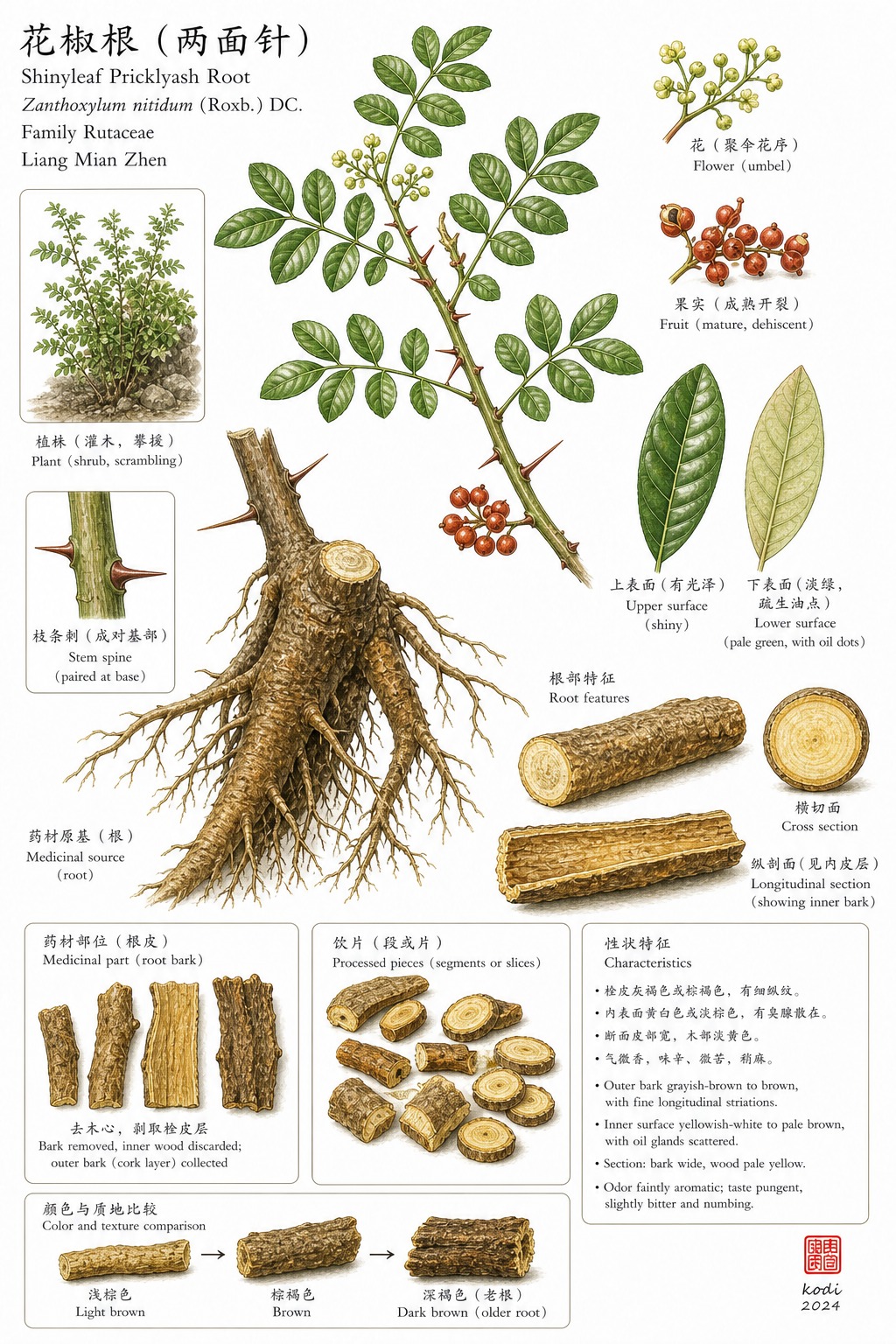
Known in TCM as Liang Mian Zhen (两面针), this bitter and pungent, neutral herb enters the Liver and Stomach. Traditionally, it moves Qi and alleviates pain, especially for toothache, epigastric pain, and abdominal pain involving local stagnation, most often applied for toothache, abdominal pain, and joint pain. Modern research has identified Benzophenanthridine among its active constituents.
Part used: Root
Also Known As
Latin: Zanthoxyli Radix | Pinyin: Liang Mian Zhen | Chinese: 两面针
TCM Properties
- Taste
- bitter, pungent
- Temperature
- neutral
- Channels
- Liver, Stomach
Traditional Use
Primary Actions
- Moves Qi and alleviates pain, especially for toothache, epigastric pain, and abdominal pain involving local stagnation.
- Invigorates Blood and dispels stasis in traumatic injury and fixed painful obstruction patterns.
- Dispels wind-dampness and unblocks the collaterals for rheumatic pain, numbness, and restricted movement.
- Resolves toxicity and reduces swelling in older use for snakebite, sore throat, and localized inflammatory swelling.
Secondary Actions
- Liang Mian Zhen is a southern Chinese analgesic specialty herb and should not be flattened into a generic prickly-ash root entry.
- Its traditional identity is closely tied to Zanthoxylum nitidum and to strong localized pain relief, including dental use.
Classic Formulas
- Sanjiuweitai-style stomach-pain formulas ... a well-known modern-traditional use when Qi stagnation and damp-heat irritate the Stomach.
- Topical or oral toothache use ... one of the most recognizable practical applications of Liang Mian Zhen.
- Wind-damp and traumatic-pain combinations with blood-moving herbs ... the usual pattern when joint pain and bruising coexist.
Classical References
- Traditional herbology describes Liang Mian Zhen as bitter and pungent, entering the Liver and Stomach to move Qi, invigorate Blood, and stop pain.
- Classical and regional sources consistently mention toothache, stomach pain, traumatic injury, rheumatic pain, and venomous snakebite.
- Chinese materia medica also classifies the root as slightly toxic, which helps explain the emphasis on dose discipline.
Modern Research
Active Compounds
- Benzophenanthridine alkaloids including nitidine chloride, chelerythrine, and sanguinarine
- Lignans, coumarins, and terpenoid constituents
- Alkaloid-rich fractions associated with anti-inflammatory and analgesic activity
Studied Effects
- A 2020 review summarized the traditional uses, phytochemistry, pharmacology, and toxicology of Zanthoxylum nitidum, confirming its historic use for stomach ache, toothache, rheumatic arthralgia, traumatic injury, and snakebite (PMID 32492492).
- An updated 2025 review focused on Zanthoxyli Radix and highlighted anti-inflammatory pharmacology, quality control, toxicity, and pharmacokinetic questions relevant to the medicinal root rather than the broader plant (PMID 39244175).
- Laboratory and translational work continues to center on anti-inflammatory and pain-relieving constituents, especially alkaloid-rich fractions that may help explain traditional analgesic use.
PubMed References
Safety & Interactions
Contraindications
- Pregnancy
- Marked deficiency without pain or obstruction pattern
- Unsuitable self-treatment of severe dental infection, abdominal pain, or snakebite
Cautions
- Liang Mian Zhen is regarded as slightly toxic in traditional sources and overdose may provoke gastrointestinal distress and other adverse effects.
- Species authentication matters because related Rutaceae roots may circulate as substitutes or adulterants.
- This herb may numb oral tissues, which is part of its appeal in folk toothache use but should not delay dental or emergency care.
Conditions
- Toothache Traditional ★★★★☆ JSON
- Abdominal Pain Traditional ★★★☆☆ JSON
- Joint Pain Traditional ★★★☆☆ JSON
- Traumatic Injury Traditional ★★★☆☆ JSON
Frequently Asked Questions
What is Liang Mian Zhen Root used for?
Liang Mian Zhen Root is traditionally used to Moves Qi and alleviates pain, especially for toothache, epigastric pain, and abdominal pain involving local stagnation., Invigorates Blood and dispels stasis in traumatic injury and fixed painful obstruction patterns., Dispels wind-dampness and unblocks the collaterals for rheumatic pain, numbness, and restricted movement., Resolves toxicity and reduces swelling in older use for snakebite, sore throat, and localized inflammatory swelling.. Research has investigated its effects on: A 2020 review summarized the traditional uses, phytochemistry, pharmacology, and toxicology of Zanthoxylum nitidum, confirming its historic use for stomach ache, toothache, rheumatic arthralgia, traumatic injury, and snakebite (PMID 32492492).; An updated 2025 review focused on Zanthoxyli Radix and highlighted anti-inflammatory pharmacology, quality control, toxicity, and pharmacokinetic questions relevant to the medicinal root rather than the broader plant (PMID 39244175)..
What are other names for Liang Mian Zhen Root?
Liang Mian Zhen Root is also known as Shinyleaf Pricklyash Root, Zanthoxylum nitidum Root. In TCM: 两面针 (Liang Mian Zhen); Zanthoxyli Radix.
Is Liang Mian Zhen Root safe during pregnancy?
Liang Mian Zhen Root is not recommended during pregnancy.
What are the contraindications for Liang Mian Zhen Root?
Liang Mian Zhen Root should not be used in: Pregnancy; Marked deficiency without pain or obstruction pattern; Unsuitable self-treatment of severe dental infection, abdominal pain, or snakebite. Consult a qualified healthcare provider before use.