Katsumada Galangal Seed
- Chinese
- 草豆蔻
- Pinyin
- Cao Dou Kou
- Latin
- Semen Alpiniae Katsumadai
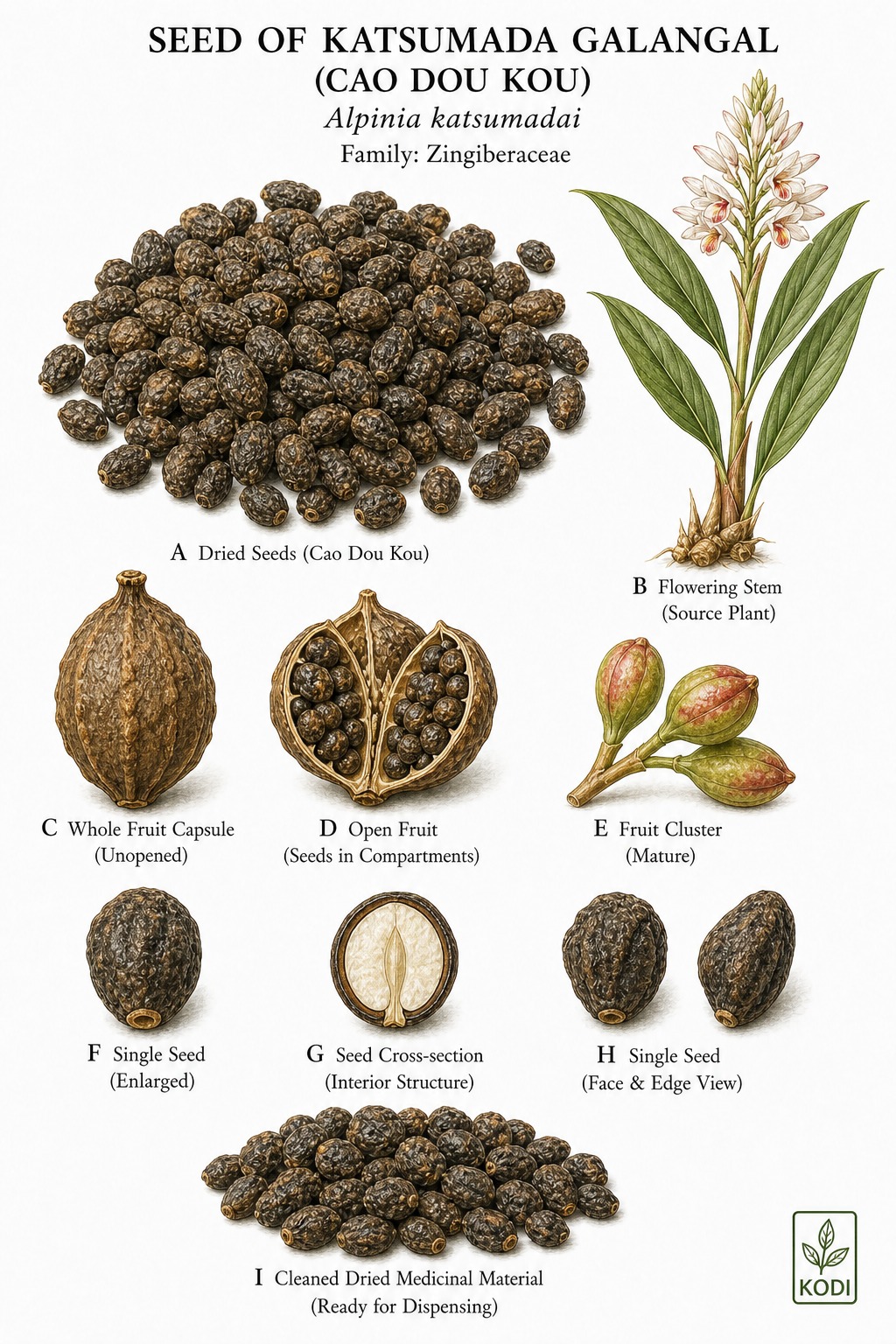
Known in TCM as Cao Dou Kou (草豆蔻), this pungent, warm herb enters the Spleen and Stomach. Traditionally, it dries dampness and awakens the Spleen ... Cao Dou Kou is used for a heavy, obstructed middle burner with poor appetite, loose stool, and greasy damp stagnation, most often applied for nausea, abdominal distension, and poor appetite. Modern research has identified Volatile among its active constituents.
Part used: Seed
Also Known As
Latin: Semen Alpiniae Katsumadai | Pinyin: Cao Dou Kou | Chinese: 草豆蔻
TCM Properties
- Taste
- pungent
- Temperature
- warm
- Channels
- Spleen, Stomach
Traditional Use
Primary Actions
- Dries dampness and awakens the Spleen ... Cao Dou Kou is used for a heavy, obstructed middle burner with poor appetite, loose stool, and greasy damp stagnation.
- Moves Qi and relieves fullness ... it helps when abdominal distension, epigastric oppression, and stagnant dampness create a blocked, swollen feeling.
- Warms the middle and stops nausea or vomiting ... the aromatic seed is chosen when cold-damp digestive upset rises upward instead of descending normally.
Secondary Actions
- This page follows the whole-seed medicinal lane and should stay linked to the `seed-of-katsumada-galangal-2` sibling rather than being treated as a different herb family.
- Cao Dou Kou overlaps in naming with Dou Kou and Cao Kou, but it should still be kept distinct from Bai Dou Kou, Hong Dou Kou, and Cao Guo in content and indexing.
Classic Formulas
- Digestive damp-obstruction combinations with Hou Po, Chen Pi, and Mu Xiang ... classic aromatic strategy for fullness, nausea, and stagnant middle-burner Qi.
- Cold-damp vomiting pairings with Gan Jiang and Ban Xia ... used when the Stomach is cold, heavy, and prone to retching.
- Loose-stool and poor-appetite combinations with Bai Zhu or Cang Zhu ... traditional approach when dampness and weak transformation coexist.
Classical References
- TCM teaching describes Cao Dou Kou as pungent and warm, entering the Spleen and Stomach to dry dampness, move Qi, warm the middle, and stop vomiting.
- Later materia medica discussions separate Cao Dou Kou more clearly from other cardamom-like aromatics, even though older texts sometimes used overlapping names.
Modern Research
Active Compounds
- Volatile oils rich in monoterpenes and sesquiterpenes ... core aromatic constituents behind the herb's fragrance and digestive activity
- Flavonoids and diarylheptanoid-related compounds ... part of the broader chemical profile discussed in recent reviews
- Seed lipids and pungent aromatic fractions ... important to both culinary and medicinal identity
Studied Effects
- A 2026 review traced Alpinia katsumadai seed from condiment use to ethnomedicine and nutraceutical interest, summarizing its chemistry and health-related research base (PMID 41696736).
- A 2026 comparative review looked at Semen Alpiniae Katsumadai alongside other aromatic digestive medicinals, which is especially useful for keeping Cao Dou Kou distinct from overlapping spice-herb names (PMID 41176135).
- Most modern evidence still clusters around chemistry, experimental pharmacology, and quality comparison rather than around large human clinical trials.
PubMed References
- Alpinia katsumadai seed from a condiment to ethnomedicine to nutraceutical, a comprehensive review of its chemistry and health benefits. (2026)
- Fructus Amomi Rotundus, Fructus Galangae, Semen Alpiniae Katsumadai and Semen Myristicae comparison of traditional medicinal uses, phytoconstituents, bioactivities. (2026)
Safety & Interactions
Contraindications
- Yin deficiency or dryness-heat without damp obstruction
- Vomiting from clear excess heat rather than cold-damp or middle-burner weakness
Cautions
- As an aromatic seed, Cao Dou Kou loses strength with excessive simmering and is often crushed or added later in decoction.
- Culinary spice use and concentrated medicinal use are related but not interchangeable.
Conditions
- Nausea Traditional ★★★★☆ JSON
- Abdominal Distension Traditional ★★★★☆ JSON
- Poor Appetite Traditional ★★★☆☆ JSON
- Diarrhea Traditional ★★★☆☆ JSON
Frequently Asked Questions
What is Katsumada Galangal Seed used for?
Katsumada Galangal Seed is traditionally used to Dries dampness and awakens the Spleen ... Cao Dou Kou is used for a heavy, obstructed middle burner with poor appetite, loose stool, and greasy damp stagnation., Moves Qi and relieves fullness ... it helps when abdominal distension, epigastric oppression, and stagnant dampness create a blocked, swollen feeling., Warms the middle and stops nausea or vomiting ... the aromatic seed is chosen when cold-damp digestive upset rises upward instead of descending normally.. Research has investigated its effects on: A 2026 review traced Alpinia katsumadai seed from condiment use to ethnomedicine and nutraceutical interest, summarizing its chemistry and health-related research base (PMID 41696736).; A 2026 comparative review looked at Semen Alpiniae Katsumadai alongside other aromatic digestive medicinals, which is especially useful for keeping Cao Dou Kou distinct from overlapping spice-herb names (PMID 41176135)..
What are other names for Katsumada Galangal Seed?
Katsumada Galangal Seed is also known as Cao Kou, Alpinia katsumadai seed, Seed of Katsumada Galangal. In TCM: 草豆蔻 (Cao Dou Kou); Semen Alpiniae Katsumadai.
Is Katsumada Galangal Seed safe during pregnancy?
The safety of Katsumada Galangal Seed during pregnancy has not been established. Consult a qualified healthcare provider before use.
What are the contraindications for Katsumada Galangal Seed?
Katsumada Galangal Seed should not be used in: Yin deficiency or dryness-heat without damp obstruction; Vomiting from clear excess heat rather than cold-damp or middle-burner weakness. Consult a qualified healthcare provider before use.