Human Urine Sediment
- Chinese
- 人中白
- Pinyin
- Ren Zhong Bai
- Latin
- Depositum Urinae Hominis
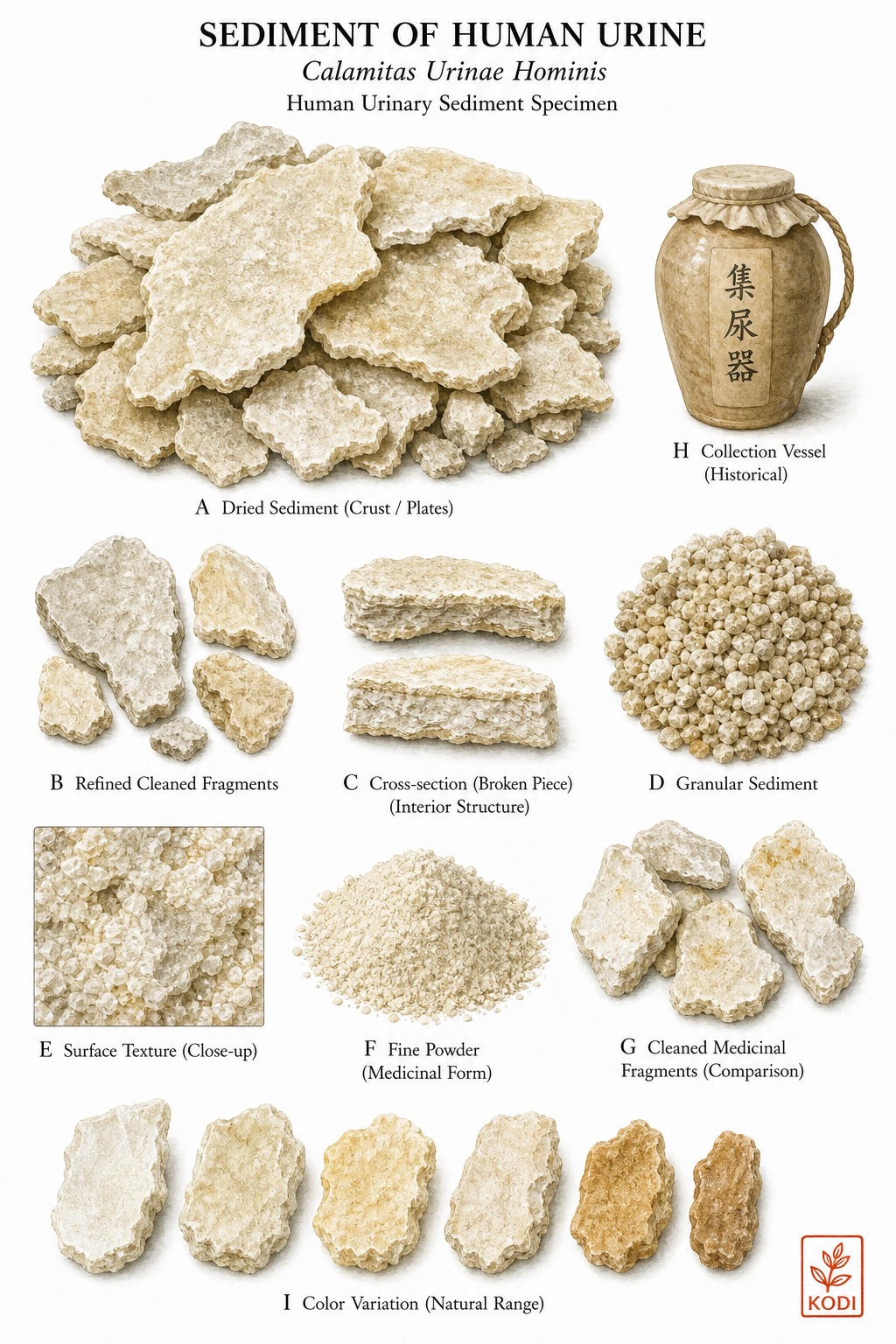
Known in TCM as Ren Zhong Bai (人中白), this salty, cold herb enters the Lung, Heart, and Bladder. Traditionally, it clears Heat and drains Fire from the mouth and throat ... Ren Zhong Bai is historically used for oral ulceration, gum erosion, and painful sore-throat patterns with toxic Heat, most often applied for oral ulcers, sore throat, and hemoptysis. Modern research has identified Calcium among its active constituents.
Also Known As
Latin: Depositum Urinae Hominis | Pinyin: Ren Zhong Bai | Chinese: 人中白
TCM Properties
- Taste
- salty
- Temperature
- cold
- Channels
- Lung, Heart, Bladder
Traditional Use
Primary Actions
- Clears Heat and drains Fire from the mouth and throat ... Ren Zhong Bai is historically used for oral ulceration, gum erosion, and painful sore-throat patterns with toxic Heat.
- Cools the Blood and helps stop bleeding ... classical indications include nosebleed, coughing blood, and other heat-type bleeding presentations.
- Resolves putrefaction and supports tissue healing ... especially in calcined topical powders for ulcerated, suppurative, or necrotic lesions.
Secondary Actions
- Ren Zhong Bai is primarily a historical special substance and is rarely used in contemporary internal practice because safer Heat-clearing alternatives now exist.
- This record describes the processed medicinal substance only ... not improvised raw collection, household use, or unscreened biological material.
Classic Formulas
- Bing Peng San ... classic topical oral powder in which calcined Ren Zhong Bai helps clear Heat and resolve putrefaction.
- Shuang Liao Hou Feng San ... throat-focused powder tradition using Ren Zhong Bai for intense Heat-toxin with ulceration and swelling.
- Historical topical combinations with Bing Pian, Huang Lian, or Huang Bai ... older oral and throat powders where Ren Zhong Bai was used externally in tiny amounts.
Classical References
- Ben Cao Gang Mu describes Ren Zhong Bai as directing Fire downward and dispersing stagnant Blood, especially for sores of the mouth and tongue.
- Modern TCM teaching distinguishes Ren Zhong Bai sharply from Ren Zhong Huang and Dan Qiu Shi ... related names, but different processed substances with different therapeutic emphasis.
- Channel attributions vary across sources, with some older summaries emphasizing Liver, Kidney, or Triple Burner fire, but provincial processing standards commonly list Lung, Heart, and Bladder.
Modern Research
Active Compounds
- Calcium phosphate and calcium urate ... major inorganic fractions described in modern teaching materials
- Other precipitated mineral salts from processed urinary sediment ... composition is driven more by source and processing than by a plant-like phytochemical fingerprint
Studied Effects
- Indexed modern clinical literature on Ren Zhong Bai is minimal, and present-day discussion focuses more on processing standards, hygiene, and historical topical use than on efficacy trials.
- Because the substance is inorganic and process-derived rather than botanical, contemporary safety interpretation centers on contamination control and proper preparation.
Safety & Interactions
Contraindications
- Yang deficiency without Fire
- Spleen and Stomach deficiency-cold with poor digestion or loose stools
- Pregnancy
- Any unprocessed or improvised source material
Cautions
- Ren Zhong Bai should be treated as a historical processed materia medica item, not as a home remedy or raw biological substance.
- The main modern hazard is contamination and biosecurity, not classical intrinsic toxicity.
- Internal use is rare and should remain practitioner-supervised; topical historical reference is the safer interpretive frame.
Drug Interactions
- Tetracycline antibiotics, fluoroquinolones, or bisphosphonates ... calcium salts in the processed material could theoretically reduce absorption if taken together
Conditions
- Oral Ulcers Traditional ★★★★☆ JSON
- Sore Throat Traditional ★★★★☆ JSON
- Hemoptysis Traditional ★★☆☆☆ JSON
Frequently Asked Questions
What is Human Urine Sediment used for?
Human Urine Sediment is traditionally used to Clears Heat and drains Fire from the mouth and throat ... Ren Zhong Bai is historically used for oral ulceration, gum erosion, and painful sore-throat patterns with toxic Heat., Cools the Blood and helps stop bleeding ... classical indications include nosebleed, coughing blood, and other heat-type bleeding presentations., Resolves putrefaction and supports tissue healing ... especially in calcined topical powders for ulcerated, suppurative, or necrotic lesions.. Research has investigated its effects on: Indexed modern clinical literature on Ren Zhong Bai is minimal, and present-day discussion focuses more on processing standards, hygiene, and historical topical use than on efficacy trials.; Because the substance is inorganic and process-derived rather than botanical, contemporary safety interpretation centers on contamination control and proper preparation..
What are other names for Human Urine Sediment?
Human Urine Sediment is also known as Ni Bai Yin. In TCM: 人中白 (Ren Zhong Bai); Depositum Urinae Hominis.
Is Human Urine Sediment safe during pregnancy?
Human Urine Sediment is not recommended during pregnancy.
What are the contraindications for Human Urine Sediment?
Human Urine Sediment should not be used in: Yang deficiency without Fire; Spleen and Stomach deficiency-cold with poor digestion or loose stools; Pregnancy; Any unprocessed or improvised source material. Consult a qualified healthcare provider before use.
Does Human Urine Sediment interact with any medications?
Human Urine Sediment may interact with: Tetracycline antibiotics, fluoroquinolones, or bisphosphonates ... calcium salts in the processed material could theoretically reduce absorption if taken together. Always inform your healthcare provider of any herbal supplements you are taking.