Sandalwood
- Chinese
- 檀香
- Pinyin
- Tan Xiang
- Latin
- Lignum Santali Albi
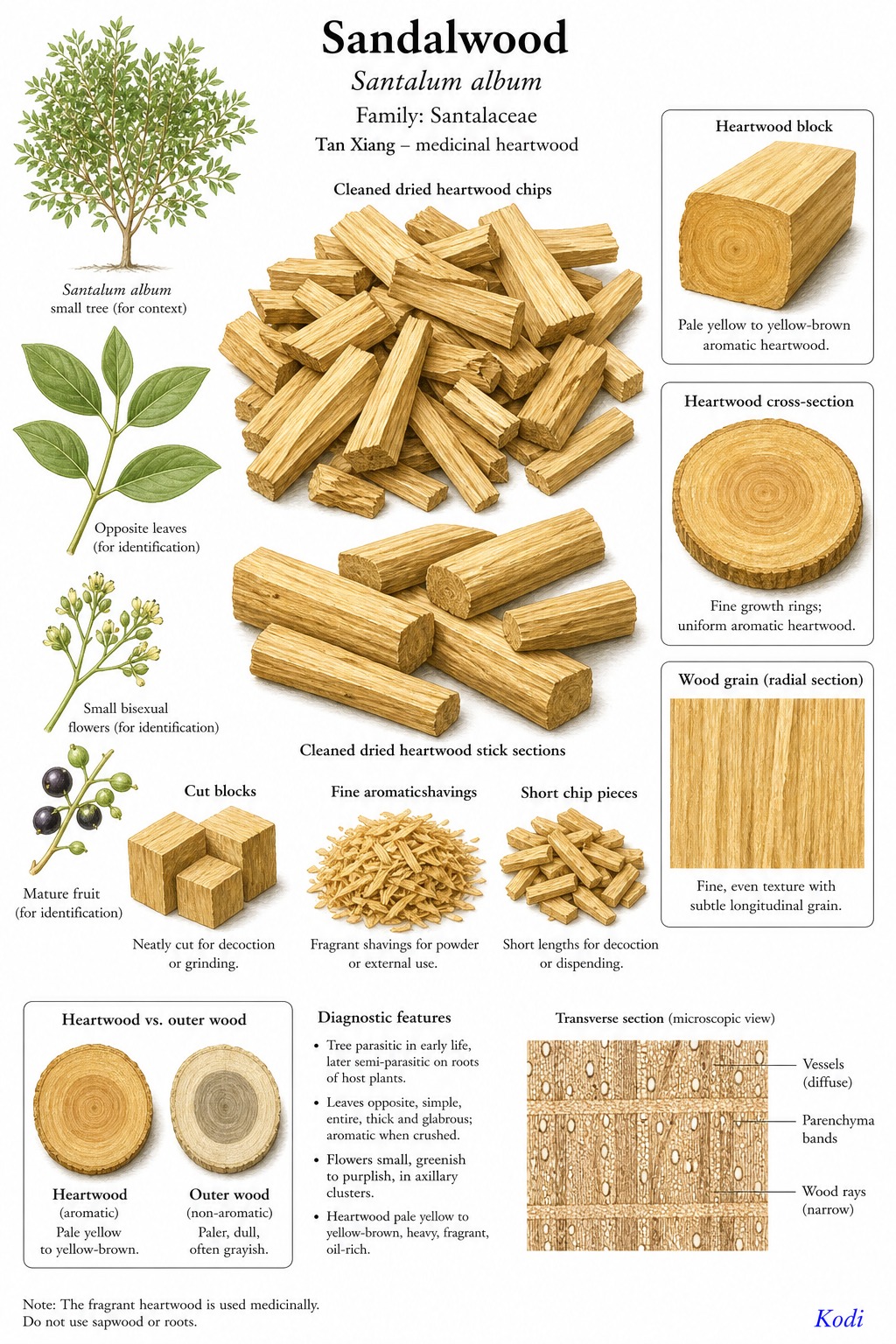
Known in TCM as Tan Xiang (檀香), this acrid and aromatic, warm herb enters the Spleen, Stomach, Heart, and Lung. Traditionally, it moves Qi and alleviates pain ... Tan Xiang is prized for chest pain, epigastric pain, and oppressed tightness above the diaphragm when cold and Qi stagnation are the dominant mechanisms, most often applied for chest pain, abdominal pain, and indigestion. Modern research has identified α-Santalol among its active constituents.
Part used: Heartwood
Also Known As
Latin: Lignum Santali Albi | Pinyin: Tan Xiang | Chinese: 檀香
TCM Properties
- Taste
- acrid, aromatic
- Temperature
- warm
- Channels
- Spleen, Stomach, Heart, Lung
Traditional Use
Primary Actions
- Moves Qi and alleviates pain ... Tan Xiang is prized for chest pain, epigastric pain, and oppressed tightness above the diaphragm when cold and Qi stagnation are the dominant mechanisms.
- Disperses cold and warms the middle burner ... it is used when cold lodges in the Stomach and Spleen, causing cramping discomfort, poor appetite, and cold-type digestive stagnation.
- Harmonizes the Stomach and helps stop vomiting ... especially when nausea or vomiting reflects cold and rebellious Stomach Qi rather than heat.
Secondary Actions
- This page stays on pale aromatic sandalwood heartwood and is intentionally distinct from the red blood-moving `Su Mu` lane represented under `sappan-wood`.
- The fragrant oil, incense trade, and cosmetic essential-oil market overlap with Tan Xiang but are not identical to the crude medicinal wood used in TCM dispensing.
Classic Formulas
- Dan Shen Yin ... classic chest and epigastric pain strategy pairing Tan Xiang with Dan Shen and Sha Ren.
- Guan Xin Su He Wan ... modern-classical chest-obstruction formula in which aromatic woods and warm openers move constrained Qi.
- Kuan Xiong Wan ... cold-type chest pain logic emphasizing Tan Xiang's ability to open the chest and move Qi above the diaphragm.
Classical References
- Traditional herbology repeatedly says Tan Xiang is especially good at adjusting Qi above the diaphragm, which is why it is directed so often to chest and upper-abdominal pain.
- Its warm aromatic profile explains the combination of chest-opening, middle-warming, and anti-vomiting actions.
- Classical comparison notes often distinguish Tan Xiang from Chen Xiang by saying Tan Xiang spreads and opens the chest more, while Chen Xiang descends rebellious Qi more strongly.
Modern Research
Active Compounds
- α-Santalol and β-santalol ... the best-known sandalwood sesquiterpene alcohols
- Sesquiterpene-rich volatile oil ... the defining aromatic fraction of Santalum album heartwood
- Minor phenolic and resinous fractions ... supportive constituents discussed in phytochemical work
Studied Effects
- A 2015 review summarized anticancer research on Santalum album and sandalwood-derived constituents, highlighting mechanistic laboratory interest rather than mature clinical evidence (PMID 26026073).
- A 2012 phytochemical and antibacterial study compared in vitro and in vivo Santalum album extracts and supported continuing interest in antimicrobial applications of sandalwood constituents (PMID 23020220).
- A 2007 safety assessment focused on sandalwood oil, a reminder that most modern safety data concern essential-oil exposures more than decocted heartwood (PMID 17980948).
PubMed References
Safety & Interactions
Contraindications
- Heat-pattern pain without cold or Qi stagnation
- Marked Yin deficiency with pronounced internal heat or dryness
Cautions
- Essential oil products are far more concentrated than crude medicinal wood and should not be treated as interchangeable.
- Because Tan Xiang is warming and aromatic, it is less appropriate when pain is driven by clear excess heat rather than cold stagnation.
- High-quality authentic sandalwood sourcing matters because the perfume market creates substitution pressure.
Conditions
- Chest Pain Traditional ★★★★☆ JSON
- Abdominal Pain Traditional ★★★☆☆ JSON
- Indigestion Traditional ★★★☆☆ JSON
- Nausea Traditional ★★☆☆☆ JSON
Frequently Asked Questions
What is Sandalwood used for?
Sandalwood is traditionally used to Moves Qi and alleviates pain ... Tan Xiang is prized for chest pain, epigastric pain, and oppressed tightness above the diaphragm when cold and Qi stagnation are the dominant mechanisms., Disperses cold and warms the middle burner ... it is used when cold lodges in the Stomach and Spleen, causing cramping discomfort, poor appetite, and cold-type digestive stagnation., Harmonizes the Stomach and helps stop vomiting ... especially when nausea or vomiting reflects cold and rebellious Stomach Qi rather than heat.. Research has investigated its effects on: A 2015 review summarized anticancer research on Santalum album and sandalwood-derived constituents, highlighting mechanistic laboratory interest rather than mature clinical evidence (PMID 26026073).; A 2012 phytochemical and antibacterial study compared in vitro and in vivo Santalum album extracts and supported continuing interest in antimicrobial applications of sandalwood constituents (PMID 23020220)..
What are other names for Sandalwood?
Sandalwood is also known as White Sandalwood, Santalum album. In TCM: 檀香 (Tan Xiang); Lignum Santali Albi.
Is Sandalwood safe during pregnancy?
The safety of Sandalwood during pregnancy has not been established. Consult a qualified healthcare provider before use.
What are the contraindications for Sandalwood?
Sandalwood should not be used in: Heat-pattern pain without cold or Qi stagnation; Marked Yin deficiency with pronounced internal heat or dryness. Consult a qualified healthcare provider before use.