Safflower
- Chinese
- 红花
- Pinyin
- Hong Hua
- Latin
- Flos Carthami
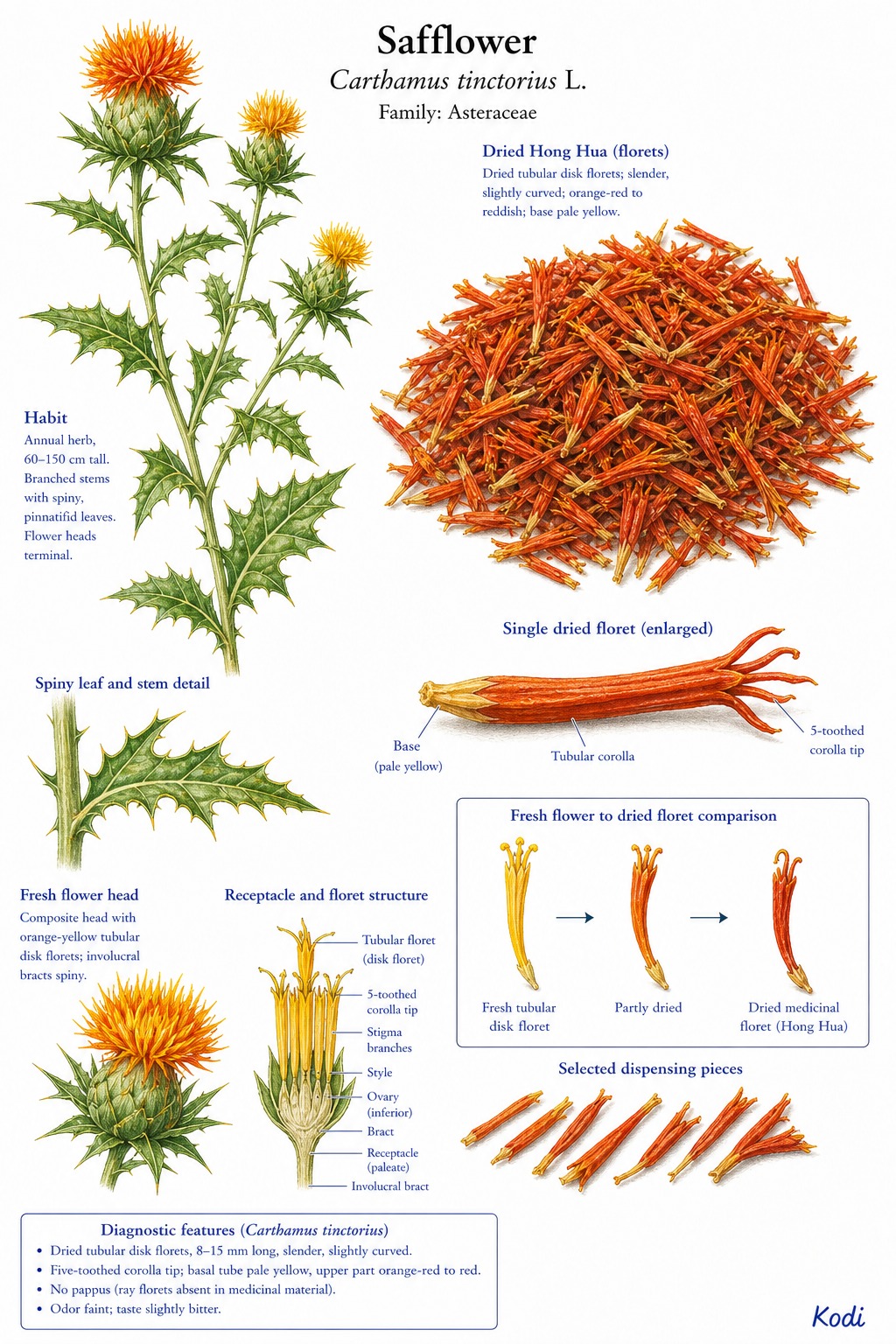
Known in TCM as Hong Hua (红花), this pungent, warm herb enters the Heart and Liver. Traditionally, it invigorates Blood and dispels stasis ... Hong Hua is one of the classic flowers for dark clots, fixed pain, and menstrual obstruction, most often applied for dysmenorrhea, amenorrhea, and traumatic injury. Modern research has identified Hydroxysafflor among its active constituents.
Part used: Flower
Also Known As
Latin: Flos Carthami | Pinyin: Hong Hua | Chinese: 红花
TCM Properties
- Taste
- pungent
- Temperature
- warm
- Channels
- Heart, Liver
Traditional Use
Primary Actions
- Invigorates Blood and dispels stasis ... Hong Hua is one of the classic flowers for dark clots, fixed pain, and menstrual obstruction.
- Unblocks menstruation and alleviates pain ... dysmenorrhea, amenorrhea, and postpartum abdominal pain are central traditional uses.
- Reduces swelling and relieves traumatic injury ... bruising, contusion, and persistent stasis pain are common non-gynecologic indications.
- Moves the channels without the heavy harshness of stronger blood-breaking substances ... this makes it versatile but still safety-relevant.
Secondary Actions
- This page must stay clearly separate from `saffron` / Xi Hong Hua ... both move Blood, but they are not interchangeable in identity, potency, price, or traditional handling.
- The medicinal part is the dried safflower floret cluster, not the oilseed or a decorative garden flower.
Classic Formulas
- Tao Hong Si Wu Tang ... classic blood-stasis and menstrual formula using Hong Hua with Tao Ren.
- Xue Fu Zhu Yu Tang ... famous chest-stasis formula where Hong Hua helps move constrained Blood.
- Shen Tong Zhu Yu Tang and trauma-oriented formulas ... used when channel stasis causes persistent pain.
Classical References
- Traditional herbology consistently places Hong Hua among the principal Blood-invigorating flowers for menstruation, trauma, and fixed stasis pain.
- Its warm moving nature explains both its usefulness and its clear pregnancy caution.
Modern Research
Active Compounds
- Hydroxysafflor yellow A ... one of the most discussed safflower flavonoid pigments in modern pharmacology
- Carthamin and related quinochalcone pigments ... signature color-bearing compounds
- Flavonoids and phenolic acids ... broader antioxidant and circulation-related constituents
Studied Effects
- A 2025 comprehensive review of Carthamus tinctorius covered ethnomedicine, phytochemistry, pharmacology, and clinical applications, confirming how broad the modern safflower literature has become (PMID 40918514).
- A 2025 review focused specifically on safflower flavonoids and their pharmacologic actions, highlighting why pigment-rich fractions dominate much of the current mechanistic work (PMID 40843199).
- A 2018 review traced safflower from traditional medicine to modern research use, giving a useful bridge between classic blood-moving functions and contemporary pharmacology (PMID 29881530).
PubMed References
- Carthamus tinctorius L.: a comprehensive review of its ethnomedicine, phytochemistry, pharmacology, and clinical applications. (2025)
- Pharmacological actions and applications of safflower flavonoids. (2025)
- Medical uses of Carthamus tinctorius L. (Safflower): a comprehensive review from Traditional Medicine to Modern Medicine. (2018)
Safety & Interactions
Contraindications
- Pregnancy
- Heavy menstrual bleeding or active hemorrhage without stasis
Cautions
- Hong Hua is a real blood-moving herb and should not be treated like a harmless tea flower.
- Concurrent use with anticoagulant or antiplatelet strategies deserves caution even though direct clinical interaction data remain limited.
Conditions
- Dysmenorrhea Traditional ★★★★☆ JSON
- Amenorrhea Traditional ★★★☆☆ JSON
- Traumatic Injury Traditional ★★★☆☆ JSON
- Chest Pain Traditional ★★☆☆☆ JSON
- Menstrual Irregularities Traditional ★★☆☆☆ JSON
Frequently Asked Questions
What is Safflower used for?
Safflower is traditionally used to Invigorates Blood and dispels stasis ... Hong Hua is one of the classic flowers for dark clots, fixed pain, and menstrual obstruction., Unblocks menstruation and alleviates pain ... dysmenorrhea, amenorrhea, and postpartum abdominal pain are central traditional uses., Reduces swelling and relieves traumatic injury ... bruising, contusion, and persistent stasis pain are common non-gynecologic indications., Moves the channels without the heavy harshness of stronger blood-breaking substances ... this makes it versatile but still safety-relevant.. Research has investigated its effects on: A 2025 comprehensive review of Carthamus tinctorius covered ethnomedicine, phytochemistry, pharmacology, and clinical applications, confirming how broad the modern safflower literature has become (PMID 40918514).; A 2025 review focused specifically on safflower flavonoids and their pharmacologic actions, highlighting why pigment-rich fractions dominate much of the current mechanistic work (PMID 40843199)..
What are other names for Safflower?
Safflower is also known as Hong Hua, Carthamus Flower, Safflower Floret. In TCM: 红花 (Hong Hua); Flos Carthami.
Is Safflower safe during pregnancy?
Safflower is not recommended during pregnancy.
What are the contraindications for Safflower?
Safflower should not be used in: Pregnancy; Heavy menstrual bleeding or active hemorrhage without stasis. Consult a qualified healthcare provider before use.