Rose Apple
- Chinese
- 蒲桃
- Pinyin
- Pu Tao
- Latin
- Fructus Syzygii
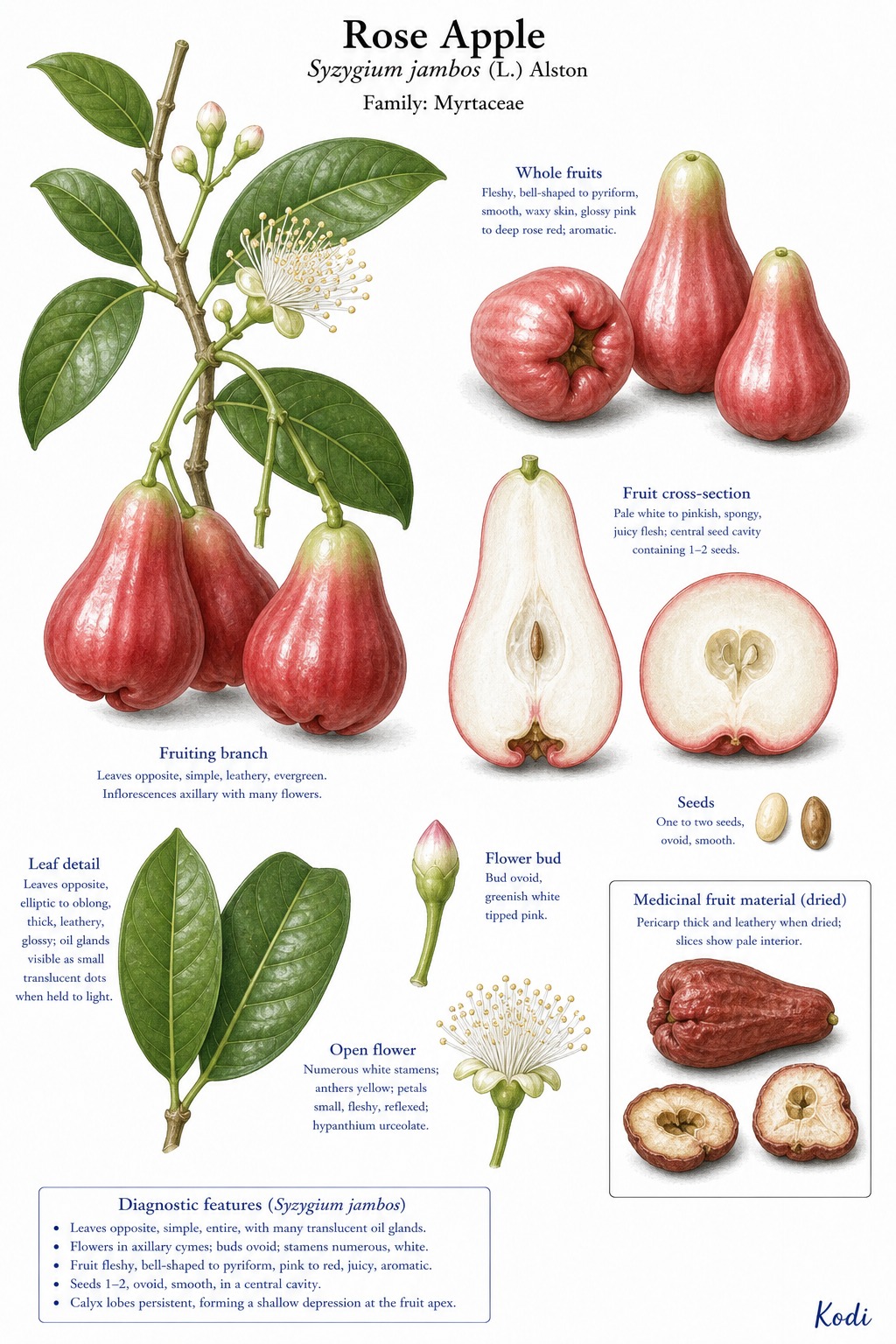
Known in TCM as Pu Tao (蒲桃), this sweet and slightly astringent, neutral herb enters the Stomach and Large Intestine. Traditionally, it generates fluids and lightly supports recovery ... rose apple is best understood as a mild food-medicine fruit rather than as a heavy classical decoction herb, most often applied for diarrhea, dysentery, and poor appetite. Modern research has identified Flavonoids among its active constituents.
Part used: Fruit
Also Known As
Latin: Fructus Syzygii | Pinyin: Pu Tao | Chinese: 蒲桃
TCM Properties
- Taste
- sweet, slightly astringent
- Temperature
- neutral
- Channels
- Stomach, Large Intestine
Traditional Use
Primary Actions
- Generates fluids and lightly supports recovery ... rose apple is best understood as a mild food-medicine fruit rather than as a heavy classical decoction herb.
- Astringes the intestines in folk use ... the fruit is traditionally used for loose stool, mild dysentery, and bowel weakness when a light fruit remedy is preferred.
- Supports appetite and digestive comfort ... fragrant, mildly sweet fruit use appears in traditions that treat it as a restorative rather than as a forceful medicine.
- Provides a gentle tonic-fruit lane rather than a strong pharmacologic intervention ... this is one of the reasons the page should stay fruit-centered and conservative.
Secondary Actions
- This `Pu Tao` page is intentionally not the already-live grape page ... here `Pu Tao` follows `Syzygium jambos` in the Myrtaceae, a real Chinese naming collision rather than a typo.
- Traditional uses of leaf, bark, and seed in the rose-apple literature are broader than the fruit's uses, so this page keeps the fruit lane separate from those other plant parts.
Classic Formulas
- Simple fruit decoctions or fresh fruit use for diarrhea and dysenteric looseness ... folk practice treats the fruit as a mild astringing support.
- Digestive and heat-thirst preparations with other gentle fruits ... used when poor appetite and dryness coexist without severe cold or heat.
- Regional household use favors direct fruit intake more than prestigious named classical formulas.
Classical References
- Chinese folk plant traditions describe rose apple fruit as a mild, fragrant, somewhat astringing edible medicine rather than as a major ben cao staple.
- Because the name `Pu Tao` can point either to grape or rose apple, botanical confirmation is part of safe traditional use.
Modern Research
Active Compounds
- Flavonoids including quercetin-related constituents ... major phenolics in the broader species literature
- Tannins and phenolic acids ... compounds consistent with the plant's astringent and antimicrobial reputation
- Volatile aromatics such as linalool ... notable fruit and leaf fragrance markers discussed in review literature
- Triterpenoids including betulinic acid and friedelin ... supportive constituents in species-level phytochemical work
Studied Effects
- A 2022 review on Syzygium jambos summarized the plant's traditional uses and pharmacology, but it also makes clear that much of the evidence is species-level and organ-mixed rather than fruit-specific (PMID 35177986).
- A 2016 study reported antioxidant and in vivo anti-inflammatory activity of Syzygium jambos ethanol extract, supporting continued interest in the species' phenolic profile (PMID 27021114).
- A 2000 antimicrobial study on Syzygium jambos bark extracts helps explain the plant's broader medicinal reputation, though it should not be overstated as direct proof for the fruit page (PMID 10904178).
PubMed References
- Syzygium jambos L. Alston: An Insight Into its Phytochemistry, Traditional Uses, and Pharmacological Properties. (2022)
- HPLC profiling, antioxidant and in vivo anti-inflammatory activity of the ethanol extract of Syzygium jambos available in Bangladesh. (2016)
- Antimicrobial activity of bark extracts of Syzygium jambos (L.) alston (Myrtaceae). (2000)
Safety & Interactions
Contraindications
- Marked constipation or severe dryness when astringent fruits are inappropriate
Cautions
- Rose-apple fruit, seed, leaf, and bark preparations are not interchangeable in dose or pharmacology.
- The shared `Pu Tao` name with grape is a real identity trap, so the source species should be confirmed before any medicinal use is assumed.
Conditions
Frequently Asked Questions
What is Rose Apple used for?
Rose Apple is traditionally used to Generates fluids and lightly supports recovery ... rose apple is best understood as a mild food-medicine fruit rather than as a heavy classical decoction herb., Astringes the intestines in folk use ... the fruit is traditionally used for loose stool, mild dysentery, and bowel weakness when a light fruit remedy is preferred., Supports appetite and digestive comfort ... fragrant, mildly sweet fruit use appears in traditions that treat it as a restorative rather than as a forceful medicine., Provides a gentle tonic-fruit lane rather than a strong pharmacologic intervention ... this is one of the reasons the page should stay fruit-centered and conservative.. Research has investigated its effects on: A 2022 review on Syzygium jambos summarized the plant's traditional uses and pharmacology, but it also makes clear that much of the evidence is species-level and organ-mixed rather than fruit-specific (PMID 35177986).; A 2016 study reported antioxidant and in vivo anti-inflammatory activity of Syzygium jambos ethanol extract, supporting continued interest in the species' phenolic profile (PMID 27021114)..
What are other names for Rose Apple?
Rose Apple is also known as Syzygium jambos Fruit, Rose Apple Fruit, Pu Tao (rose apple lane). In TCM: 蒲桃 (Pu Tao); Fructus Syzygii.
Is Rose Apple safe during pregnancy?
The safety of Rose Apple during pregnancy has not been established. Consult a qualified healthcare provider before use.
What are the contraindications for Rose Apple?
Rose Apple should not be used in: Marked constipation or severe dryness when astringent fruits are inappropriate. Consult a qualified healthcare provider before use.