Root of Twotooth Achyranthes
- Chinese
- 怀牛膝
- Pinyin
- Huai Niu Xi
- Latin
- Radix Achyranthis Bidentatae
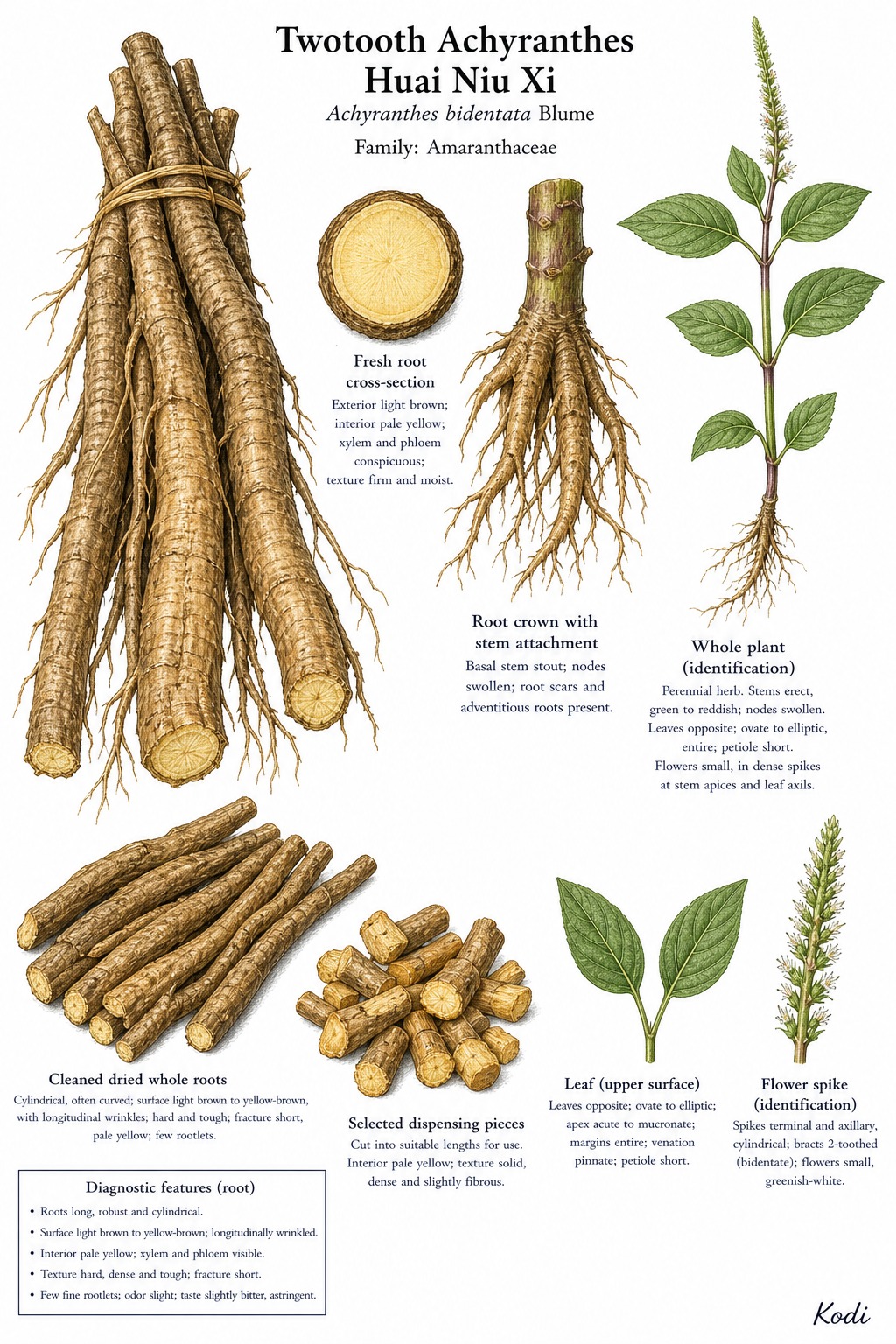
Known in TCM as Huai Niu Xi (怀牛膝), this bitter and sour, neutral herb enters the Liver and Kidney. Traditionally, it invigorates Blood and dispels stasis, most often applied for hypertension, low back pain, and osteoarthritis. Modern research has identified Achyranthes among its active constituents.
Part used: Root
Also Known As
Latin: Radix Achyranthis Bidentatae | Pinyin: Huai Niu Xi | Chinese: 怀牛膝
TCM Properties
- Taste
- bitter, sour
- Temperature
- neutral
- Channels
- Liver, Kidney
Traditional Use
Primary Actions
- Invigorates Blood and dispels stasis
- Guides herbs and Blood downward
- Supplements the Liver and Kidneys
- Strengthens sinews and bones
- Promotes urination and relieves stranguria
Secondary Actions
- Leads Blood downward to treat Liver Yang rising with headache and hypertension
- Addresses Bi syndrome pain in knees and lower back
Classic Formulas
- Zhen Gan Xi Feng Tang … descends Liver Yang and clears Wind for headache and hypertension
- Du Huo Ji Sheng Wan … addresses Bi syndrome and joint pain with underlying Kidney deficiency
Classical References
- Shen Nong Ben Cao Jing: 'Treats cold-damp atrophy and painful obstruction, expels stagnant Blood' … historically classified as top-grade medicine
Modern Research
Active Compounds
- Achyranthes saponins A, B, C
- Beta-ecdysone (ecdysterone)
- Betaine
- Achyranthes polysaccharides
- Ferulic acid
Studied Effects
- Three novel compounds (achyranbidens A-C) isolated, two showing significant anti-alpha-glucosidase activity (PMID 36722288)
- Comprehensive review of phytochemistry and pharmacology confirms traditional uses; further clinical studies warranted (PMID 38600792)
- Systematic pharmacology identified key active compounds and multi-target mechanisms relevant to osteoarthritis (PMID 32925869)
PubMed References
- Achyranbidens A-C: three new compounds from Achyranthes bidentata Blume (2024)
- Achyranthes bidentata Blume (Amaranthaceae): a review of its botany, traditional uses, phytochemistry, pharmacology, and toxicology (2024)
- A Systematic Pharmacology and In Vitro Study to Identify the Role of the Active Compounds of Achyranthes bidentata in the Treatment of Osteoarthritis (2020)
Safety & Interactions
Contraindications
- Pregnancy … explicitly contraindicated; saponins stimulate uterine contractions with abortifacient effect
- Excessive menstrual bleeding … blood-invigorating properties worsen hemorrhage
- Spermatorrhea or premature ejaculation … downward-guiding nature worsens leakage
- Middle Qi deficiency with sinking
Cautions
- Use cautiously in Spleen deficiency with loose stools
- Downward-guiding action contraindicated in conditions requiring upward movement of Qi
Conditions
- Hypertension Traditional ★★★★☆ JSON
- Low Back Pain Traditional ★★★★☆ JSON
- Osteoarthritis Research ★★★★☆ JSON
- Kidney Deficiency Traditional ★★★★☆ JSON
- Amenorrhea Traditional ★★★☆☆ JSON
- Urinary Tract Infection Traditional ★★★☆☆ JSON
Frequently Asked Questions
What is Root of Twotooth Achyranthes used for?
Root of Twotooth Achyranthes is traditionally used to Invigorates Blood and dispels stasis, Guides herbs and Blood downward, Supplements the Liver and Kidneys, Strengthens sinews and bones. Research has investigated its effects on: Three novel compounds (achyranbidens A-C) isolated, two showing significant anti-alpha-glucosidase activity (PMID 36722288); Comprehensive review of phytochemistry and pharmacology confirms traditional uses; further clinical studies warranted (PMID 38600792).
What are other names for Root of Twotooth Achyranthes?
Root of Twotooth Achyranthes is also known as Achyranthis. In TCM: 怀牛膝 (Huai Niu Xi); Radix Achyranthis Bidentatae.
Is Root of Twotooth Achyranthes safe during pregnancy?
Root of Twotooth Achyranthes is not recommended during pregnancy.
What are the contraindications for Root of Twotooth Achyranthes?
Root of Twotooth Achyranthes should not be used in: Pregnancy … explicitly contraindicated; saponins stimulate uterine contractions with abortifacient effect; Excessive menstrual bleeding … blood-invigorating properties worsen hemorrhage; Spermatorrhea or premature ejaculation … downward-guiding nature worsens leakage; Middle Qi deficiency with sinking. Consult a qualified healthcare provider before use.