Root of Shortstalk Monkshood
- Chinese
- 雪上一枝蒿
- Pinyin
- Xue Shang Yi Zhi Hao
- Latin
- Radix Aconiti Brachypodi
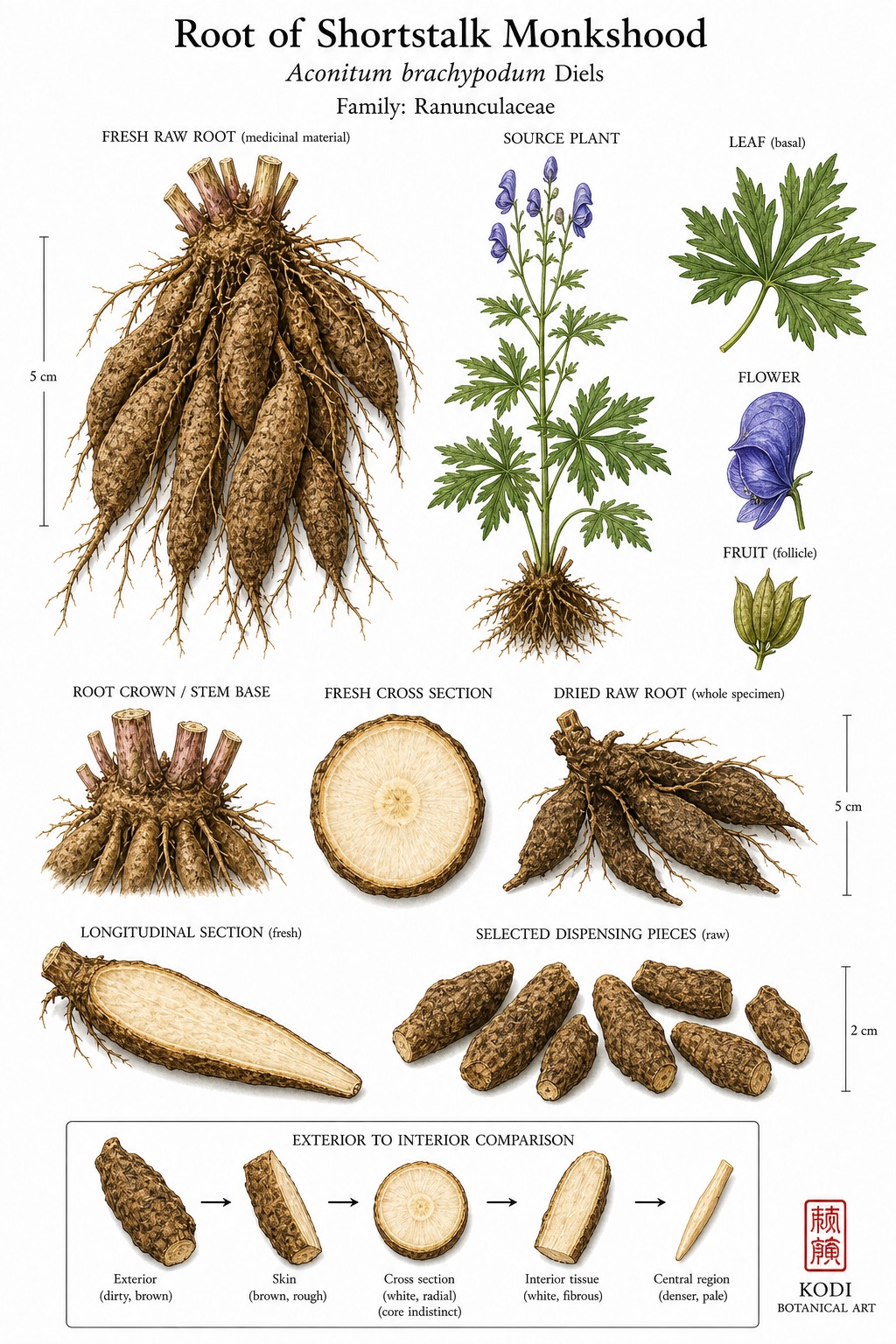
Known in TCM as Xue Shang Yi Zhi Hao (雪上一枝蒿), this acrid and bitter, hot herb enters the Liver and Kidney. Traditionally, it dispels wind-damp and strongly relieves pain ... Xue Shang Yi Zhi Hao is a raw toxic aconite-root lane used for severe obstructive pain, cold-damp bi, and stubborn localized pain, most often applied for joint pain, rheumatism, and traumatic injury. Modern research has identified Diterpenoid among its active constituents.
Part used: Root
Also Known As
Latin: Radix Aconiti Brachypodi | Pinyin: Xue Shang Yi Zhi Hao | Chinese: 雪上一枝蒿
TCM Properties
- Taste
- acrid, bitter
- Temperature
- hot
- Channels
- Liver, Kidney
Traditional Use
Primary Actions
- Dispels wind-damp and strongly relieves pain ... Xue Shang Yi Zhi Hao is a raw toxic aconite-root lane used for severe obstructive pain, cold-damp bi, and stubborn localized pain.
- Scatters cold and opens the channels ... regional use extends to deep aching in the joints, lower back, and injured tissues when cold and obstruction dominate.
- Reduces swelling and sharp pain in folk practice ... some traditions apply it topically or in very controlled internal preparations for trauma and intense pain.
Secondary Actions
- This page stays clearly separate from the already-live Cao Wu and processed aconite lanes ... it is a distinct raw Aconitum brachypodum identity with a toxicity-first profile.
- Its traditional value comes from potency, not gentleness, and that same potency explains why modern handling must be extremely cautious.
Classic Formulas
- Ethnic Yunnan and southwest pain-wine traditions ... Xue Shang Yi Zhi Hao is used in tightly controlled folk analgesic preparations for severe cold-damp pain.
- Topical trauma liniments and poultices ... common regional use when strong pain relief is wanted without relying on oral dosing alone.
- Aconite-style cold-pain pairings with warming and channel-opening herbs ... formula logic rather than a universally standardized classic pill line.
Classical References
- Regional materia medica treats Xue Shang Yi Zhi Hao as a potent wind-damp and pain-dispelling root with marked toxicity.
- Unlike processed Fu Zi or related prepared aconites, this raw root should never be presented as a casual home-use herb.
Modern Research
Active Compounds
- Diterpenoid alkaloids ... the defining toxic and analgesically relevant constituent family of Aconitum brachypodum
- Aconitine-type and related alkaloid fractions ... the main drivers of cardiotoxic and neurotoxic concern
- Root-alkaloid mixtures explored in detoxification studies ... central to modern safety research around this species
Studied Effects
- A 2016 phytochemical paper isolated diterpenoid alkaloids from the roots of Aconitum brachypodum, reinforcing that the medicinal lane is inseparable from the species' high-alkaloid toxicology (PMID 27268073).
- A 2016 study showed that Veratrilla baillonii attenuated acute toxicity induced by Aconitum brachypodum in mice, reflecting how much of the modern literature is focused on poisoning mitigation rather than casual therapeutic use (PMID 26719282).
- A companion 2016 study found that Veratrilla baillonii water extract also reduced subacute toxicity induced by Aconitum brachypodum, again highlighting detoxification as a central research theme (PMID 27823623).
PubMed References
- Diterpenoid alkaloids from the roots of Aconitum brachypodum Diels. (2016)
- Antitoxic effect of Veratrilla baillonii on the acute toxicity in mice induced by Aconitum brachypodum, one of the genus Aconitum. (2016)
- The water extract of Veratrilla baillonii could attenuate the subacute toxicity induced by Aconitum brachypodum. (2016)
Safety & Interactions
Contraindications
- Pregnancy
- Any unsupervised internal use
- Internal heat or yin deficiency with heat signs
- Classical aconite incompatibility traditions involving Ban Xia, Gua Lou, Tian Hua Fen, Bai Ji, Bai Lian, and Bei Mu group herbs
Cautions
- Raw aconite roots can cause life-threatening arrhythmias, neurologic toxicity, numbness, vomiting, and collapse if misprocessed or overdosed.
- This herb should be framed as a toxic ethnomedicinal record, not a casual wellness root.
- Topical use can still be dangerous if concentrated preparations contact damaged skin or are used carelessly.
Conditions
- Joint Pain Traditional ★★★★☆ JSON
- Rheumatism Traditional ★★★★☆ JSON
- Traumatic Injury Traditional ★★★☆☆ JSON
- Toothache Traditional ★★☆☆☆ JSON
- Low Back Pain Traditional ★★☆☆☆ JSON
Frequently Asked Questions
What is Root of Shortstalk Monkshood used for?
Root of Shortstalk Monkshood is traditionally used to Dispels wind-damp and strongly relieves pain ... Xue Shang Yi Zhi Hao is a raw toxic aconite-root lane used for severe obstructive pain, cold-damp bi, and stubborn localized pain., Scatters cold and opens the channels ... regional use extends to deep aching in the joints, lower back, and injured tissues when cold and obstruction dominate., Reduces swelling and sharp pain in folk practice ... some traditions apply it topically or in very controlled internal preparations for trauma and intense pain.. Research has investigated its effects on: A 2016 phytochemical paper isolated diterpenoid alkaloids from the roots of Aconitum brachypodum, reinforcing that the medicinal lane is inseparable from the species' high-alkaloid toxicology (PMID 27268073).; A 2016 study showed that Veratrilla baillonii attenuated acute toxicity induced by Aconitum brachypodum in mice, reflecting how much of the modern literature is focused on poisoning mitigation rather than casual therapeutic use (PMID 26719282)..
What are other names for Root of Shortstalk Monkshood?
Root of Shortstalk Monkshood is also known as Shortstalk Monkshood Root, Aconitum Root. In TCM: 雪上一枝蒿 (Xue Shang Yi Zhi Hao); Radix Aconiti Brachypodi.
Is Root of Shortstalk Monkshood safe during pregnancy?
Root of Shortstalk Monkshood is not recommended during pregnancy.
What are the contraindications for Root of Shortstalk Monkshood?
Root of Shortstalk Monkshood should not be used in: Pregnancy; Any unsupervised internal use; Internal heat or yin deficiency with heat signs; Classical aconite incompatibility traditions involving Ban Xia, Gua Lou, Tian Hua Fen, Bai Ji, Bai Lian, and Bei Mu group herbs. Consult a qualified healthcare provider before use.