Ku Shen Root
- Chinese
- 苦å‚
- Pinyin
- Ku Shen
- Latin
- Radix Sophorae Flavescentis
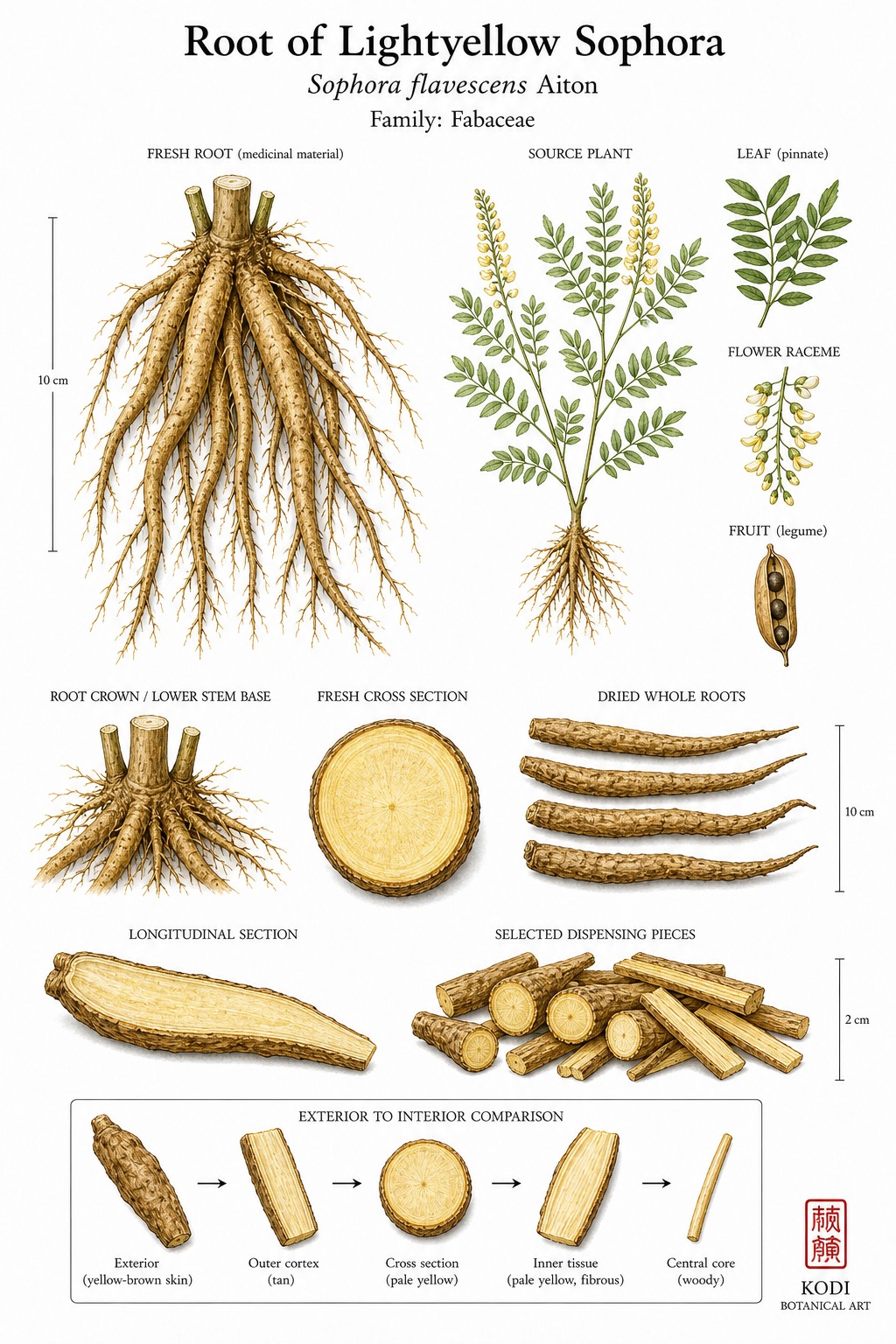
Known in TCM as Ku Shen (苦å‚), this bitter, cold herb enters the Heart, Liver, Stomach, Large Intestine, and Bladder. Traditionally, it clears heat and dries damp ... Ku Shen is a classic root for damp-heat dysentery, diarrhea, jaundice, leukorrhea, and lower-body heat with irritation, most often applied for eczema, scabies, and leukorrhea. Modern research has identified Quinolizidine among its active constituents.
Part used: Root
Also Known As
Latin: Radix Sophorae Flavescentis | Pinyin: Ku Shen | Chinese: 苦å‚
TCM Properties
- Taste
- bitter
- Temperature
- cold
- Channels
- Heart, Liver, Stomach, Large Intestine, Bladder
Traditional Use
Primary Actions
- Clears heat and dries damp ... Ku Shen is a classic root for damp-heat dysentery, diarrhea, jaundice, leukorrhea, and lower-body heat with irritation.
- Kills parasites and relieves itching ... it is one of the core herbs for eczema, scabies, genital itching, and damp-toxic skin disease, often as a wash or topical decoction.
- Promotes urination and resolves toxic swelling ... especially when lower-burner heat and dampness combine with swelling, sores, or inflammatory lesions.
Secondary Actions
- This page should stay clearly separate from Ku Gan Cao and from other bitter Sophora relatives with different source plants and traditions.
- Modern products often spotlight isolated matrine or oxymatrine, but the monograph should remain anchored to whole-root traditional use.
Classic Formulas
- Ku Shen Tang and topical Ku Shen washes ... classic itch, scabies, and damp-heat skin strategy.
- Lower-burner pairings with Huang Bai, Bai Xian Pi, or Di Fu Zi ... eczema, leukorrhea, and genital itching logic.
- Intestinal damp-heat formulas with Huang Lian, Bai Tou Weng, or Qin Pi ... dysenteric heat and toxic diarrhea use patterns.
Classical References
- Traditional herbology consistently presents Ku Shen as a bitter cold root that clears damp-heat above all else.
- Its internal and external use profiles overlap strongly around dampness, heat, toxin, and itching rather than around tonification.
Modern Research
Active Compounds
- Quinolizidine alkaloids such as matrine, oxymatrine, sophocarpine, and sophoridine ... the best-known Ku Shen fractions
- Prenylated flavonoids ... increasingly important in modern pharmacology and quality review work
- Other phenolic and minor alkaloid fractions ... supportive antioxidant and anti-inflammatory context
Studied Effects
- A 2015 review summarized the traditional usage, phytochemistry, and pharmacology of Sophora flavescens and remains a major broad source for the modern Ku Shen evidence base (PMID 26087234).
- A 2024 systematic review focused specifically on prenylated flavonoids from Sophora flavescens, reinforcing the depth of current chemistry and pharmacology work beyond the better-known matrine lane (PMID 38864547).
- A 2020 clinical-evidence review examined Sophora flavescens-based traditional Chinese medicine in ulcerative colitis, showing how modern study continues to explore the herb in damp-heat bowel disease contexts (PMID 33362558).
PubMed References
- Sophora flavescens Ait.: Traditional usage, phytochemistry and pharmacology of an important traditional Chinese medicine. (2015)
- Prenylated Flavonoids in Sophora flavescens: A Systematic Review of Their Phytochemistry and Pharmacology. (2024)
- Efficacy and Safety of Sophora flavescens (Kushen) Based Traditional Chinese Medicine in the Treatment of Ulcerative Colitis: Clinical Evidence and Potential Mechanisms. (2020)
Safety & Interactions
Contraindications
- Spleen-Stomach deficiency cold
- Patterns without damp-heat, toxin, or itching
Cautions
- Sophora flavescens can be pharmacologically intense, and concentrated modern products have a much narrower safety margin than simple wash or decoction use.
- Reports of toxicity in modern literature mean Ku Shen should not be treated as a casual daily tonic.
- Whole-root use is not interchangeable in dose or safety with isolated matrine or oxymatrine preparations.
Conditions
Frequently Asked Questions
What is Ku Shen Root used for?
Ku Shen Root is traditionally used to Clears heat and dries damp ... Ku Shen is a classic root for damp-heat dysentery, diarrhea, jaundice, leukorrhea, and lower-body heat with irritation., Kills parasites and relieves itching ... it is one of the core herbs for eczema, scabies, genital itching, and damp-toxic skin disease, often as a wash or topical decoction., Promotes urination and resolves toxic swelling ... especially when lower-burner heat and dampness combine with swelling, sores, or inflammatory lesions.. Research has investigated its effects on: A 2015 review summarized the traditional usage, phytochemistry, and pharmacology of Sophora flavescens and remains a major broad source for the modern Ku Shen evidence base (PMID 26087234).; A 2024 systematic review focused specifically on prenylated flavonoids from Sophora flavescens, reinforcing the depth of current chemistry and pharmacology work beyond the better-known matrine lane (PMID 38864547)..
What are other names for Ku Shen Root?
Ku Shen Root is also known as Kushen, Sophora Root, Sophorae Flavescentis Radix. In TCM: è‹¦å‚ (Ku Shen); Radix Sophorae Flavescentis.
Is Ku Shen Root safe during pregnancy?
The safety of Ku Shen Root during pregnancy has not been established. Consult a qualified healthcare provider before use.
What are the contraindications for Ku Shen Root?
Ku Shen Root should not be used in: Spleen-Stomach deficiency cold; Patterns without damp-heat, toxin, or itching. Consult a qualified healthcare provider before use.