Japanese Dock Root
- Chinese
- ç¾Šè¹„æ ¹
- Pinyin
- Yang Ti Gen
- Latin
- Radix Rumicis Japonici
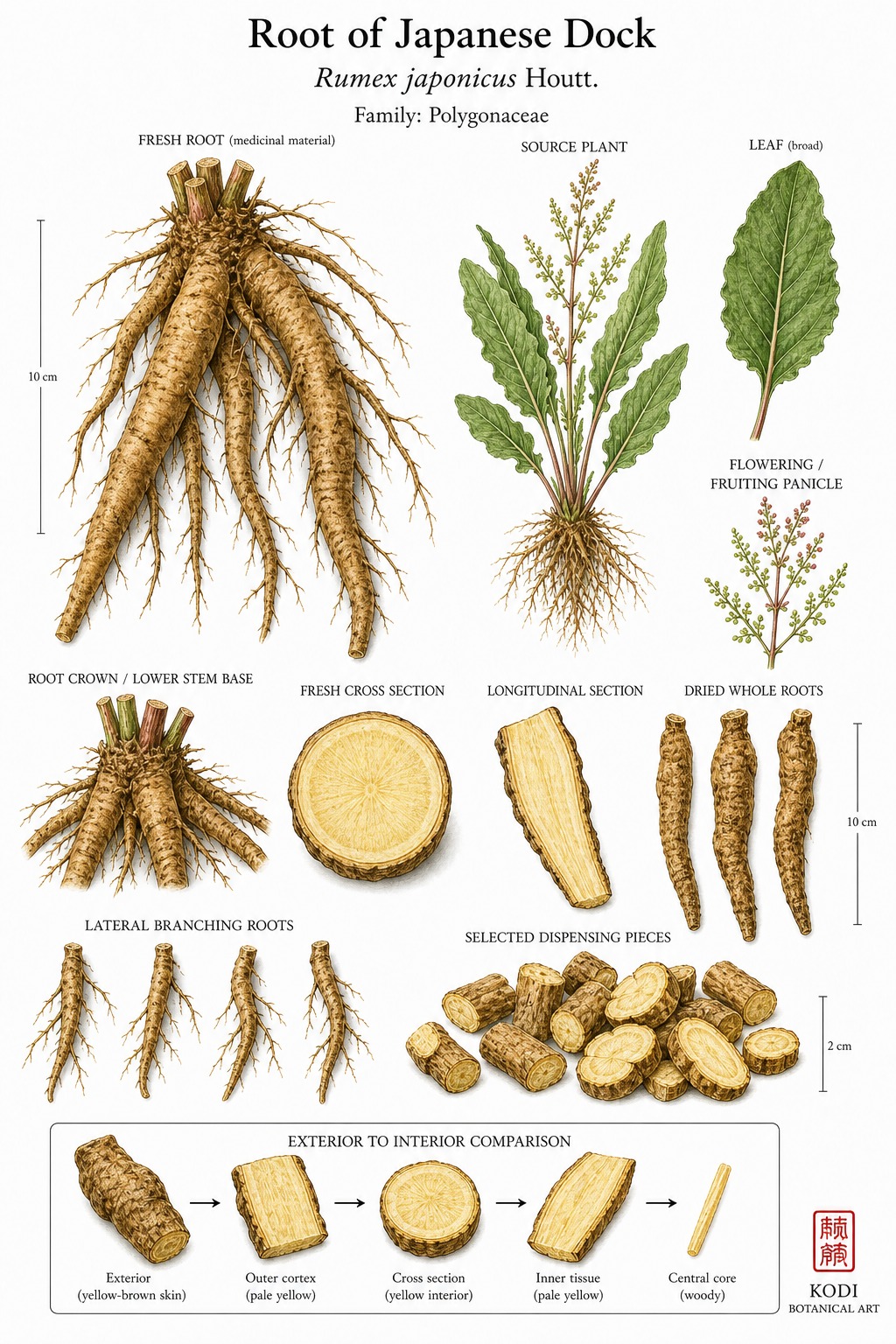
Known in TCM as Yang Ti Gen (ç¾Šè¹„æ ¹), this bitter, cold herb enters the Large Intestine, Liver, and Stomach. Traditionally, it clears heat and relieves toxic skin lesions ... Yang Ti Gen is used topically or internally for tinea-like eruptions, boils, itchy damp lesions, and inflamed skin disorders, most often applied for eczema, constipation, and furunculosis. Modern research has identified Anthraquinones among its active constituents.
Part used: Root
Also Known As
Latin: Radix Rumicis Japonici | Pinyin: Yang Ti Gen | Chinese: ç¾Šè¹„æ ¹
TCM Properties
- Taste
- bitter
- Temperature
- cold
- Channels
- Large Intestine, Liver, Stomach
Traditional Use
Primary Actions
- Clears heat and relieves toxic skin lesions ... Yang Ti Gen is used topically or internally for tinea-like eruptions, boils, itchy damp lesions, and inflamed skin disorders.
- Cools blood and reduces swelling ... the root is chosen when heat and irritation are obvious in sores, nodules, or inflamed tissue rather than when dryness or deficiency dominate.
- Moves the bowels in heat patterns ... its bitter descending nature gives it a stronger opening and draining profile than the edible dock image might suggest.
Secondary Actions
- This page should stay on Rumex japonicus root and not collapse into generic dock, rhubarb, or knotweed-like blood-cooling assumptions.
- Fresh root juice and topical vinegar-rub style use are historically important and fit the plant's skin-focused identity better than inflated claims of deep classical formula centrality.
Classic Formulas
- Yang Ti Gen San ... topical damp-itch and tinea-style skin logic.
- Luo Li San type pairings ... a traditional handbook lane for nodular or scrofula-like swelling.
- Fresh-root or vinegar-rub applications ... practical folk use for stubborn parasitic or damp skin eruptions.
Classical References
- Classical and handbook-style usage emphasizes fresh or juiced root on skin disease at least as much as internal decoction use.
- Its bitter cold descending profile explains why constipation and toxic skin patterns sit closer to the center of use than tonic or nourishing claims.
Modern Research
Active Compounds
- Anthraquinones such as emodin and chrysophanol ... the most relevant modern markers
- Naphthalene derivatives and phenolic acids ... recurrent in Rumex japonicus chemistry
- Flavonoids and tannin-like antioxidant fractions ... supportive anti-inflammatory context
Studied Effects
- A 2020 review summarized the phytochemistry, pharmacology, and pharmacokinetics of Rumex japonicus Houtt., giving a modern framework for why Yang Ti Gen is discussed for inflammation, skin disease, and bowel effects (PMID 31849133).
- A 2020 study found that Rumex japonicus alleviated DSS-induced colitis by protecting tight junctions, supporting its lower-bowel heat and inflammatory use profile (PMID 32322483).
- A 2022 mouse study reported suppression of colitis-associated colorectal cancer together with inflammation and tight-junction protection, showing the depth of current gut-focused interest in this root (PMID 35865942).
PubMed References
- Rumex japonicus Houtt.: A phytochemical, pharmacological, and pharmacokinetic review. (2020)
- Rumex japonicus Houtt. alleviates dextran sulfate sodium-induced colitis by protecting tight junctions in mice. (2020)
- Rumex japonicus Houtt. Extract Suppresses Colitis-Associated Colorectal Cancer by Regulating Inflammation and Tight-Junction Integrity in Mice. (2022)
Safety & Interactions
Contraindications
- Middle-burner deficiency with chronic loose stool
- Dehydration or laxative-sensitive states without heat accumulation
Cautions
- Anthraquinone-rich roots can loosen the bowels and aggravate depletion if overused.
- Persistent skin infection, rectal bleeding, or severe nodular disease should not be self-treated indefinitely.
- Strong topical applications to damaged skin can irritate as well as soothe, so preparation strength matters.
Conditions
- Eczema Traditional ★★☆☆☆ JSON
- Constipation Traditional ★★☆☆☆ JSON
- Furunculosis Traditional ★★☆☆☆ JSON
- Jaundice Traditional ★☆☆☆☆ JSON
Frequently Asked Questions
What is Japanese Dock Root used for?
Japanese Dock Root is traditionally used to Clears heat and relieves toxic skin lesions ... Yang Ti Gen is used topically or internally for tinea-like eruptions, boils, itchy damp lesions, and inflamed skin disorders., Cools blood and reduces swelling ... the root is chosen when heat and irritation are obvious in sores, nodules, or inflamed tissue rather than when dryness or deficiency dominate., Moves the bowels in heat patterns ... its bitter descending nature gives it a stronger opening and draining profile than the edible dock image might suggest.. Research has investigated its effects on: A 2020 review summarized the phytochemistry, pharmacology, and pharmacokinetics of Rumex japonicus Houtt., giving a modern framework for why Yang Ti Gen is discussed for inflammation, skin disease, and bowel effects (PMID 31849133).; A 2020 study found that Rumex japonicus alleviated DSS-induced colitis by protecting tight junctions, supporting its lower-bowel heat and inflammatory use profile (PMID 32322483)..
What are other names for Japanese Dock Root?
Japanese Dock Root is also known as Rumex japonicus Root, Japan Dock Root, Rumex Root. In TCM: ç¾Šè¹„æ ¹ (Yang Ti Gen); Radix Rumicis Japonici.
Is Japanese Dock Root safe during pregnancy?
The safety of Japanese Dock Root during pregnancy has not been established. Consult a qualified healthcare provider before use.
What are the contraindications for Japanese Dock Root?
Japanese Dock Root should not be used in: Middle-burner deficiency with chronic loose stool; Dehydration or laxative-sensitive states without heat accumulation. Consult a qualified healthcare provider before use.