Wild Ginger Lily Rhizome
- Chinese
- 野姜
- Pinyin
- Ye Jiang
- Latin
- Rhizoma Hedychii Venusti
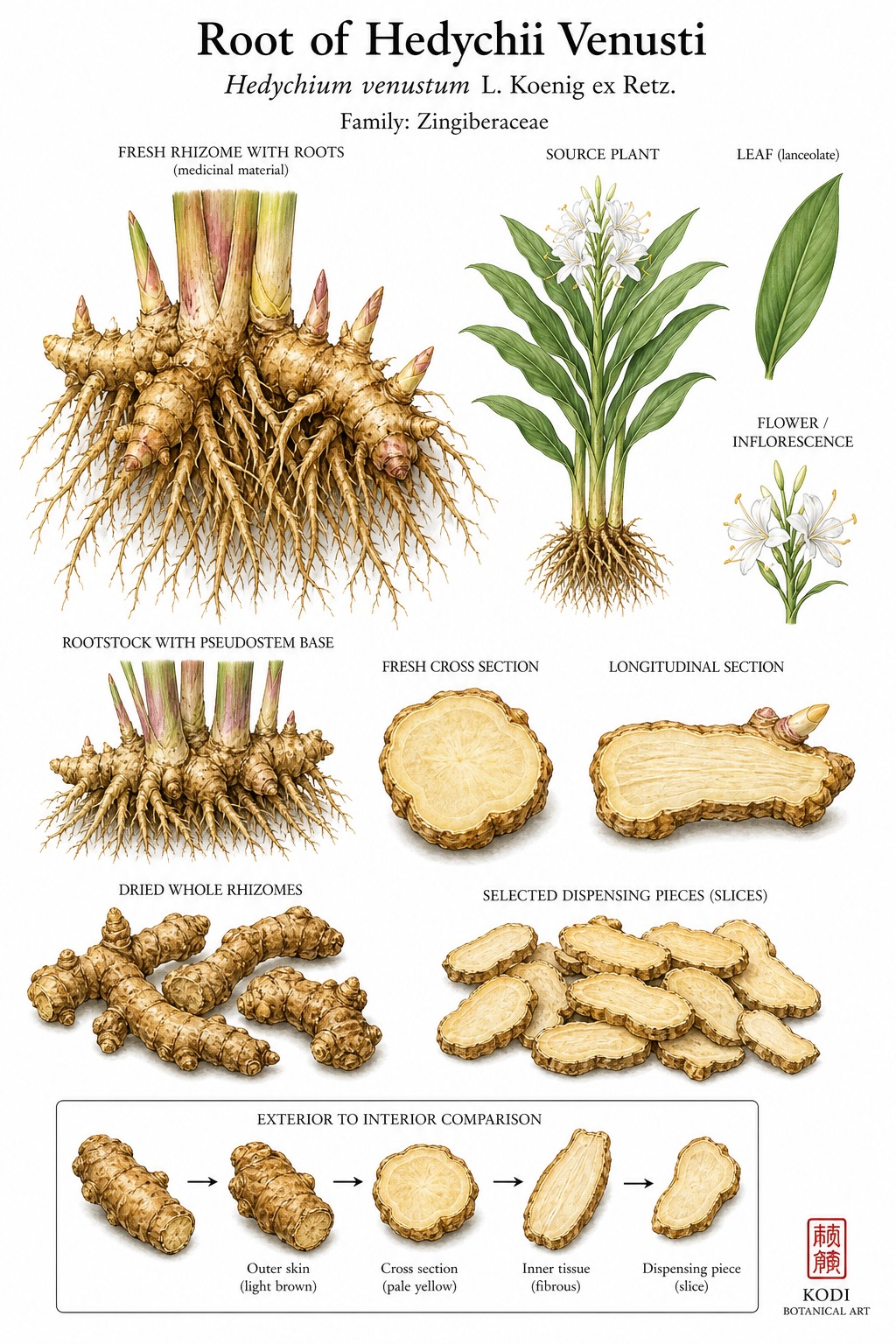
Known in TCM as Ye Jiang (野姜), this acrid, warm herb enters the Stomach and Spleen. Traditionally, it warms and quickens localized pain patterns ... regional use of Ye Jiang rhizome centers on aching, bruised, or stagnation-type discomfort rather than on large classical internal formula use, most often applied for joint pain, rheumatism, and traumatic injury. Modern research has identified Rhizome among its active constituents.
Part used: Rhizome
Also Known As
Latin: Rhizoma Hedychii Venusti | Pinyin: Ye Jiang | Chinese: 野姜
TCM Properties
- Taste
- acrid
- Temperature
- warm
- Channels
- Stomach, Spleen
Traditional Use
Primary Actions
- Warms and quickens localized pain patterns ... regional use of Ye Jiang rhizome centers on aching, bruised, or stagnation-type discomfort rather than on large classical internal formula use.
- Transforms damp turbidity in aromatic-rhizome style use ... as a ginger-lily rhizome it is better understood as an aromatic warming material for cold-damp heaviness or minor digestive stagnation than as a deep tonic.
- Supports topical cleansing and pain-relief folk use ... the medicinal profile is more regional and practical than textbook-canonical.
Secondary Actions
- Ye Jiang is not a mainstream Han pharmacopoeia cornerstone, and direct indexed pharmacology for the named herb is sparse.
- Much of the usable modern context comes from Hedychium genus work and broader Zingiberaceae rhizome chemistry, so conservative wording is more accurate than inventing a deep classical lane.
Classical References
- Regional ethnomedicine treats Ye Jiang as a warming rhizome for pain and practical complaints rather than as a major classical Materia Medica staple.
- Because published herb-specific TCM detail is thin, the page should stay modest and resist over-standardization.
Modern Research
Active Compounds
- Rhizome essential-oil terpenes ... the likeliest modern chemistry lane for Hedychium venustum
- Aromatic monoterpenes and sesquiterpenes ... consistent with broader ginger-lily pharmacology
- Genus-level diterpenoid context ... supportive but not sufficiently herb-specific to justify bold clinical claims
Studied Effects
- No robust herb-specific PubMed review literature was identified for Ye Jiang as a defined TCM medicinal, and the indexed record remains much thinner than for mainstream Zingiberaceae rhizomes.
- Non-PubMed Hedychium work emphasizes rhizome essential-oil chemistry, antimicrobial activity, and biofilm inhibition, which fits the plant's aromatic rhizome use but does not justify overstated clinical claims.
- A 2024 genetic-resource paper on Hedychium spicatum datasets included H. venustum material, underscoring that indexed literature is still oriented more toward taxonomy and plant-resource work than toward clinical monography (PMID 39183967).
PubMed References
Safety & Interactions
Contraindications
- Marked heat signs without cold or damp stagnation
- Unknown-allergen use of concentrated aromatic rhizome extracts
Cautions
- Sparse herb-specific evidence means Ye Jiang should be treated as a minor regional rhizome, not a fully standardized major TCM drug.
- Aromatic rhizome extracts and essential oils can irritate skin or digestion at higher concentrations.
- Pain, swelling, or traumatic injury severe enough to impair function needs direct medical evaluation.
Conditions
- Joint Pain Traditional ★★☆☆☆ JSON
- Rheumatism Traditional ★☆☆☆☆ JSON
- Traumatic Injury Traditional ★☆☆☆☆ JSON
Frequently Asked Questions
What is Wild Ginger Lily Rhizome used for?
Wild Ginger Lily Rhizome is traditionally used to Warms and quickens localized pain patterns ... regional use of Ye Jiang rhizome centers on aching, bruised, or stagnation-type discomfort rather than on large classical internal formula use., Transforms damp turbidity in aromatic-rhizome style use ... as a ginger-lily rhizome it is better understood as an aromatic warming material for cold-damp heaviness or minor digestive stagnation than as a deep tonic., Supports topical cleansing and pain-relief folk use ... the medicinal profile is more regional and practical than textbook-canonical.. Research has investigated its effects on: No robust herb-specific PubMed review literature was identified for Ye Jiang as a defined TCM medicinal, and the indexed record remains much thinner than for mainstream Zingiberaceae rhizomes.; Non-PubMed Hedychium work emphasizes rhizome essential-oil chemistry, antimicrobial activity, and biofilm inhibition, which fits the plant's aromatic rhizome use but does not justify overstated clinical claims..
What are other names for Wild Ginger Lily Rhizome?
Wild Ginger Lily Rhizome is also known as Hedychium Rhizome, Hedychium venustum, Ye Jiang Rhizome. In TCM: 野姜 (Ye Jiang); Rhizoma Hedychii Venusti.
Is Wild Ginger Lily Rhizome safe during pregnancy?
The safety of Wild Ginger Lily Rhizome during pregnancy has not been established. Consult a qualified healthcare provider before use.
What are the contraindications for Wild Ginger Lily Rhizome?
Wild Ginger Lily Rhizome should not be used in: Marked heat signs without cold or damp stagnation; Unknown-allergen use of concentrated aromatic rhizome extracts. Consult a qualified healthcare provider before use.