Eggplant Root Pieces
- Chinese
- èŒ„æ ¹
- Pinyin
- Qie Gen
- Latin
- Radix Solani Melongenae
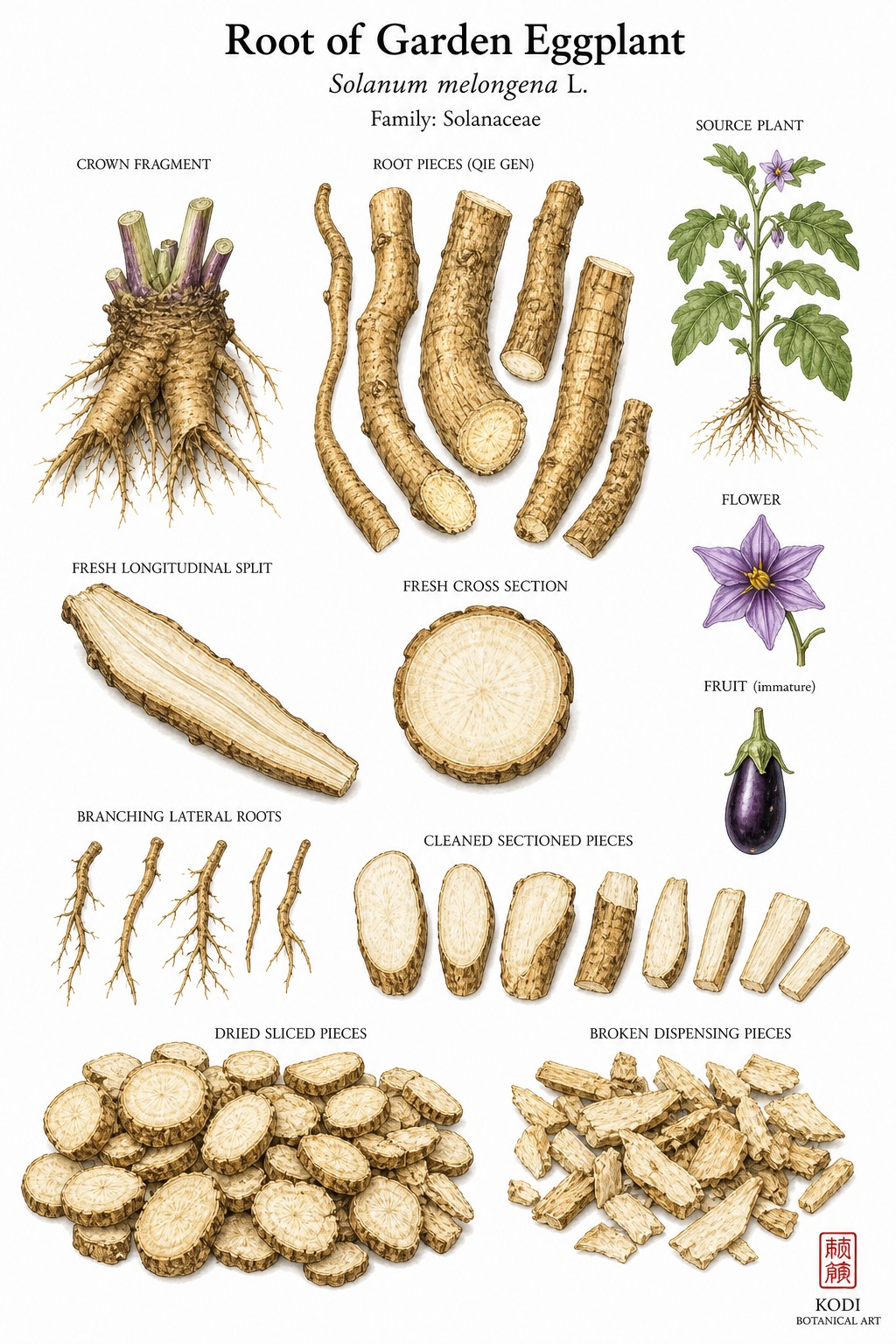
Known in TCM as Qie Gen (èŒ„æ ¹), this sweet and bitter, neutral herb enters the Stomach and Large Intestine. Traditionally, it clears heat and reduces painful swelling ... Qie Gen is the cut-root dispensing lane of eggplant root and is used in the same broad folk tradition for toothache, gum inflammation, and hot painful lesions, most often applied for toothache, rheumatism, and joint pain. Modern research has identified Phenylethyl among its active constituents.
Part used: Root
Also Known As
Latin: Radix Solani Melongenae | Pinyin: Qie Gen | Chinese: èŒ„æ ¹
TCM Properties
- Taste
- sweet, bitter
- Temperature
- neutral
- Channels
- Stomach, Large Intestine
Traditional Use
Primary Actions
- Clears heat and reduces painful swelling ... Qie Gen is the cut-root dispensing lane of eggplant root and is used in the same broad folk tradition for toothache, gum inflammation, and hot painful lesions.
- Relieves aching and wind-damp style discomfort ... cleaned root pieces are more often discussed as decoction material for chronic soreness, fixed pain, and limb discomfort than as fresh root-crown material.
- Supports rough regional bowel use ... some local traditions use sliced root when diarrhea or damp-heat bowel irritation overlaps with pain or inflammation, but evidence remains limited.
Secondary Actions
- This sibling page should stay distinct from Jia Gen mainly by preparation and trade style ... whole-root and crown versus cleaned cut pieces ... not by pretending they are different source plants.
- Modern published evidence remains chemistry-first and sparse, so claims about Qie Gen should stay conservative and practical.
Classic Formulas
- Sliced-root decoction use for toothache and swelling ... a practical folk-medicine lane rather than a named classical formula.
- Cut-root pairings with other heat-clearing herbs ... regional strategy when pain and inflammation coexist.
- Pain-relief decoctions for chronic soreness ... a modest trade-use profile rather than a major pharmacopoeial tradition.
Classical References
- Qie Gen is best understood as the prepared root-piece presentation of the same eggplant-root medicinal stream represented by Jia Gen.
- Keeping the page on cut material and dispensing practice is more accurate than inventing a sharply separate therapeutic identity.
Modern Research
Active Compounds
- Phenylethyl cinnamides ... notable root compounds with metabolic-enzyme interest
- Lignanamides ... anti-inflammatory root constituents
- Terpenes and lignans ... repeatedly reported from root extracts
Studied Effects
- A 2011 study identified phenylethyl cinnamides from eggplant roots with alpha-glucosidase inhibitory activity, confirming pharmacologically active chemistry in the root material itself (PMID 21815424).
- A 2014 paper isolated anti-inflammatory lignanamides from Solanum melongena roots, supporting a rational link between the root's folk pain use and modern chemistry (PMID 25068200).
- A 2020 report described additional terpenes and lignans from the roots of Solanum melongena, underscoring that the cleaned medicinal root pieces still belong to an active chemical plant part even though clinical evidence is thin (PMID 30600708).
PubMed References
Safety & Interactions
Contraindications
- Pregnancy without expert supervision
- Known Solanaceae sensitivity
- Cases needing urgent dental or infectious-disease care
Cautions
- Prepared root pieces are still not equivalent in safety profile to edible eggplant fruit.
- Clinical evidence is sparse and does not support broad self-treatment claims.
- Persistent tooth, gum, or bowel symptoms should be medically evaluated rather than repeatedly self-treated with folk root decoctions.
Conditions
- Toothache Traditional ★★☆☆☆ JSON
- Rheumatism Traditional ★☆☆☆☆ JSON
- Joint Pain Traditional ★☆☆☆☆ JSON
- Diarrhea Traditional ★☆☆☆☆ JSON
Frequently Asked Questions
What is Eggplant Root Pieces used for?
Eggplant Root Pieces is traditionally used to Clears heat and reduces painful swelling ... Qie Gen is the cut-root dispensing lane of eggplant root and is used in the same broad folk tradition for toothache, gum inflammation, and hot painful lesions., Relieves aching and wind-damp style discomfort ... cleaned root pieces are more often discussed as decoction material for chronic soreness, fixed pain, and limb discomfort than as fresh root-crown material., Supports rough regional bowel use ... some local traditions use sliced root when diarrhea or damp-heat bowel irritation overlaps with pain or inflammation, but evidence remains limited.. Research has investigated its effects on: A 2011 study identified phenylethyl cinnamides from eggplant roots with alpha-glucosidase inhibitory activity, confirming pharmacologically active chemistry in the root material itself (PMID 21815424).; A 2014 paper isolated anti-inflammatory lignanamides from Solanum melongena roots, supporting a rational link between the root's folk pain use and modern chemistry (PMID 25068200)..
What are other names for Eggplant Root Pieces?
Eggplant Root Pieces is also known as Solanum melongena Root, Brinjal Root, Cut Eggplant Root. In TCM: èŒ„æ ¹ (Qie Gen); Radix Solani Melongenae.
Is Eggplant Root Pieces safe during pregnancy?
The safety of Eggplant Root Pieces during pregnancy has not been established. Consult a qualified healthcare provider before use.
What are the contraindications for Eggplant Root Pieces?
Eggplant Root Pieces should not be used in: Pregnancy without expert supervision; Known Solanaceae sensitivity; Cases needing urgent dental or infectious-disease care. Consult a qualified healthcare provider before use.