Eggplant Root
- Chinese
- èŒ„æ ¹
- Pinyin
- Jia Gen
- Latin
- Radix Solani Melongenae
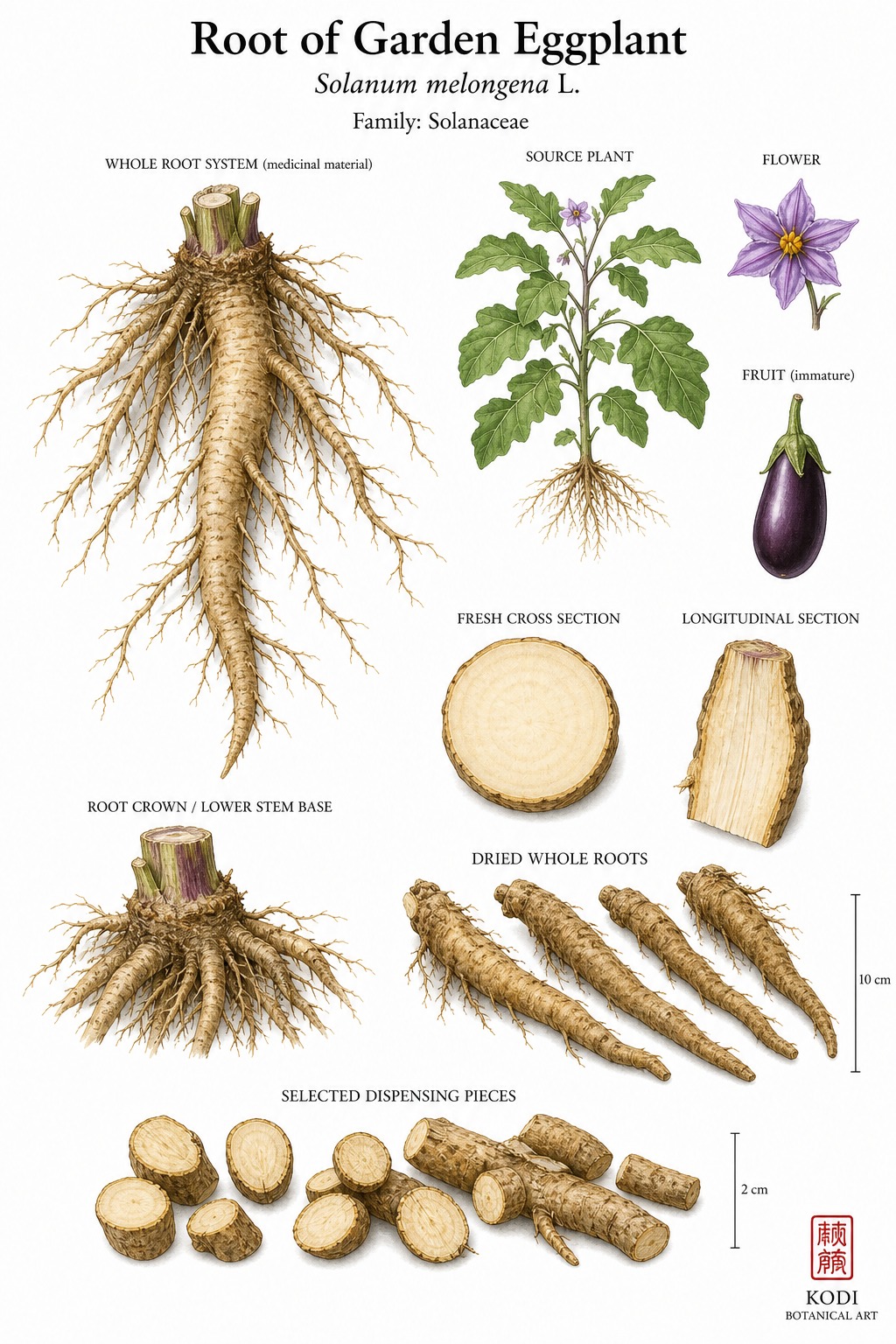
Known in TCM as Jia Gen (èŒ„æ ¹), this sweet and bitter, neutral herb enters the Stomach and Large Intestine. Traditionally, it clears local toxic heat and reduces swelling ... regional folk use applies Jia Gen to toothache, inflamed gums, boils, and other superficial painful swellings, most often applied for toothache, traumatic injury, and rheumatism. Modern research has identified Phenylethyl among its active constituents.
Part used: Root
Also Known As
Latin: Radix Solani Melongenae | Pinyin: Jia Gen | Chinese: èŒ„æ ¹
TCM Properties
- Taste
- sweet, bitter
- Temperature
- neutral
- Channels
- Stomach, Large Intestine
Traditional Use
Primary Actions
- Clears local toxic heat and reduces swelling ... regional folk use applies Jia Gen to toothache, inflamed gums, boils, and other superficial painful swellings.
- Relieves pain and unblocks fixed soreness ... the whole root or root-crown is used more for chronic aching and traumatic discomfort than for the culinary food lane associated with eggplant fruit.
- Addresses rough damp-heat bowel complaints in minor regional practice ... some use extends to diarrhea or dysenteric irritation, but the root remains a small folk medicine rather than a textbook staple.
Secondary Actions
- This sibling page stays on the whole-root and crown material shown in the botanical plate, while the Qie Gen record leans more toward cleaned and sectioned dispensing pieces from the same Solanum melongena root tradition.
- Indexed modern literature on eggplant focuses heavily on the fruit ... root-specific evidence exists, but it is chemistry-led and much thinner than the food-medicine record for the edible plant.
Classic Formulas
- Fresh-root poultice or decoction folk use ... a practical rather than classical lane for toothache, boils, and painful swelling.
- Whole-root pairings with other heat-clearing topical herbs ... used where inflammation and pain are both obvious.
- Decoction use for chronic painful obstruction ... regional practice rather than a famous pharmacopoeial formula.
Classical References
- Jia Gen is best treated as a minor regional root medicine from the eggplant plant rather than as a major canonical decoction herb with a deep formula history.
- Because the plant is widely eaten as food, it is easy to overgeneralize from the fruit to the root ... the medicinal page should stay conservative and root-specific.
Modern Research
Active Compounds
- Phenylethyl cinnamides ... alpha-glucosidase-related root constituents
- Lignanamides ... anti-inflammatory compounds repeatedly isolated from eggplant root
- Terpenes and other phenolic amides ... broader root-chemistry markers
Studied Effects
- A 2011 phytochemical study isolated phenylethyl cinnamides from eggplant roots and reported alpha-glucosidase inhibitory activity, showing that the medicinal root carries a chemistry profile distinct from the fruit (PMID 21815424).
- A 2014 paper isolated anti-inflammatory lignanamides from Solanum melongena roots, supporting why folk root use has often clustered around pain and swelling rather than simple nutrition (PMID 25068200).
- A 2020 study further characterized terpenes and lignans from the roots of Solanum melongena, reinforcing that this is a chemically active medicinal plant part even though clinical root evidence remains sparse (PMID 30600708).
PubMed References
Safety & Interactions
Contraindications
- Pregnancy without expert supervision
- Known Solanaceae sensitivity
- Cases where severe infection, dental abscess, or acute surgical pain is present
Cautions
- Eggplant root is not equivalent in safety or dosing to the commonly eaten fruit.
- Clinical evidence is sparse, so strong claims for internal root use should be avoided.
- Traditional toothache or swelling use should not delay dental or medical treatment when infection is significant.
Conditions
- Toothache Traditional ★★☆☆☆ JSON
- Traumatic Injury Traditional ★☆☆☆☆ JSON
- Rheumatism Traditional ★☆☆☆☆ JSON
- Diarrhea Traditional ★☆☆☆☆ JSON
Frequently Asked Questions
What is Eggplant Root used for?
Eggplant Root is traditionally used to Clears local toxic heat and reduces swelling ... regional folk use applies Jia Gen to toothache, inflamed gums, boils, and other superficial painful swellings., Relieves pain and unblocks fixed soreness ... the whole root or root-crown is used more for chronic aching and traumatic discomfort than for the culinary food lane associated with eggplant fruit., Addresses rough damp-heat bowel complaints in minor regional practice ... some use extends to diarrhea or dysenteric irritation, but the root remains a small folk medicine rather than a textbook staple.. Research has investigated its effects on: A 2011 phytochemical study isolated phenylethyl cinnamides from eggplant roots and reported alpha-glucosidase inhibitory activity, showing that the medicinal root carries a chemistry profile distinct from the fruit (PMID 21815424).; A 2014 paper isolated anti-inflammatory lignanamides from Solanum melongena roots, supporting why folk root use has often clustered around pain and swelling rather than simple nutrition (PMID 25068200)..
What are other names for Eggplant Root?
Eggplant Root is also known as Solanum melongena Root, Brinjal Root, Eggplant Root Crown. In TCM: èŒ„æ ¹ (Jia Gen); Radix Solani Melongenae.
Is Eggplant Root safe during pregnancy?
The safety of Eggplant Root during pregnancy has not been established. Consult a qualified healthcare provider before use.
What are the contraindications for Eggplant Root?
Eggplant Root should not be used in: Pregnancy without expert supervision; Known Solanaceae sensitivity; Cases where severe infection, dental abscess, or acute surgical pain is present. Consult a qualified healthcare provider before use.