Lian Xin Mai Dong Ophiopogon Root Tuber
- Chinese
- 连心麦冬
- Pinyin
- Lian Xin Mai Dong
- Latin
- Radix Ophiopogonis
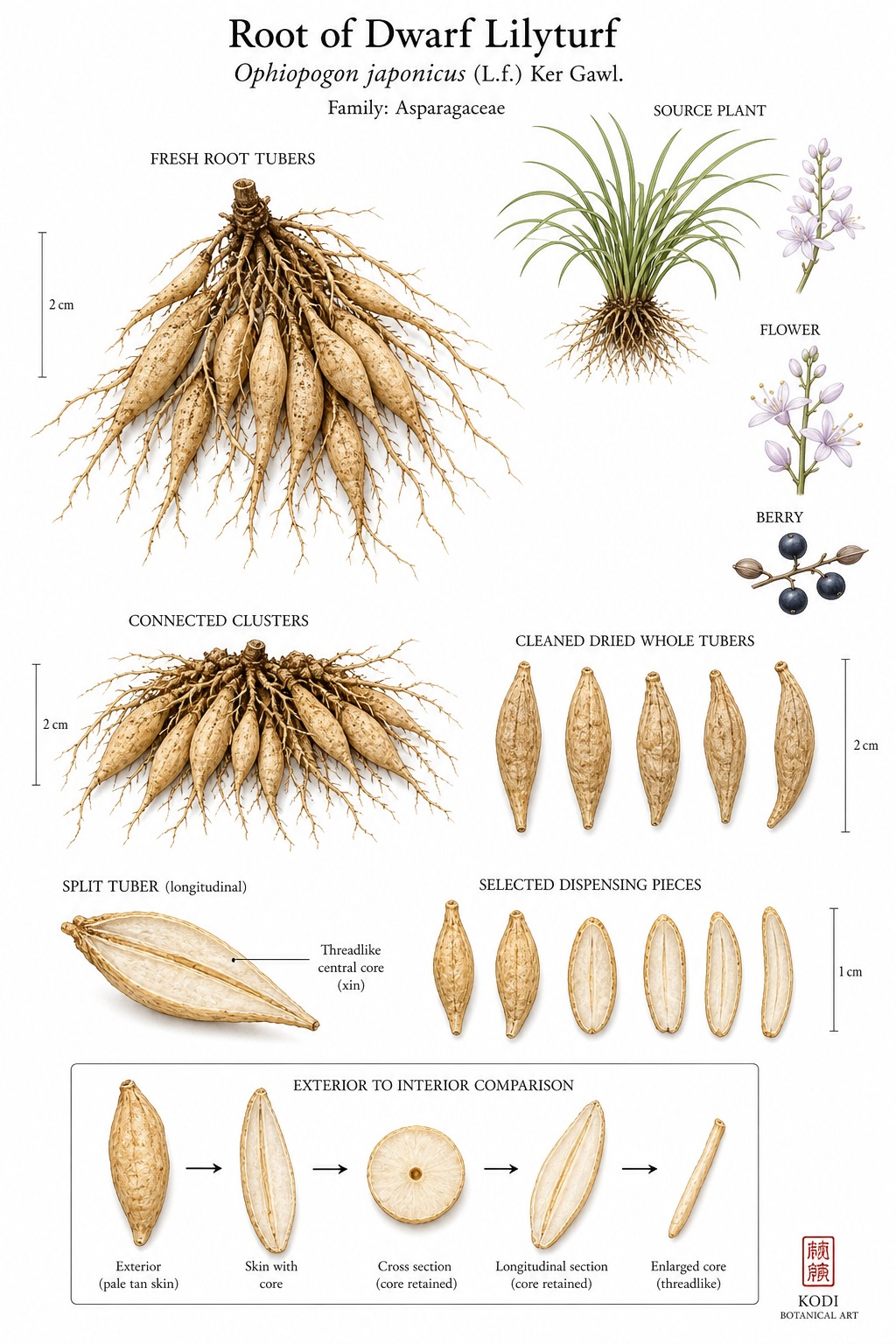
Known in TCM as Lian Xin Mai Dong (连心麦冬), this sweet and slightly bitter, slightly cold herb enters the Heart, Lung, and Stomach. Traditionally, it nourishes yin and generates fluids ... Lian Xin Mai Dong remains within the standard Ophiopogon maidong lane for depleted fluids, dry mouth, and dryness affecting the Lung and Stomach, most often applied for yin deficiency, palpitations, and insomnia. Modern research has identified Ophiopogon among its active constituents.
Part used: Root
Also Known As
Latin: Radix Ophiopogonis | Pinyin: Lian Xin Mai Dong | Chinese: 连心麦冬
TCM Properties
- Taste
- sweet, slightly bitter
- Temperature
- slightly cold
- Channels
- Heart, Lung, Stomach
Traditional Use
Primary Actions
- Nourishes yin and generates fluids ... Lian Xin Mai Dong remains within the standard Ophiopogon maidong lane for depleted fluids, dry mouth, and dryness affecting the Lung and Stomach.
- Moistens the Lung and eases dry cough ... it is used for dryness with scant sputum, throat irritation, and chronic cough from yin damage.
- Clears Heart irritability and calms vexation ... the retained-core trade description traditionally leans this lane toward Heart-yin and spirit-related presentations alongside general maidong use.
Secondary Actions
- This page preserves the core-retaining Lian Xin Mai Dong lot described in the illustration prompt, which keeps it distinct from the larger Cun Dong lane and the standard Mai Dong bulk lot.
- Like the other Ophiopogon pages, it should remain separate from the already-live Liriope-derived Shan Mai Dong record.
Classic Formulas
- Tian Wang Bu Xin Dan ... classic Heart-Kidney yin deficiency formula context in which maidong supports fluids and relieves vexation.
- Sheng Mai San ... qi-and-yin restoring formula tradition where maidong nourishes fluids and supports the Heart.
- Mai Men Dong Tang ... dry-Lung and rebellious-qi formula that remains the best-known maidong reference point.
Classical References
- Traditional descriptions of maidong consistently include nourishment of Heart, Lung, and Stomach yin, which makes the Lian Xin Mai Dong lane editorially appropriate for more Heart-centered wording without inventing a different herb.
- The preserved central core is a trade-material distinction, not a separate species or separate pharmacologic lineage.
Modern Research
Active Compounds
- Ophiopogon polysaccharides ... the most heavily studied macromolecular fractions
- Steroidal saponins such as ophiopogonin D and related compounds ... major active small molecules
- Homoisoflavonoids ... frequently discussed antioxidant and anti-inflammatory constituents
- Flavonoids and other secondary metabolites ... supportive components in the broader chemistry profile
Studied Effects
- A 2025 review summarized extraction, structural characterization, safety evaluation, and broad biological activities of Ophiopogon japonicus polysaccharides, underlining their central role in modern maidong research (PMID 39863237).
- A 2024 review further detailed the structure-activity relationships of Ophiopogon japonicus polysaccharides and emphasized immunomodulatory, hypoglycemic, and organ-protective research directions (PMID 39624687).
- A 2019 review of polysaccharides from traditional Chinese herbs provides wider context for why Ophiopogon remains so strongly associated with bioactive fluid-restoring polysaccharide fractions (PMID 31030757).
PubMed References
- Extraction and purification of Ophiopogon japonicus polysaccharides, structural characterization, biological activity, safety evaluation, chemical modification and potential applications: A review (2025)
- Extraction, purification, structural characterization, bioactivities, modifications and structure-activity relationship of polysaccharides from Ophiopogon japonicus: a review. (2024)
- The structures and biological functions of polysaccharides from traditional Chinese herbs. (2019)
Safety & Interactions
Contraindications
- Loose stools or weak digestion with damp accumulation
- Cold-phlegm obstruction without meaningful dryness or yin depletion
Cautions
- Lian Xin Mai Dong is still a moistening and somewhat cloying herb, so digestive weakness can worsen if it is used indiscriminately.
- The more Heart-centered traditional framing of this lane does not mean it has separate human clinical evidence from other Ophiopogon maidong materials.
- Authentication still matters because Ophiopogon and Liriope products circulate under overlapping maidong names.
Conditions
- Yin Deficiency Traditional ★★★★☆ JSON
- Palpitations Traditional ★★★☆☆ JSON
- Insomnia Traditional ★★★☆☆ JSON
- Dry Cough Traditional ★★★☆☆ JSON
Frequently Asked Questions
What is Lian Xin Mai Dong Ophiopogon Root Tuber used for?
Lian Xin Mai Dong Ophiopogon Root Tuber is traditionally used to Nourishes yin and generates fluids ... Lian Xin Mai Dong remains within the standard Ophiopogon maidong lane for depleted fluids, dry mouth, and dryness affecting the Lung and Stomach., Moistens the Lung and eases dry cough ... it is used for dryness with scant sputum, throat irritation, and chronic cough from yin damage., Clears Heart irritability and calms vexation ... the retained-core trade description traditionally leans this lane toward Heart-yin and spirit-related presentations alongside general maidong use.. Research has investigated its effects on: A 2025 review summarized extraction, structural characterization, safety evaluation, and broad biological activities of Ophiopogon japonicus polysaccharides, underlining their central role in modern maidong research (PMID 39863237).; A 2024 review further detailed the structure-activity relationships of Ophiopogon japonicus polysaccharides and emphasized immunomodulatory, hypoglycemic, and organ-protective research directions (PMID 39624687)..
What are other names for Lian Xin Mai Dong Ophiopogon Root Tuber?
Lian Xin Mai Dong Ophiopogon Root Tuber is also known as Ophiopogon Root Tuber, Mai Men Dong, Core-retaining Maidong. In TCM: 连心麦冬 (Lian Xin Mai Dong); Radix Ophiopogonis.
Is Lian Xin Mai Dong Ophiopogon Root Tuber safe during pregnancy?
The safety of Lian Xin Mai Dong Ophiopogon Root Tuber during pregnancy has not been established. Consult a qualified healthcare provider before use.
What are the contraindications for Lian Xin Mai Dong Ophiopogon Root Tuber?
Lian Xin Mai Dong Ophiopogon Root Tuber should not be used in: Loose stools or weak digestion with damp accumulation; Cold-phlegm obstruction without meaningful dryness or yin depletion. Consult a qualified healthcare provider before use.