Ting Hu Corydalis Root
- Chinese
- 延胡索
- Pinyin
- Ting Hu
- Latin
- Rhizoma Corydalis
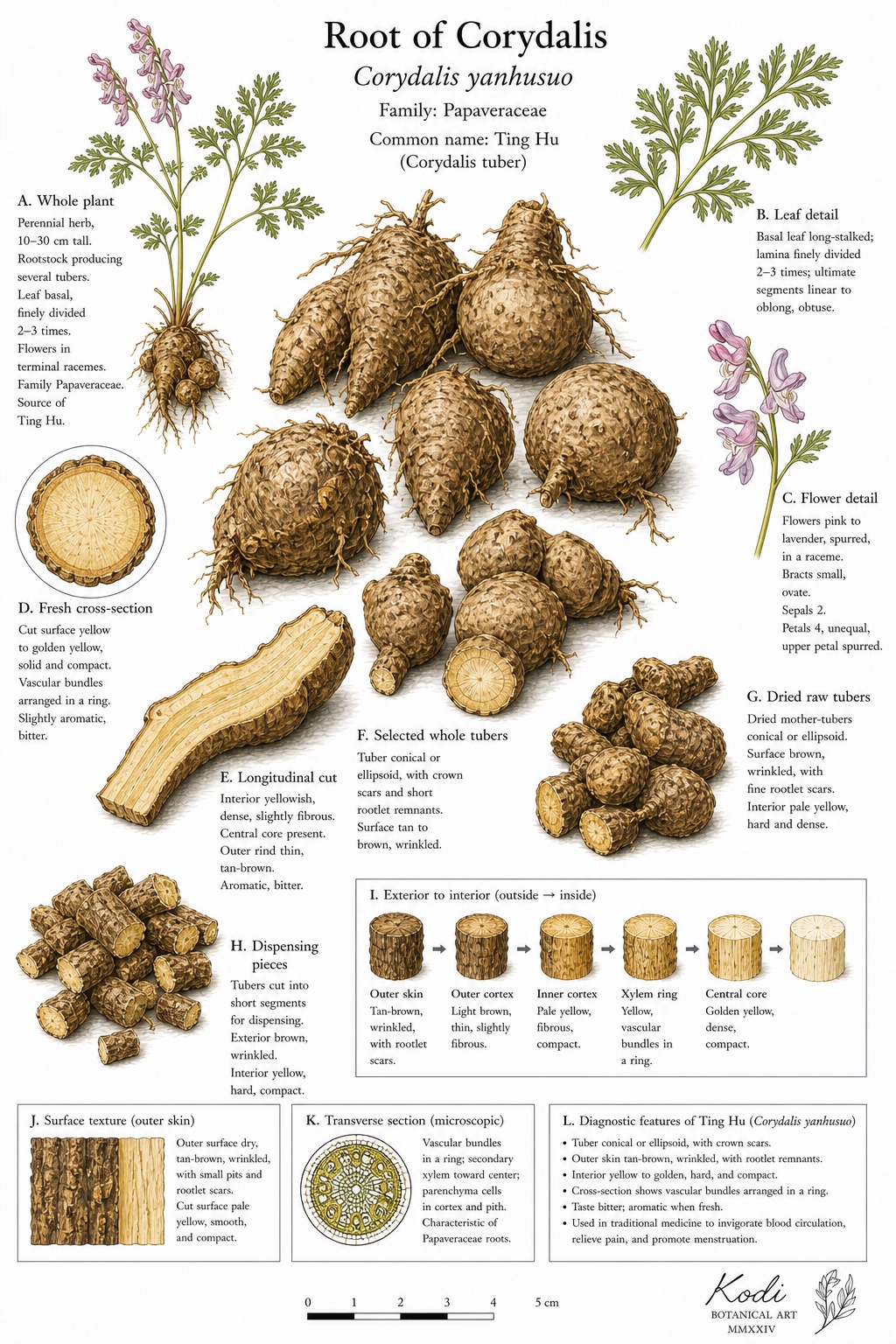
Known in TCM as Ting Hu (延胡索), this acrid and bitter, warm herb enters the Heart, Liver, and Spleen. Traditionally, it invigorates Blood, moves qi, and relieves pain ... Ting Hu is still the same Corydalis yanhusuo medicinal stream used when qi stagnation and blood stasis combine into distending or fixed pain, most often applied for abdominal pain, dysmenorrhea, and chest pain. Modern research has identified Tetrahydropalmatine among its active constituents.
Part used: Rhizome
Also Known As
Latin: Rhizoma Corydalis | Pinyin: Ting Hu | Chinese: 延胡索
TCM Properties
- Taste
- acrid, bitter
- Temperature
- warm
- Channels
- Heart, Liver, Spleen
Traditional Use
Primary Actions
- Invigorates Blood, moves qi, and relieves pain ... Ting Hu is still the same Corydalis yanhusuo medicinal stream used when qi stagnation and blood stasis combine into distending or fixed pain.
- Relieves chest, flank, and abdominal pain ... it is suited to constrained, obstructive pain patterns rather than to generalized weakness or depletion aches.
- Supports menstrual and trauma formulas ... Ting Hu retains the same traditional role in dysmenorrhea, postpartum pain, and traumatic injury as other raw yanhusuo naming lanes.
Secondary Actions
- This Ting Hu page is separated for alias and illustration accuracy, with a smaller selected whole-tuber and short-cut lot profile rather than a larger clustered lot.
- The naming difference is commercial and editorial, not pharmacologic ... it should still be understood as a raw corydalis pain herb.
Classic Formulas
- Jin Ling Zi San ... classic constrained-pain pairing that uses corydalis to move stagnation and reduce pain.
- Yan Hu Suo Zhi Tong Wan ... patent-style pain-formula logic centered on corydalis.
- Shao Fu Zhu Yu Tang modifications ... gynecologic stasis settings in which corydalis helps relieve lower-abdominal pain.
Classical References
- Materia medica tradition values corydalis for treating both qi and blood aspects of pain, which is why it spans digestive, gynecologic, traumatic, and channel-obstruction use.
- Ting Hu should therefore be read as an alias-track raw lot within the broader Yan Hu Suo family, not as a separate herb.
Modern Research
Active Compounds
- Tetrahydropalmatine ... a well-known corydalis alkaloid associated with analgesic and sedative effects
- Dehydrocorybulbine ... studied for pain-modulating relevance in experimental models
- Protopine and related isoquinoline alkaloids ... supportive constituents within the raw tuber profile
- Alkaloid-rich fractions ... the principal pharmacologically active chemical group discussed in modern corydalis research
Studied Effects
- A 2021 review summarized the analgesic chemistry of Corydalis yanhusuo and reinforced why the herb remains one of the most research-visible traditional pain medicines (PMID 34946576).
- Experimental work showed significant antinociceptive activity across inflammatory and neuropathic pain models, supporting traditional use for painful stagnation patterns (PMID 27622550).
- A 2022 review emphasized that processing changes efficacy and safety considerations, which matters when distinguishing raw alias pages from prepared corydalis records (PMID 35003289).
PubMed References
Safety & Interactions
Contraindications
- Pregnancy
- Heavy menstrual bleeding without stasis
- Severe qi or blood deficiency pain without obstruction
Cautions
- Ting Hu is still a moving, dispersing pain herb and may worsen active bleeding or purely deficient pain states.
- Its alkaloid-rich chemistry can cause dizziness, sedation, or gastrointestinal upset in sensitive individuals.
- Raw-lot naming does not make the herb safer than the canonical Yan Hu Suo page.
Conditions
- Abdominal Pain Traditional ★★★★☆ JSON
- Dysmenorrhea Traditional ★★★★☆ JSON
- Chest Pain Traditional ★★★☆☆ JSON
- Traumatic Injury Traditional ★★☆☆☆ JSON
Frequently Asked Questions
What is Ting Hu Corydalis Root used for?
Ting Hu Corydalis Root is traditionally used to Invigorates Blood, moves qi, and relieves pain ... Ting Hu is still the same Corydalis yanhusuo medicinal stream used when qi stagnation and blood stasis combine into distending or fixed pain., Relieves chest, flank, and abdominal pain ... it is suited to constrained, obstructive pain patterns rather than to generalized weakness or depletion aches., Supports menstrual and trauma formulas ... Ting Hu retains the same traditional role in dysmenorrhea, postpartum pain, and traumatic injury as other raw yanhusuo naming lanes.. Research has investigated its effects on: A 2021 review summarized the analgesic chemistry of Corydalis yanhusuo and reinforced why the herb remains one of the most research-visible traditional pain medicines (PMID 34946576).; Experimental work showed significant antinociceptive activity across inflammatory and neuropathic pain models, supporting traditional use for painful stagnation patterns (PMID 27622550)..
What are other names for Ting Hu Corydalis Root?
Ting Hu Corydalis Root is also known as Corydalis, Yan Hu Suo, Ting Hu Suo. In TCM: 延胡索 (Ting Hu); Rhizoma Corydalis.
Is Ting Hu Corydalis Root safe during pregnancy?
Ting Hu Corydalis Root is not recommended during pregnancy.
What are the contraindications for Ting Hu Corydalis Root?
Ting Hu Corydalis Root should not be used in: Pregnancy; Heavy menstrual bleeding without stasis; Severe qi or blood deficiency pain without obstruction. Consult a qualified healthcare provider before use.