Chinese Stephania Root
- Chinese
- 华千金藤
- Pinyin
- Hua Qian Jin Teng
- Latin
- Radix Stephaniae Sinicae
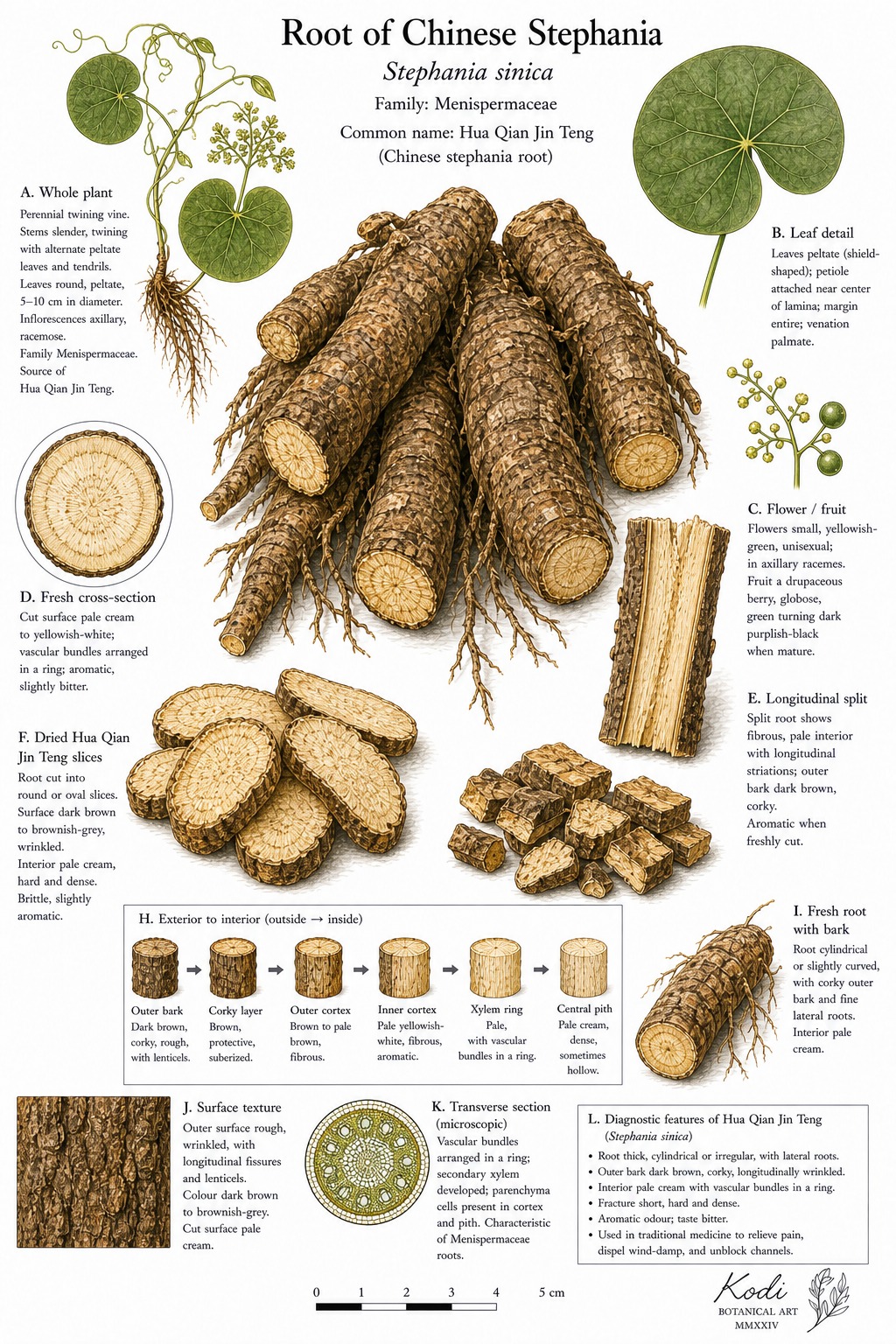
Known in TCM as Hua Qian Jin Teng (华千金藤), this bitter, slightly cold herb enters the Liver and Stomach. Traditionally, it invigorates blood and relieves pain ... Hua Qian Jin Teng is used in regional traditions for stomach pain, headache, toothache, trauma pain, and rheumatic obstruction where stasis is a major feature, most often applied for abdominal pain, toothache, and traumatic injury. Modern research has identified Bisbenzylisoquinoline among its active constituents.
Part used: Root
Also Known As
Latin: Radix Stephaniae Sinicae | Pinyin: Hua Qian Jin Teng | Chinese: 华千金藤
TCM Properties
- Taste
- bitter
- Temperature
- slightly cold
- Channels
- Liver, Stomach
Traditional Use
Primary Actions
- Invigorates blood and relieves pain ... Hua Qian Jin Teng is used in regional traditions for stomach pain, headache, toothache, trauma pain, and rheumatic obstruction where stasis is a major feature.
- Clears heat and resolves toxicity ... local use extends to sores, mouth ulcers, abscesses, burns, and snakebite where inflammatory toxicity is obvious.
- Addresses toxic bowel irritation ... some traditional notes include dysenteric or inflammatory diarrhea patterns when heat and toxicity are part of the picture.
Secondary Actions
- Species-level indexed modern research is sparse, so this page stays conservative and leans on regional materia medica use plus broader Stephania-genus chemistry rather than inflated species-specific claims.
- This record should remain distinct from other Qian Jin Teng trade names in the Stephania world ... source authentication matters because the genus carries several overlapping medicinal lanes.
Classic Formulas
- Regional trauma and blood-stasis pain combinations ... selected when fixed pain and local swelling are prominent.
- Heat-toxin and sore-throat or mouth-lesion wash logic ... used where cooling and detoxifying pain relief are both needed.
- Bowel-heat and toxic-diarrhea pairings in local practice rather than in the highest-canon national formula traditions.
Classical References
- Regional Chinese materia medica descriptions emphasize moving blood, stopping pain, and clearing toxic heat as the core Hua Qian Jin Teng profile.
- Its practical range is broad, but the common thread is painful or toxic patterns rather than tonification.
Modern Research
Active Compounds
- Bisbenzylisoquinoline and related Stephania alkaloids ... the most important genus-level chemistry to keep in view here
- Aporphine and protoberberine-type alkaloid patterns used in chemotaxonomic and pharmacology work
- Other Menispermaceae alkaloid fractions relevant to analgesic, anti-inflammatory, and toxicology discussions
Studied Effects
- A 2023 study on alkaloid variation within Chinese Stephania species helps frame Hua Qian Jin Teng within a chemically active genus where source identity matters materially (PMID 37305452).
- A 2022 comprehensive review summarized ethnopharmacology, phytochemistry, pharmacology, and toxicology across the genus Stephania, offering the best indexed modern context for this page while species-specific data remain limited (PMID 35430287).
- A 2005 multidisciplinary review on toxicologic problems associated with herbal medicines remains relevant here as a caution that alkaloid-rich herbs and substitutions can create safety issues even when traditional use is longstanding (PMID 15665747).
PubMed References
- Alkaloid variations within the genus Stephania (Menispermaceae) in China. (2023)
- Alkaloids in genus stephania (Menispermaceae): A comprehensive review of its ethnopharmacology, phytochemistry, pharmacology and toxicology. (2022)
- A multidisciplinary approach to the toxicologic problems associated with the use of herbal medicines. (2005)
Safety & Interactions
Contraindications
- Pregnancy unless specifically prescribed
- Patients without clear blood-stasis, pain, or heat-toxin indications
- Unverified or mixed Stephania source material
Cautions
- Stephania herbs are alkaloid-rich and source confusion inside the genus is a real quality-control issue.
- Use should remain conservative because indexed species-specific dosing and safety data for Stephania sinica are limited.
Conditions
- Abdominal Pain Traditional ★★☆☆☆ JSON
- Toothache Traditional ★★☆☆☆ JSON
- Traumatic Injury Traditional ★★☆☆☆ JSON
- Abscess Traditional ★★☆☆☆ JSON
- Rheumatism Traditional ★★☆☆☆ JSON
Frequently Asked Questions
What is Chinese Stephania Root used for?
Chinese Stephania Root is traditionally used to Invigorates blood and relieves pain ... Hua Qian Jin Teng is used in regional traditions for stomach pain, headache, toothache, trauma pain, and rheumatic obstruction where stasis is a major feature., Clears heat and resolves toxicity ... local use extends to sores, mouth ulcers, abscesses, burns, and snakebite where inflammatory toxicity is obvious., Addresses toxic bowel irritation ... some traditional notes include dysenteric or inflammatory diarrhea patterns when heat and toxicity are part of the picture.. Research has investigated its effects on: A 2023 study on alkaloid variation within Chinese Stephania species helps frame Hua Qian Jin Teng within a chemically active genus where source identity matters materially (PMID 37305452).; A 2022 comprehensive review summarized ethnopharmacology, phytochemistry, pharmacology, and toxicology across the genus Stephania, offering the best indexed modern context for this page while species-specific data remain limited (PMID 35430287)..
What are other names for Chinese Stephania Root?
Chinese Stephania Root is also known as Stephania sinica Root, Hua Qian Jin Teng Root, Stephania Root. In TCM: 华千金藤 (Hua Qian Jin Teng); Radix Stephaniae Sinicae.
Is Chinese Stephania Root safe during pregnancy?
Chinese Stephania Root is not recommended during pregnancy.
What are the contraindications for Chinese Stephania Root?
Chinese Stephania Root should not be used in: Pregnancy unless specifically prescribed; Patients without clear blood-stasis, pain, or heat-toxin indications; Unverified or mixed Stephania source material. Consult a qualified healthcare provider before use.