Chinese Pulsatilla Root
- Chinese
- 白头翁
- Pinyin
- Bai Tou Weng
- Latin
- Radix Pulsatillae
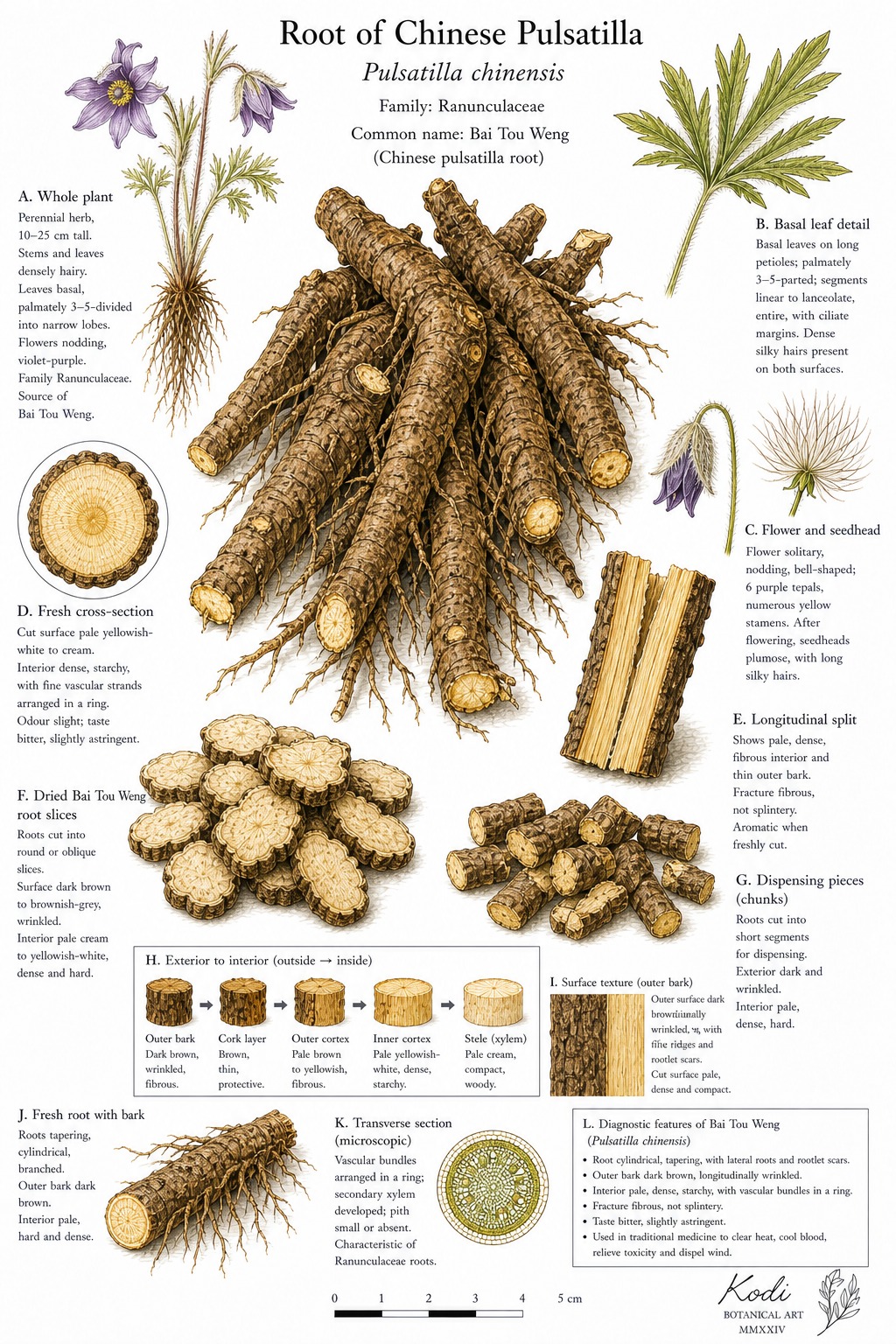
Known in TCM as Bai Tou Weng (白头翁), this bitter, cold herb enters the Large Intestine and Stomach. Traditionally, it clears toxic heat and cools the blood in the intestines ... Bai Tou Weng is one of the classic dysentery herbs for heat, blood, mucus, abdominal pain, and tenesmus, most often applied for dysentery, diarrhea, and eczema. Modern research has identified Pulsatilla among its active constituents.
Part used: Root
Also Known As
Latin: Radix Pulsatillae | Pinyin: Bai Tou Weng | Chinese: 白头翁
TCM Properties
- Taste
- bitter
- Temperature
- cold
- Channels
- Large Intestine, Stomach
Traditional Use
Primary Actions
- Clears toxic heat and cools the blood in the intestines ... Bai Tou Weng is one of the classic dysentery herbs for heat, blood, mucus, abdominal pain, and tenesmus.
- Stops toxic diarrhea and enteric inflammation ... it is especially valued when the stool is hot, urgent, offensive, or blood-streaked rather than simply loose from deficiency.
- Resolves heat toxicity in skin and lower-burner patterns ... traditional extension of use includes boils, inflammatory lesions, and some hot discharges.
Secondary Actions
- This is one of the signature heat-dysentery herbs in Chinese medicine and should not be softened into a generic diarrhea page.
- Its cold bitter direction makes it most useful for excess heat and toxin patterns, not for cold deficiency diarrhea or chronic weak digestion.
Classic Formulas
- Bai Tou Weng Tang ... the canonical formula for toxic-heat dysentery with tenesmus and blood.
- Pairings with Qin Pi, Huang Bai, and Huang Lian ... classic lower-bowel heat and toxin logic.
- Topical or wash traditions for hot inflammatory lesions and skin irritation.
Classical References
- Materia medica teaching consistently gives Bai Tou Weng a focused role in toxic-heat dysentery rather than a broad indiscriminate anti-diarrheal role.
- Its reputation comes from cooling, clearing, and detoxifying the intestines, especially when blood and tenesmus are present.
Modern Research
Active Compounds
- Pulsatilla saponins ... the major modern pharmacology focus
- Oleanane-type triterpenoid saponins studied for gastrointestinal and anticancer activity
- Other bitter root constituents contributing to anti-inflammatory interest
Studied Effects
- A 2022 systematic review focused on the anticancer pharmacology, clinical research, and pharmacokinetic studies of Pulsatilla chinensis, showing that Bai Tou Weng has become an active modern research subject beyond its classical bowel role (PMID 35814470).
- A 2022 review summarized pharmacological activities and molecular mechanisms of Pulsatilla saponins, reinforcing their central importance to the herb's modern evidence base (PMID 35606807).
- A 2023 study evaluated oleanane-type saponins from Pulsatilla chinensis for ulcerative-colitis treatment, giving a particularly relevant bridge between modern research and traditional intestinal use (PMID 36843292).
PubMed References
- Pulsatilla chinensis (Bge.) Regel: A Systematic Review on Anticancer of Its Pharmacological Properties, Clinical Researches and Pharmacokinetic Studies. (2022)
- Pharmacological activities and molecular mechanisms of Pulsatilla saponins. (2022)
- Discovery, Preliminary Structure-Activity Relationship, and Evaluation of Oleanane-Type Saponins from Pulsatilla chinensis for the Treatment of Ulcerative Colitis. (2023)
Safety & Interactions
Contraindications
- Cold deficiency diarrhea or weak digestion without heat toxin
- Cases where the bowel disorder is primarily deficiency rather than inflammatory heat
Cautions
- Bitter cold roots with active saponin chemistry can aggravate fragile digestion if the pattern is misidentified.
- Concentrated extracts studied in modern pharmacology are not interchangeable with traditional decoction dosing.
Conditions
Frequently Asked Questions
What is Chinese Pulsatilla Root used for?
Chinese Pulsatilla Root is traditionally used to Clears toxic heat and cools the blood in the intestines ... Bai Tou Weng is one of the classic dysentery herbs for heat, blood, mucus, abdominal pain, and tenesmus., Stops toxic diarrhea and enteric inflammation ... it is especially valued when the stool is hot, urgent, offensive, or blood-streaked rather than simply loose from deficiency., Resolves heat toxicity in skin and lower-burner patterns ... traditional extension of use includes boils, inflammatory lesions, and some hot discharges.. Research has investigated its effects on: A 2022 systematic review focused on the anticancer pharmacology, clinical research, and pharmacokinetic studies of Pulsatilla chinensis, showing that Bai Tou Weng has become an active modern research subject beyond its classical bowel role (PMID 35814470).; A 2022 review summarized pharmacological activities and molecular mechanisms of Pulsatilla saponins, reinforcing their central importance to the herb's modern evidence base (PMID 35606807)..
What are other names for Chinese Pulsatilla Root?
Chinese Pulsatilla Root is also known as Pulsatilla chinensis Root, Bai Tou Weng Root, Pulsatilla Root. In TCM: 白头翁 (Bai Tou Weng); Radix Pulsatillae.
Is Chinese Pulsatilla Root safe during pregnancy?
The safety of Chinese Pulsatilla Root during pregnancy has not been established. Consult a qualified healthcare provider before use.
What are the contraindications for Chinese Pulsatilla Root?
Chinese Pulsatilla Root should not be used in: Cold deficiency diarrhea or weak digestion without heat toxin; Cases where the bowel disorder is primarily deficiency rather than inflammatory heat. Consult a qualified healthcare provider before use.