Shield Fern Rhizome
- Chinese
- 贯众
- Pinyin
- Guan Zhong
- Latin
- Rhizoma Dryopteris Crassirhizomae
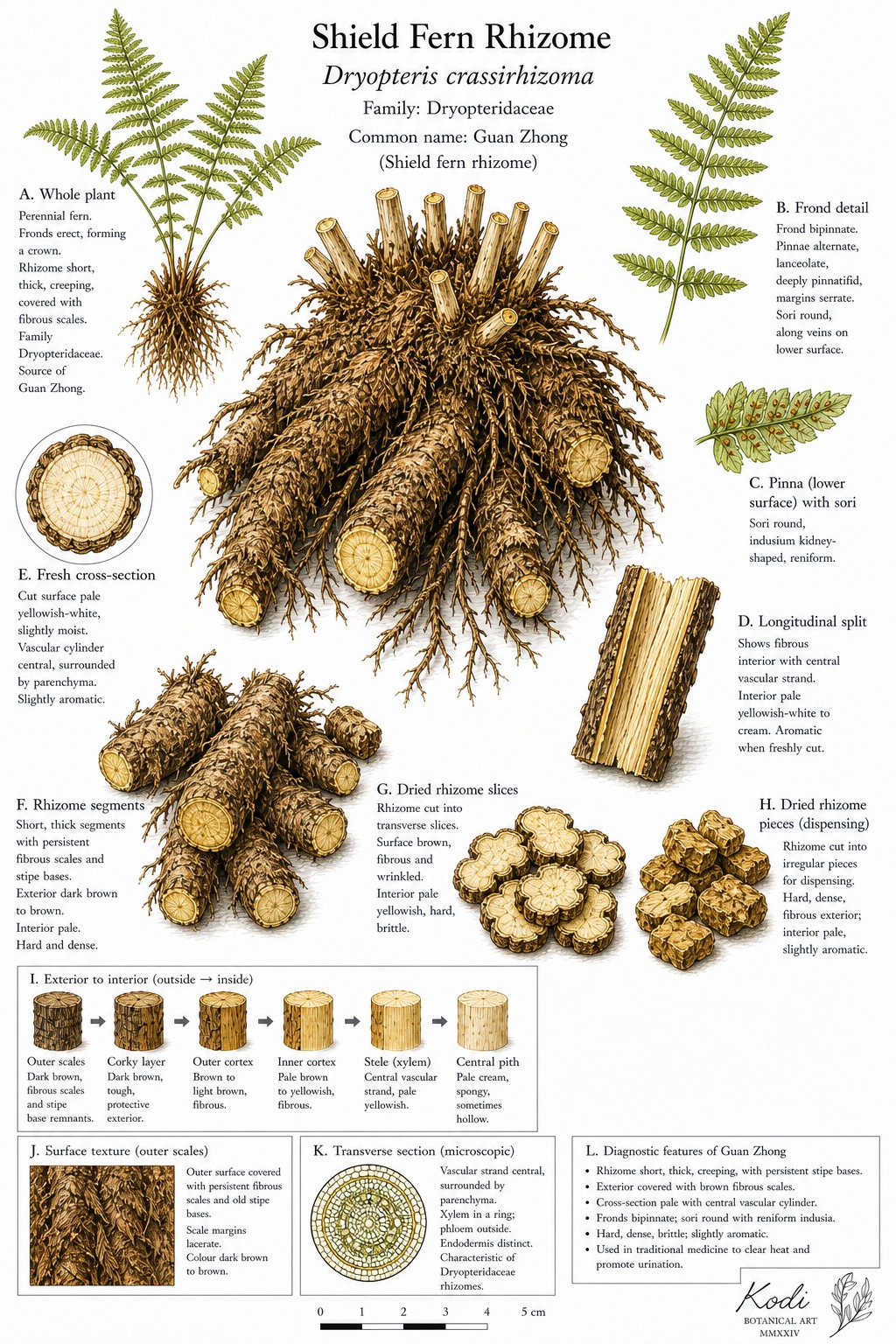
Known in TCM as Guan Zhong (贯众), this acrid and bitter, cold herb enters the Liver, Lung, and Stomach. Traditionally, it clears heat and resolves toxicity ... Guan Zhong is used for epidemic-fever logic, toxic heat in the throat, and inflammatory states where a cold bitter fern rhizome is appropriate, most often applied for intestinal parasites, abnormal uterine bleeding, and sore throat. Modern research has identified Phloroglucinol among its active constituents.
Part used: Rhizome
Also Known As
Latin: Rhizoma Dryopteris Crassirhizomae | Pinyin: Guan Zhong | Chinese: 贯众
TCM Properties
- Taste
- acrid, bitter
- Temperature
- cold
- Channels
- Liver, Lung, Stomach
Traditional Use
Primary Actions
- Clears heat and resolves toxicity ... Guan Zhong is used for epidemic-fever logic, toxic heat in the throat, and inflammatory states where a cold bitter fern rhizome is appropriate.
- Expels and kills intestinal parasites ... traditional use includes roundworm and tapeworm patterns when a stronger parasite-focused herb is needed.
- Cools blood and stops bleeding ... the charred form is classically used when heat agitates the blood and bleeding needs a cooling hemostatic approach.
Secondary Actions
- This page corrects an inherited identity error in the slug and should be read as a Guan Zhong rhizome page, not as any Dang Gui or Chinese angelica lane.
- It overlaps heavily with the already-live Mian Ma Guan Zhong sibling, which is also anchored to Dryopteris crassirhizoma ... the distinction here is naming lane and page identity, not a different medicinal family.
Classic Formulas
- Parasite-expelling formulas ... used when intestinal worms are clinically obvious and stronger cold agents are appropriate.
- Heat-toxin and epidemic-prevention logic ... older teaching includes prophylactic and outbreak-season use in some regional traditions.
- Charred-form hemostatic use ... selected when cooling blood and stopping bleeding become the priority.
Classical References
- Traditional materia medica consistently treats Guan Zhong as a cold fern-rhizome medicine for parasites, heat-toxin, and blood heat.
- Charred Guan Zhong has a separate hemostatic emphasis, which is why the raw and charred lanes should not be mentally collapsed.
Modern Research
Active Compounds
- Phloroglucinol derivatives such as dryocrassin ABBA and filixic-acid-related constituents
- Flavonoids and tannins present in Dryopteris crassirhizoma rhizome
- Species-authentication markers relevant to adulterant control
Studied Effects
- A 2024 review summarized the botany, traditional use, phytochemistry, pharmacology, toxicology, and pharmacokinetics of Dryopteris crassirhizoma, giving broad support for the modern understanding of Guan Zhong chemistry and safety (PMID 38570147).
- A 2007 identification study used cpDNA rbcL and translated amino-acid sequences to distinguish Dryopteris crassirhizoma from adulterant species, which is directly relevant to this page because trade authentication matters (PMID 17713871).
- A 2017 study reported anti-influenza H5N1 activity from phloroglucinols in Dryopteris crassirhizoma rhizomes, supporting one modern angle on the herb's old epidemic-fever reputation (PMID 28282885).
PubMed References
- Dryopteris crassirhizoma Nakai.: A review of its botany, traditional use, phytochemistry, pharmacological activity, toxicology and pharmacokinetics. (2024)
- Identification of Dryopteris crassirhizoma and the adulterant species based on cpDNA rbcL and translated amino acid sequences. (2007)
- Anti-Influenza Virus (H5N1) Activity Screening on the Phloroglucinols from Rhizomes of Dryopteris crassirhizoma. (2017)
Safety & Interactions
Contraindications
- Pregnancy
- Weak digestion without parasites or heat-toxin
- Long-term unsupervised use
Cautions
- Dryopteris rhizome is not a casual immune or parasite herb ... the fern-derived chemistry is active enough to justify conservative dosing.
- Authentication matters because adulteration within fern trade material is well documented.
- Higher doses can cause headache, dizziness, abdominal upset, diarrhea, or more pronounced adverse effects.
Conditions
- Intestinal Parasites Traditional ★★★☆☆ JSON
- Abnormal Uterine Bleeding Traditional ★☆☆☆☆ JSON
- Sore Throat Traditional ★☆☆☆☆ JSON
- Fever Traditional ★☆☆☆☆ JSON
Frequently Asked Questions
What is Shield Fern Rhizome used for?
Shield Fern Rhizome is traditionally used to Clears heat and resolves toxicity ... Guan Zhong is used for epidemic-fever logic, toxic heat in the throat, and inflammatory states where a cold bitter fern rhizome is appropriate., Expels and kills intestinal parasites ... traditional use includes roundworm and tapeworm patterns when a stronger parasite-focused herb is needed., Cools blood and stops bleeding ... the charred form is classically used when heat agitates the blood and bleeding needs a cooling hemostatic approach.. Research has investigated its effects on: A 2024 review summarized the botany, traditional use, phytochemistry, pharmacology, toxicology, and pharmacokinetics of Dryopteris crassirhizoma, giving broad support for the modern understanding of Guan Zhong chemistry and safety (PMID 38570147).; A 2007 identification study used cpDNA rbcL and translated amino-acid sequences to distinguish Dryopteris crassirhizoma from adulterant species, which is directly relevant to this page because trade authentication matters (PMID 17713871)..
What are other names for Shield Fern Rhizome?
Shield Fern Rhizome is also known as Guan Zong, Dryopteris crassirhizoma, Mian Ma Guan Zhong. In TCM: 贯众 (Guan Zhong); Rhizoma Dryopteris Crassirhizomae.
Is Shield Fern Rhizome safe during pregnancy?
Shield Fern Rhizome is not recommended during pregnancy.
What are the contraindications for Shield Fern Rhizome?
Shield Fern Rhizome should not be used in: Pregnancy; Weak digestion without parasites or heat-toxin; Long-term unsupervised use. Consult a qualified healthcare provider before use.