Chinese Wolfberry Root Bark
- Chinese
- 地骨皮
- Pinyin
- Di Gu Pi
- Latin
- Cortex Lycii Radicis
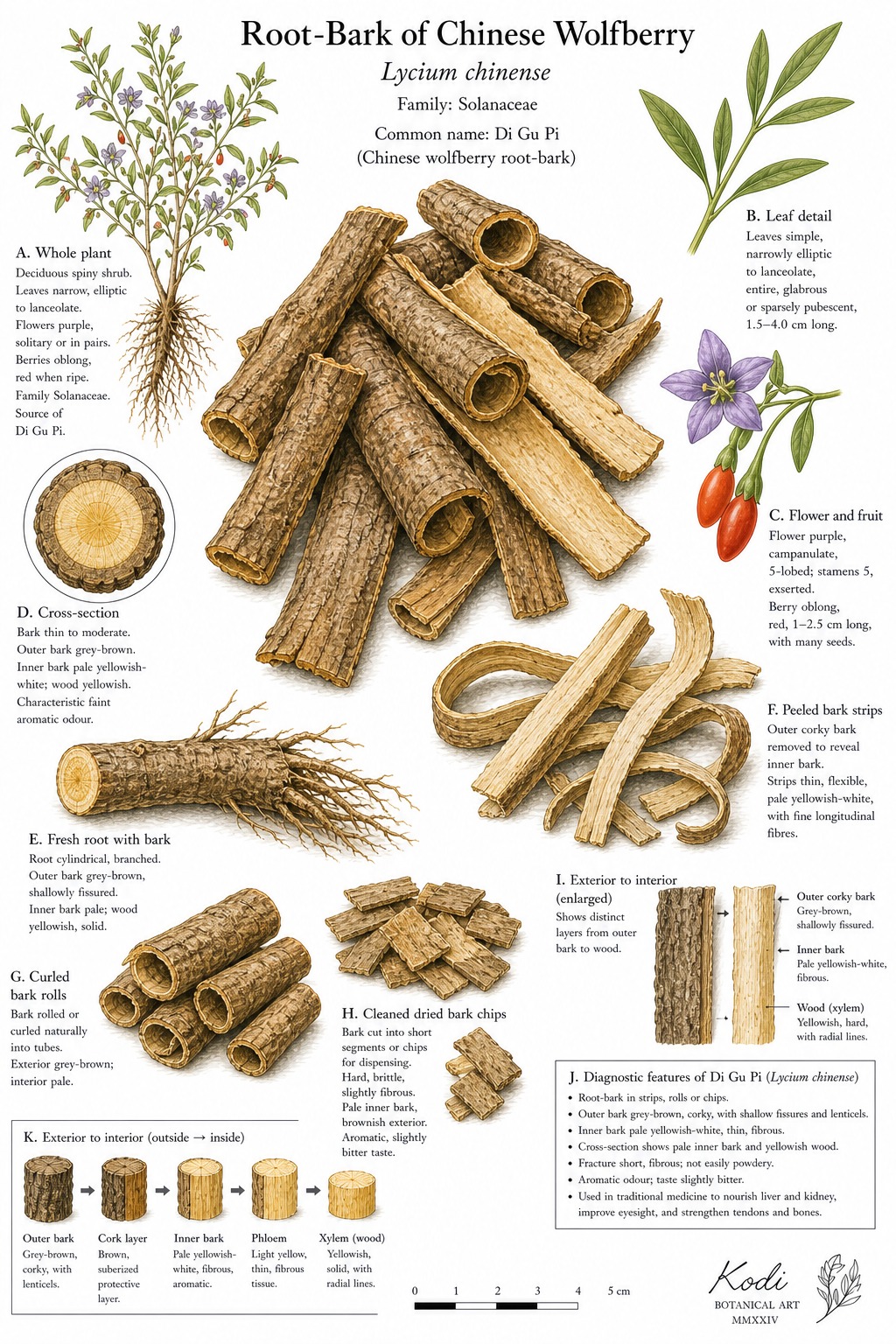
Known in TCM as Di Gu Pi (地骨皮), this sweet and bland, cold herb enters the Liver, Lung, and Kidney. Traditionally, it clears deficiency heat ... Di Gu Pi is a classic herb for steaming-bone fever, tidal heat, and warm depletion patterns where the body is exhausted yet internally smoldering, most often applied for night sweats, cough, and type 2 diabetes. Modern research has identified Kukoamines among its active constituents.
Part used: Bark
Also Known As
Latin: Cortex Lycii Radicis | Pinyin: Di Gu Pi | Chinese: 地骨皮
TCM Properties
- Taste
- sweet, bland
- Temperature
- cold
- Channels
- Liver, Lung, Kidney
Traditional Use
Primary Actions
- Clears deficiency heat ... Di Gu Pi is a classic herb for steaming-bone fever, tidal heat, and warm depletion patterns where the body is exhausted yet internally smoldering.
- Clears Lung heat and stops cough ... it is used for lingering cough with heat or yin damage rather than for simple exterior wind-cold presentations.
- Cools the blood and supports wasting-thirst logic ... traditional use extends to heat injuring fluids, irritability, and thirst patterns associated with internal depletion.
Secondary Actions
- This page should stay clearly distinct from Gou Qi Zi ... the berry tonifies and nourishes, while the root bark clears hidden heat and cools.
- Di Gu Pi is often chosen when the patient looks deficient but still carries an interior heat signature ... one of the classic examples of treating heat without using a harsh detox herb.
Classic Formulas
- Qing Gu San ... classic deficiency-heat formula in which Di Gu Pi cools lingering fever from yin depletion.
- Di Gu Pi Yin and related Lung-heat cough logic ... used when cough and internal heat coexist.
- Wasting-thirst and yin-depletion formulas ... added when thirst, irritability, or smoldering heat complicate chronic weakness.
Classical References
- Materia medica tradition consistently describes Di Gu Pi as the root-bark counterpart to Gou Qi Zi ... same plant family, opposite direction of action.
- Its defining niche is deficiency heat and Lung heat ... not general tonic use and not an exterior-releasing cough herb.
Modern Research
Active Compounds
- Kukoamines and related polyamine alkaloids ... notable Lycium-root constituents
- Phenolic amides and flavonoids ... broader antioxidant and metabolic-interest fractions
- Polysaccharide-rich extracts from Cortex Lycii Radicis studied for glucose and beta-cell support
Studied Effects
- A 2007 mouse study reported hypoglycemic effects from Cortex Lycii Radicis and investigated possible mechanisms, supporting the old wasting-thirst association with a modern metabolic angle (PMID 17917429).
- A 2008 obese-diabetic rat study found Cortex Lycii Radicis extracts improved insulin resistance and lipid metabolism markers, extending the case for metabolic relevance beyond simple glucose lowering (PMID 19003954).
- A 2016 study reported that Cortex Lycii Radicis extracts protected pancreatic beta cells under high-glucose conditions, adding a cell-level rationale for its modern diabetes-related interest (PMID 27211801).
PubMed References
- Hypoglycemic effects and mechanisms of action of Cortex Lycii Radicis on alloxan-induced diabetic mice. (2007)
- Cortex Lycii Radicis extracts improve insulin resistance and lipid metabolism in obese-diabetic rats. (2008)
- Cortex Lycii Radicis Extracts Protect Pancreatic Beta Cells Under High Glucose Conditions. (2016)
Safety & Interactions
Contraindications
- Exterior wind-cold cough without internal heat
- Cold deficiency diarrhea or marked Spleen weakness
- Patterns needing tonification rather than clearing
Cautions
- The modern literature suggests genuine glucose-lowering potential, so concentrated extracts deserve more caution than ordinary decoction use in people already managing blood sugar aggressively.
- Do not confuse this root bark page with the nourishing wolfberry fruit page ... the therapeutic direction is quite different.
Conditions
- Night Sweats Traditional ★★★☆☆ JSON
- Cough Traditional ★★☆☆☆ JSON
- Type 2 Diabetes Research ★★☆☆☆ JSON
- Fever Traditional ★★☆☆☆ JSON
Frequently Asked Questions
What is Chinese Wolfberry Root Bark used for?
Chinese Wolfberry Root Bark is traditionally used to Clears deficiency heat ... Di Gu Pi is a classic herb for steaming-bone fever, tidal heat, and warm depletion patterns where the body is exhausted yet internally smoldering., Clears Lung heat and stops cough ... it is used for lingering cough with heat or yin damage rather than for simple exterior wind-cold presentations., Cools the blood and supports wasting-thirst logic ... traditional use extends to heat injuring fluids, irritability, and thirst patterns associated with internal depletion.. Research has investigated its effects on: A 2007 mouse study reported hypoglycemic effects from Cortex Lycii Radicis and investigated possible mechanisms, supporting the old wasting-thirst association with a modern metabolic angle (PMID 17917429).; A 2008 obese-diabetic rat study found Cortex Lycii Radicis extracts improved insulin resistance and lipid metabolism markers, extending the case for metabolic relevance beyond simple glucose lowering (PMID 19003954)..
What are other names for Chinese Wolfberry Root Bark?
Chinese Wolfberry Root Bark is also known as Cortex Lycii, Lycium chinense Root Bark, Wolfberry Root Bark. In TCM: 地骨皮 (Di Gu Pi); Cortex Lycii Radicis.
Is Chinese Wolfberry Root Bark safe during pregnancy?
The safety of Chinese Wolfberry Root Bark during pregnancy has not been established. Consult a qualified healthcare provider before use.
What are the contraindications for Chinese Wolfberry Root Bark?
Chinese Wolfberry Root Bark should not be used in: Exterior wind-cold cough without internal heat; Cold deficiency diarrhea or marked Spleen weakness; Patterns needing tonification rather than clearing. Consult a qualified healthcare provider before use.