Rice Wine
- Chinese
- 米酒
- Pinyin
- Mi Jiu
- Latin
- Rice Wine
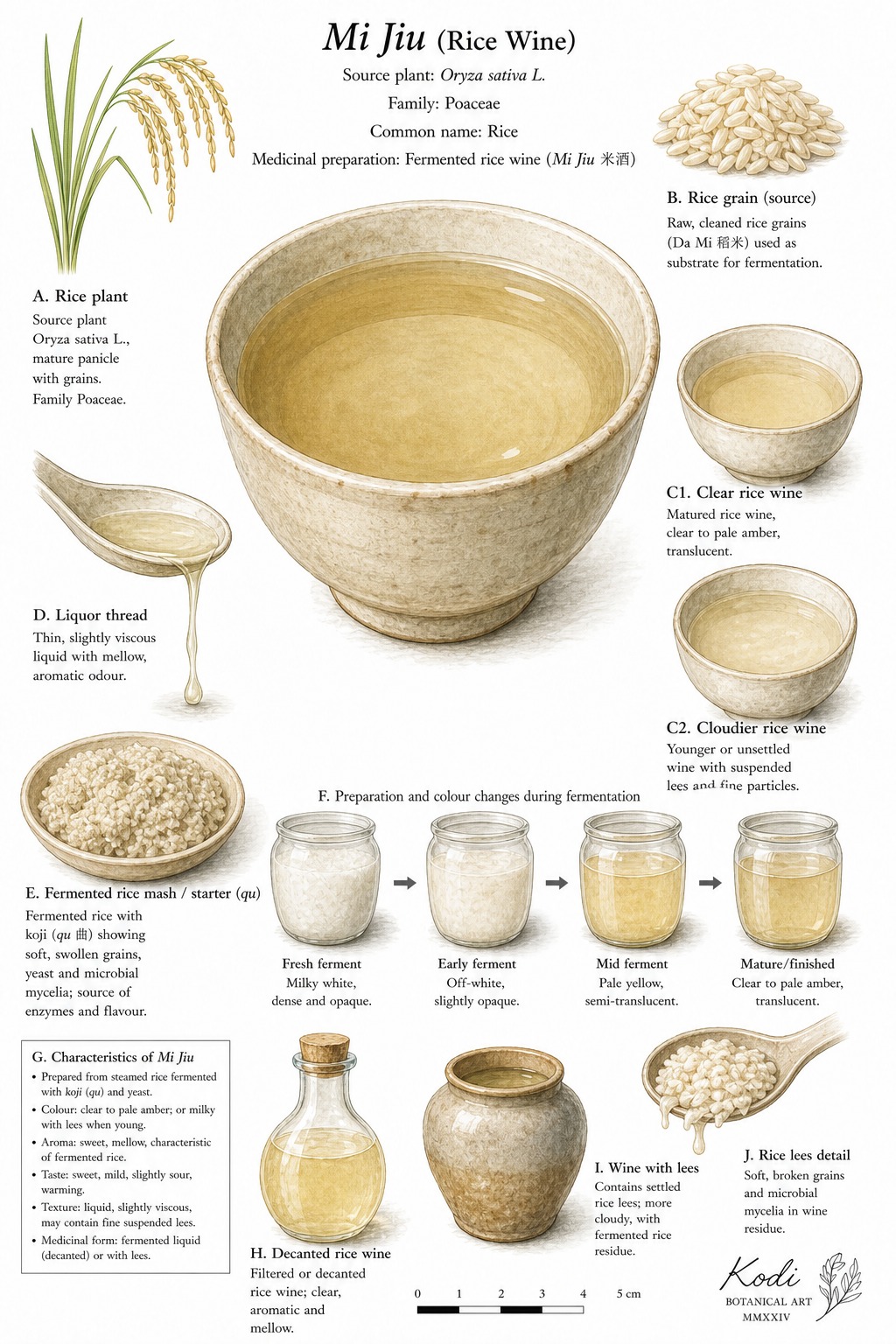
Known in TCM as Mi Jiu (米酒), this sweet and acrid, warm herb enters the Heart, Liver, and Stomach. Traditionally, it warms the middle and disperses cold ... rice wine is used in food-medicine and household practice when cold congealing, poor appetite, or cold abdominal discomfort are part of the picture, most often applied for poor appetite, blood stasis, and traumatic injury. Modern research has identified Ethanol among its active constituents.
Also Known As
Latin: Rice Wine | Pinyin: Mi Jiu | Chinese: 米酒
TCM Properties
- Taste
- sweet, acrid
- Temperature
- warm
- Channels
- Heart, Liver, Stomach
Traditional Use
Primary Actions
- Warms the middle and disperses cold ... rice wine is used in food-medicine and household practice when cold congealing, poor appetite, or cold abdominal discomfort are part of the picture.
- Invigorates blood and opens the channels ... it is traditionally used as a warming vehicle in medicinal wines, post-trauma soaks, and postpartum cold-stasis support rather than as a stand-alone daily tonic.
- Guides and extracts other medicinals ... many classical preparations use rice wine to carry the action of warming, blood-moving, or channel-opening herbs more deeply than water alone.
Secondary Actions
- This record should be read as a preparation and delivery medium as much as a medicinal substance ... Mi Jiu belongs to the food-medicine and paozhi world more than to the high-dose single-herb world.
- It should stay distinct from plain rice grain pages ... the traditional logic here depends on fermentation, warmth, circulation, and solvent properties rather than on grain nourishment alone.
Classic Formulas
- Medicinal-wine steeping traditions ... herbs for wind-damp pain, chronic cold obstruction, or trauma are commonly soaked in rice wine to warm the channels and improve extraction.
- Postpartum and trauma wash or liniment logic ... rice wine is used as a carrier when blood stasis and cold need warming movement rather than simple nourishment.
- Processing and administration methods in materia medica ... some herbs are wine-fried or wine-delivered specifically to alter direction, warmth, or circulation effects.
Classical References
- Traditional household medicine and materia medica teaching treat rice wine as both a medicinal adjunct and a vehicle that changes how other herbs act.
- Its role is usually contextual ... warming cold, moving blood, and carrying formula action ... rather than serving as an isolated tonic beverage.
Modern Research
Active Compounds
- Ethanol ... the primary solvent and warming active component created by fermentation
- Organic acids, amino acids, and peptides ... major nutritional and flavor-related fractions in Huangjiu
- Esters and other volatile aroma compounds ... key markers of fermentation quality and sensory profile
- Phenolic and Maillard-derived compounds ... broader contributors to antioxidant and aging-related study interest
Studied Effects
- A 2025 review summarized the fermentation variables that shape Chinese rice-wine quality, flavor, and technological development, reinforcing that modern interest centers on processing and composition rather than on a simple generic alcohol category (PMID 40724366).
- A 2022 microbiome review described the complex microbial ecology of Chinese rice wine and showed why fermentation identity matters when discussing any Huangjiu-type medicinal or dietary use (PMID 35198991).
- A 2024 review examined ethyl carbamate formation and mitigation in Huangjiu, adding a practical safety lens that is directly relevant when rice wine is discussed as a medicinal food rather than as an abstract traditional ingredient (PMID 38517033).
PubMed References
- Rice Wine Fermentation: Unveiling Key Factors Shaping Quality, Flavor, and Technological Evolution. (2025)
- The microbiome of Chinese rice wine (Huangjiu). (2022)
- Formation and hazard of ethyl carbamate and construction of genetically engineered Saccharomyces cerevisiae strains in Huangjiu (Chinese grain wine). (2024)
Safety & Interactions
Contraindications
- Pregnancy
- Alcohol use disorder or recovery from alcohol dependence
- Active liver disease or situations where alcohol exposure is contraindicated
- Heat signs, active bleeding, or agitation patterns where warming alcohol would be mismatched
Cautions
- Medicinal rice wine is still alcohol ... traditional use does not remove modern concerns about intoxication, liver burden, and dependence risk.
- Commercial rice wines vary widely in alcohol content, sweetness, additives, and production quality, so culinary products are not interchangeable with small medicinal doses in classical contexts.
- Ethyl carbamate and other fermentation-related contaminants are a real quality-control issue in modern production.
Drug Interactions
- Sedatives or other central nervous system depressants ... additive impairment
- Disulfiram-like therapies or metronidazole ... risk of alcohol reaction
Conditions
- Poor Appetite Traditional ★★☆☆☆ JSON
- Blood Stasis Traditional ★★☆☆☆ JSON
- Traumatic Injury Traditional ★★☆☆☆ JSON
- Common Cold Traditional ★☆☆☆☆ JSON
Frequently Asked Questions
What is Rice Wine used for?
Rice Wine is traditionally used to Warms the middle and disperses cold ... rice wine is used in food-medicine and household practice when cold congealing, poor appetite, or cold abdominal discomfort are part of the picture., Invigorates blood and opens the channels ... it is traditionally used as a warming vehicle in medicinal wines, post-trauma soaks, and postpartum cold-stasis support rather than as a stand-alone daily tonic., Guides and extracts other medicinals ... many classical preparations use rice wine to carry the action of warming, blood-moving, or channel-opening herbs more deeply than water alone.. Research has investigated its effects on: A 2025 review summarized the fermentation variables that shape Chinese rice-wine quality, flavor, and technological development, reinforcing that modern interest centers on processing and composition rather than on a simple generic alcohol category (PMID 40724366).; A 2022 microbiome review described the complex microbial ecology of Chinese rice wine and showed why fermentation identity matters when discussing any Huangjiu-type medicinal or dietary use (PMID 35198991)..
What are other names for Rice Wine?
Rice Wine is also known as Huangjiu, Medicinal Rice Wine, Oryza sativa Wine. In TCM: 米酒 (Mi Jiu); Rice Wine.
Is Rice Wine safe during pregnancy?
Rice Wine is not recommended during pregnancy.
What are the contraindications for Rice Wine?
Rice Wine should not be used in: Pregnancy; Alcohol use disorder or recovery from alcohol dependence; Active liver disease or situations where alcohol exposure is contraindicated; Heat signs, active bleeding, or agitation patterns where warming alcohol would be mismatched. Consult a qualified healthcare provider before use.
Does Rice Wine interact with any medications?
Rice Wine may interact with: Sedatives or other central nervous system depressants ... additive impairment; Disulfiram-like therapies or metronidazole ... risk of alcohol reaction. Always inform your healthcare provider of any herbal supplements you are taking.