Rice Bean (Chi Xiao Dou)
- Pinyin
- Chi Xiao Dou
- Latin
- Semen Phaseoli
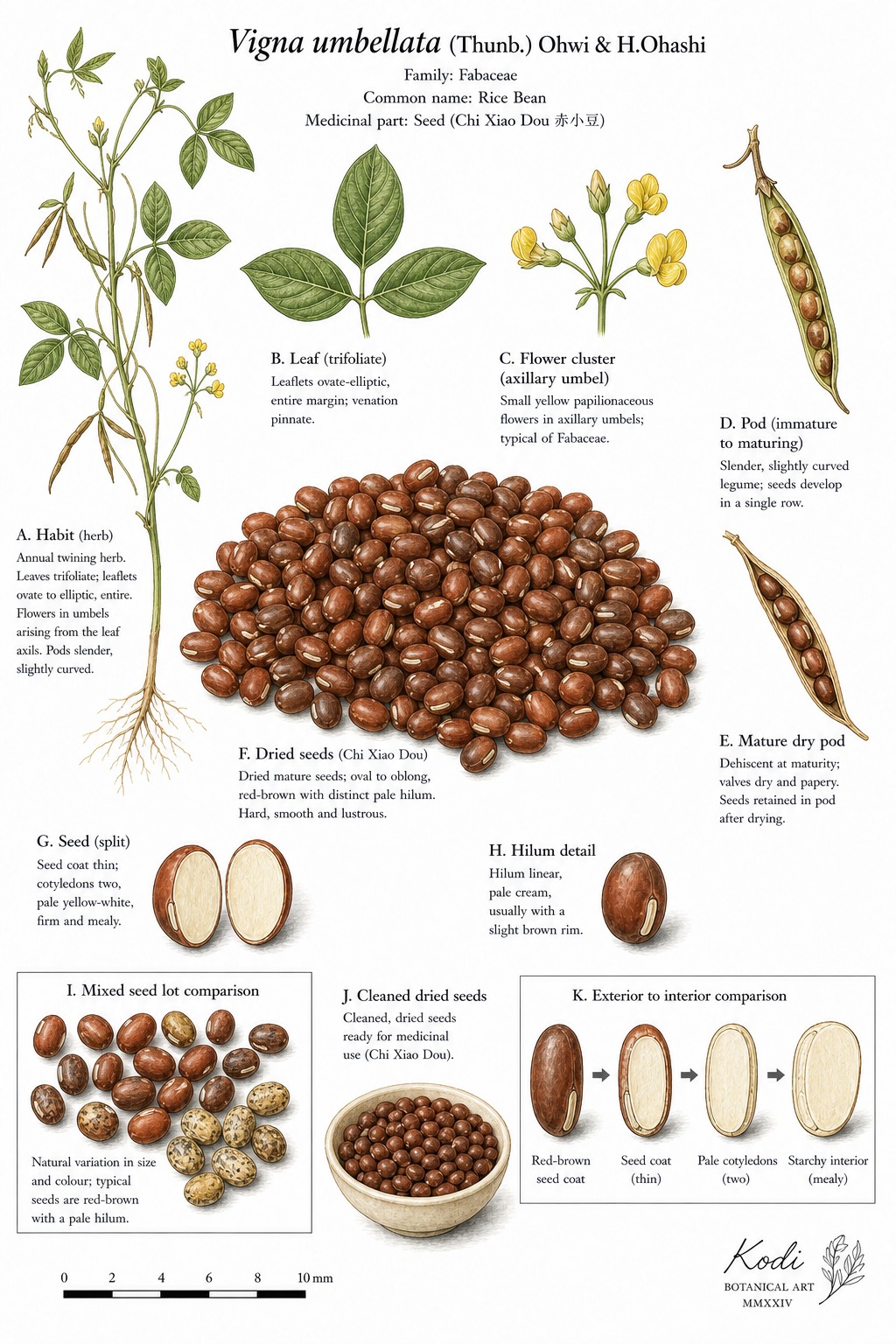
This sweet and sour, neutral herb enters the Heart and Small Intestine. Traditionally, it promotes urination and reduces edema ... Chi Xiao Dou is a classic food-medicine bean for swelling, water retention, and dampness that is still accessible enough for dietetic use, most often applied for edema, abscess, and carbuncle. Modern research has identified Protein-rich among its active constituents.
Part used: Seed
Also Known As
Latin: Semen Phaseoli | Pinyin: Chi Xiao Dou
TCM Properties
- Taste
- sweet, sour
- Temperature
- neutral
- Channels
- Heart, Small Intestine
Traditional Use
Primary Actions
- Promotes urination and reduces edema ... Chi Xiao Dou is a classic food-medicine bean for swelling, water retention, and dampness that is still accessible enough for dietetic use.
- Clears heat and resolves toxic swelling ... traditional use includes sores, abscesses, and carbuncle-type lesions, often in soups or paired formulas rather than harsh isolated dosing.
- Helps drain damp-heat and support jaundice recovery ... the bean's gentle draining nature explains its long history in food-style medicinal combinations.
Secondary Actions
- This page follows the local accepted Vigna umbellata lane for Chi Xiao Dou and should stay distinct from mung bean, soybean, or hyacinth bean records.
- Chi Xiao Dou sits close to food therapy, but that should not hide its traditional role in edema and toxic-swelling formulas.
Classic Formulas
- Li Yu Chi Xiao Dou Tang ... classical carp and red-bean soup for edema, ascites, and water retention patterns.
- Chi Xiao Dou Dang Gui San ... traditional intestinal-abscess and swelling context in which the bean is paired for drainage and discharge of pus.
- Food-therapy pairings with Yi Yi Ren or Dong Gua Pi ... gentle damp-draining strategy for swelling and summer-damp burden.
Classical References
- Traditional materia medica describes Chi Xiao Dou as a sweet-sour, neutral bean that promotes urination, reduces swelling, and resolves sores.
- Its long-standing use in soups and medicinal foods helps explain why it bridges ordinary diet and formal herbal therapy.
Modern Research
Active Compounds
- Protein-rich seed fractions ... central to the bean's nutritive profile
- Dietary fiber and resistant starch ... key contributors to metabolic and digestive interest
- Phenolic and broader bioactive seed constituents ... the main modern functional-food research targets
Studied Effects
- A 2019 review described rice bean as a lesser-known pulse with strong nutritional and agronomic potential, supporting its food-medicine character on this page (PMID 31134340).
- A 2026 review examined the genetic improvement and bioactive potential of rice bean for climate resilience and sustainable agriculture, showing the species' growing modern research relevance (PMID 42147274).
- A 2023 review of underutilized African legumes included rice bean among seeds with notable nutritional, functional, and bioactive properties, reinforcing its modern functional-food reputation (PMID 37123863).
PubMed References
Safety & Interactions
Cautions
- Chi Xiao Dou is generally food-like, but persistent edema, jaundice, or suppurative skin disease still needs proper diagnosis rather than self-treatment alone.
- Modern functional-food findings do not make the bean a substitute for drainage therapy or infection care when symptoms are severe.
Conditions
Frequently Asked Questions
What is Rice Bean (Chi Xiao Dou) used for?
Rice Bean (Chi Xiao Dou) is traditionally used to Promotes urination and reduces edema ... Chi Xiao Dou is a classic food-medicine bean for swelling, water retention, and dampness that is still accessible enough for dietetic use., Clears heat and resolves toxic swelling ... traditional use includes sores, abscesses, and carbuncle-type lesions, often in soups or paired formulas rather than harsh isolated dosing., Helps drain damp-heat and support jaundice recovery ... the bean's gentle draining nature explains its long history in food-style medicinal combinations.. Research has investigated its effects on: A 2019 review described rice bean as a lesser-known pulse with strong nutritional and agronomic potential, supporting its food-medicine character on this page (PMID 31134340).; A 2026 review examined the genetic improvement and bioactive potential of rice bean for climate resilience and sustainable agriculture, showing the species' growing modern research relevance (PMID 42147274)..
What are other names for Rice Bean (Chi Xiao Dou)?
Rice Bean (Chi Xiao Dou) is also known as Chi Xiao Dou, Vigna umbellata Seed, Red Rice Bean. In TCM: Semen Phaseoli.
Is Rice Bean (Chi Xiao Dou) safe during pregnancy?
The safety of Rice Bean (Chi Xiao Dou) during pregnancy has not been established. Consult a qualified healthcare provider before use.