Rhizome of Swordlike Atractylodes
- Pinyin
- Zhi Cang Zhu
- Latin
- Rhizoma Atractylodis Praeparata
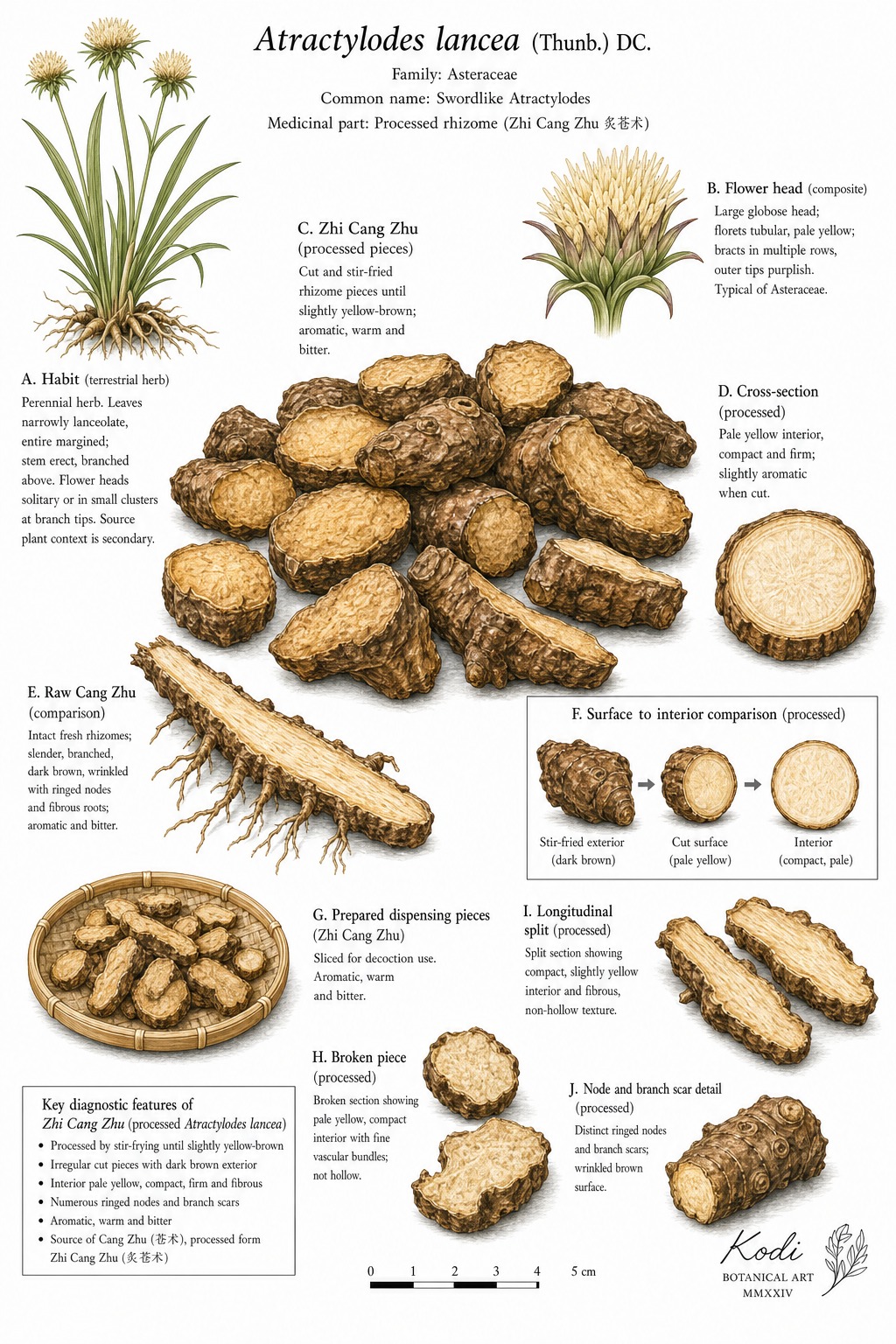
This acrid and bitter, warm herb enters the Spleen, Stomach, and Liver. Traditionally, it strengthens the Spleen and dries dampness with a somewhat moderated dispersing quality ... Zhi Cang Zhu is chosen when middle-burner dampness, poor appetite, and loose stool are primary concerns, most often applied for poor appetite, digestive weakness, and diarrhea. Modern research has identified Atractylodin among its active constituents.
Part used: Rhizome
Also Known As
Latin: Rhizoma Atractylodis Praeparata | Pinyin: Zhi Cang Zhu
TCM Properties
- Taste
- acrid, bitter
- Temperature
- warm
- Channels
- Spleen, Stomach, Liver
Traditional Use
Primary Actions
- Strengthens the Spleen and dries dampness with a somewhat moderated dispersing quality ... Zhi Cang Zhu is chosen when middle-burner dampness, poor appetite, and loose stool are primary concerns.
- Relieves distension and digestive blockage from damp accumulation ... it helps fullness, heaviness, and weak transformation of food and fluids.
- Retains some wind-damp pain utility while leaning more toward the prepared dispensing lane ... processed material is often preferred when raw Cang Zhu would feel too harsh or too strongly dispersing.
Secondary Actions
- This page follows the processed Zhi Cang Zhu pharmacy lane rather than the broader raw herb identity in `rhizome-of-swordlike-atractylodes`.
- Modern research rarely separates processed product cleanly from raw Atractylodes lancea, so the distinction here depends more on traditional processing logic than on a separate large evidence base.
Classic Formulas
- Middle-burner dampness combinations with Hou Po, Chen Pi, or Ban Xia ... used when processed Cang Zhu is chosen to reduce fullness and heaviness.
- Digestive weakness pairings with Bai Zhu or Fu Ling ... traditional strategy when drying dampness must be balanced with middle support.
- Er Miao San-style lower-burner damp patterns ... processed Cang Zhu may still be used when a milder prepared form is preferred.
Classical References
- Traditional pharmacy practice treats Zhi Cang Zhu as a prepared extension of Cang Zhu with a somewhat more middle-focused, less excessively dispersing clinical feel.
- The processing distinction matters even when modern review papers discuss Atractylodis Rhizoma more broadly.
Modern Research
Active Compounds
- Atractylodin ... one of the best-known marker compounds of the Cang Zhu source species
- Hinesol and beta-eudesmol ... major sesquiterpenoid fractions in Atractylodes lancea studies
- Atractylon and related volatile-oil constituents ... important aromatic compounds in broader pharmacology work
Studied Effects
- A 2024 review summarized the biological functions of Atractylodes lancea and its modern applications, providing the clearest contemporary overview for the source species behind Zhi Cang Zhu (PMID 39867604).
- A 2021 review of Atractylodis Rhizoma covered traditional uses, phytochemistry, pharmacology, toxicology, and quality control, although it did not always isolate processed Cang Zhu from raw material (PMID 32987126).
- A 2014 review described the therapeutic potential and pharmacological activities of Atractylodes lancea, reinforcing the broader medicinal research base that also informs processed-lane discussion (PMID 25066389).
PubMed References
- The biological function of Atractylodes lancea and its application in animal husbandry: a review. (2024)
- Atractylodis Rhizoma: A review of its traditional uses, phytochemistry, pharmacology, toxicology and quality control. (2021)
- Therapeutic potential and pharmacological activities of Atractylodes lancea (Thunb.) DC. (2014)
Safety & Interactions
Contraindications
- Yin deficiency dryness or fluid depletion without dampness
- Dry heat patterns without middle-burner damp obstruction
Cautions
- Processed Cang Zhu is still warm and drying and can aggravate thirst or dryness if used in the wrong pattern.
- Most modern studies examine the source species or crude rhizome broadly, not this exact processed dispensing grade.
Conditions
- Poor Appetite Traditional ★★★★☆ JSON
- Digestive Weakness Traditional ★★★☆☆ JSON
- Diarrhea Traditional ★★★☆☆ JSON
- Rheumatism Traditional ★★☆☆☆ JSON
Frequently Asked Questions
What is Rhizome of Swordlike Atractylodes used for?
Rhizome of Swordlike Atractylodes is traditionally used to Strengthens the Spleen and dries dampness with a somewhat moderated dispersing quality ... Zhi Cang Zhu is chosen when middle-burner dampness, poor appetite, and loose stool are primary concerns., Relieves distension and digestive blockage from damp accumulation ... it helps fullness, heaviness, and weak transformation of food and fluids., Retains some wind-damp pain utility while leaning more toward the prepared dispensing lane ... processed material is often preferred when raw Cang Zhu would feel too harsh or too strongly dispersing.. Research has investigated its effects on: A 2024 review summarized the biological functions of Atractylodes lancea and its modern applications, providing the clearest contemporary overview for the source species behind Zhi Cang Zhu (PMID 39867604).; A 2021 review of Atractylodis Rhizoma covered traditional uses, phytochemistry, pharmacology, toxicology, and quality control, although it did not always isolate processed Cang Zhu from raw material (PMID 32987126)..
What are other names for Rhizome of Swordlike Atractylodes?
Rhizome of Swordlike Atractylodes is also known as Zhi Cang Zhu, Processed Atractylodes lancea Rhizome, Prepared Cang Zhu. In TCM: Rhizoma Atractylodis Praeparata.
Is Rhizome of Swordlike Atractylodes safe during pregnancy?
The safety of Rhizome of Swordlike Atractylodes during pregnancy has not been established. Consult a qualified healthcare provider before use.
What are the contraindications for Rhizome of Swordlike Atractylodes?
Rhizome of Swordlike Atractylodes should not be used in: Yin deficiency dryness or fluid depletion without dampness; Dry heat patterns without middle-burner damp obstruction. Consult a qualified healthcare provider before use.