Rhizome of Lalang Grass
- Pinyin
- Mao Gen
- Latin
- Rhizoma Imperatae
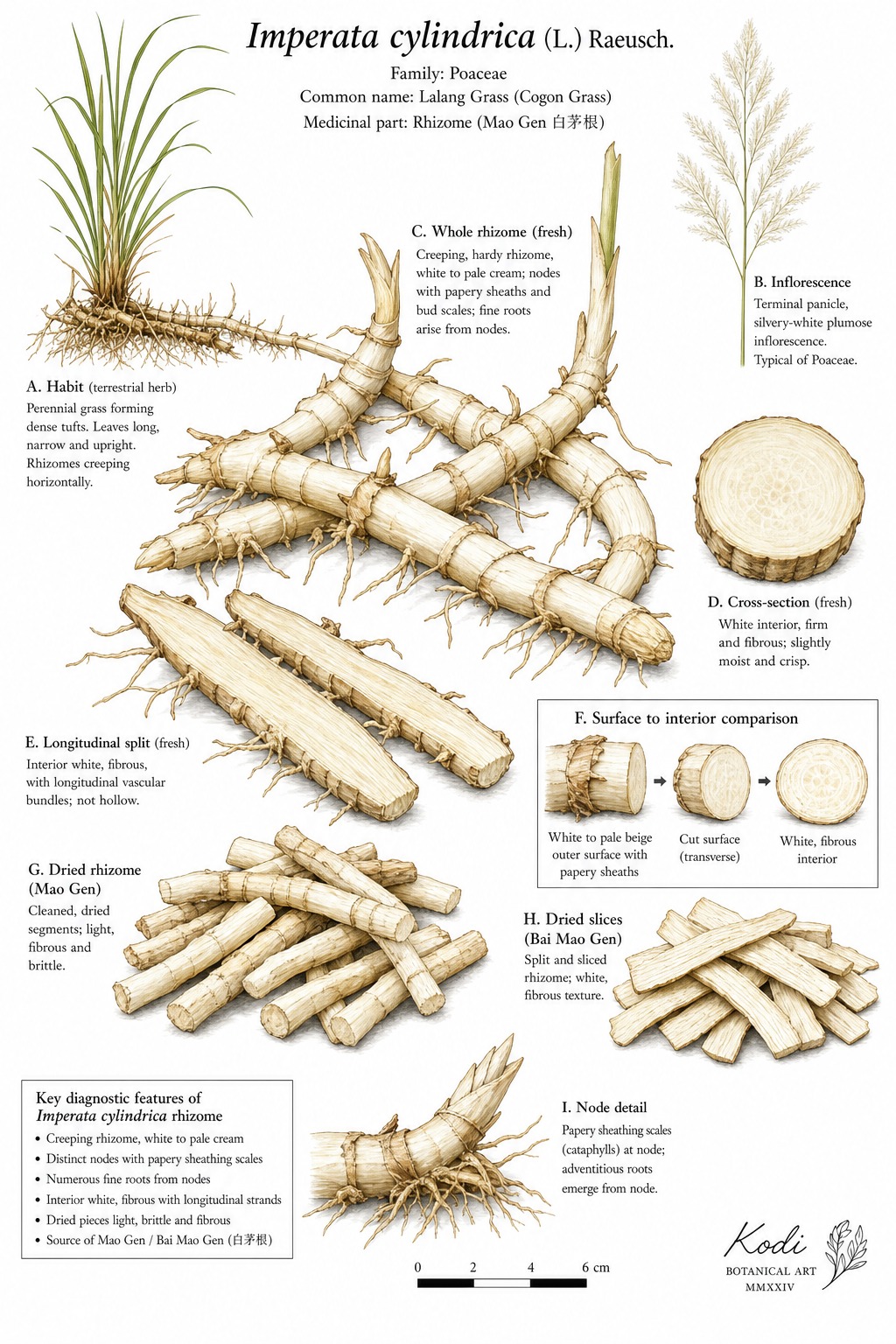
This sweet, cold herb enters the Lung, Stomach, and Bladder. Traditionally, it cools blood and stops bleeding ... Mao Gen is classically used for hematuria, nosebleed, hemoptysis, and other bleeding driven by heat in the blood, most often applied for hematuria, urinary tract infection, and hemoptysis. Modern research has identified Phenolic among its active constituents.
Part used: Rhizome
Also Known As
Latin: Rhizoma Imperatae | Pinyin: Mao Gen
TCM Properties
- Taste
- sweet
- Temperature
- cold
- Channels
- Lung, Stomach, Bladder
Traditional Use
Primary Actions
- Cools blood and stops bleeding ... Mao Gen is classically used for hematuria, nosebleed, hemoptysis, and other bleeding driven by heat in the blood.
- Clears heat and promotes urination ... it treats painful urinary dribbling, damp-heat urinary irritation, edema, and heat strangury, especially when bleeding is also present.
- Clears Lung and Stomach heat and generates fluids ... traditional use extends to cough from Lung heat, vexing thirst, vomiting from Stomach heat, and recovery fluids depleted by heat.
Secondary Actions
- This page should be read alongside the already-live `lalang-grass-rhizome` / Bai Mao Gen sibling ... the two records sit in the same Imperata medicinal lane rather than representing different source species.
- Fresh Mao Gen is often considered stronger for cooling blood, generating fluids, and stopping bleeding than the ordinary dried slices.
Classic Formulas
- Mao Gen Yin Zi ... classic formula context for hematuria and blood strangury with both heat and deficiency components.
- Mao Gen with Xiao Ji, Ce Bai Ye, or Di Yu ... common hemostatic pairing style for upper- and lower-body bleeding with heat signs.
- Fresh Mao Gen juice or single-herb decoction ... traditional emergency-style use for blood-heat bleeding or severe thirst from heat.
Classical References
- Traditional references describe Mao Gen as sweet and cold, entering the Lung, Stomach, and Bladder to cool blood, stop bleeding, clear heat, and induce diuresis.
- The main naming difference from Bai Mao Gen is usually editorial or marketplace emphasis rather than a different medicinal identity.
Modern Research
Active Compounds
- Phenolic acids such as caffeic acid, ferulic acid, and p-coumaric acid ... repeatedly identified rhizome constituents
- Isoeugenin and related chromone compounds ... bioactive rhizome constituents linked to anti-inflammatory investigation
- 2-(2-phenylethyl)chromones ... characteristic compounds reported with neuroprotective activity
Studied Effects
- A 1992 study found that Imperata cylindrica contributed diuretic effects in a traditional herbal comparison model, giving a modest modern correlate for Mao Gen's urination-promoting use (PMID 1434681).
- A 2015 paper isolated isoeugenin from Imperata cylindrica rhizomes and found that it inhibited nitric oxide production and downregulated inflammatory mediators in activated macrophages (PMID 26633331).
- A 2024 Bai Mao Gen study profiled major compounds and proposed gastroprotective mechanisms through PI3K/AKT-related pathways, suggesting that modern supplement interest extends beyond the herb's classic urinary and bleeding roles (PMID 39537788).
PubMed References
- Studies on the individual and combined diuretic effects of four Vietnamese traditional herbal remedies (Zea mays, Imperata cylindrica, Plantago major and Orthosiphon stamineus). (1992)
- Isoeugenin, a Novel Nitric Oxide Synthase Inhibitor Isolated from the Rhizomes of Imperata cylindrica. (2015)
- Elucidating the gastroprotective mechanisms of Imperata cylindrica Beauv.var. major (Nees) C.E.Hubb through UHPLC-MS/MS and systems network pharmacology. (2024)
Safety & Interactions
Contraindications
- Spleen and Stomach deficiency-cold with loose stool
- Copious clear urination without heat signs or thirst
Cautions
- Mao Gen is generally gentle, but persistent bleeding, gross hematuria, or edema still warrant proper diagnosis rather than extended self-treatment.
- Because the herb promotes urination and cools blood, it should be used more cautiously in deficient-cold constitutions.
Conditions
- Hematuria Traditional ★★★★☆ JSON
- Urinary Tract Infection Traditional ★★★☆☆ JSON
- Hemoptysis Traditional ★★★☆☆ JSON
- Edema Traditional ★★☆☆☆ JSON
Frequently Asked Questions
What is Rhizome of Lalang Grass used for?
Rhizome of Lalang Grass is traditionally used to Cools blood and stops bleeding ... Mao Gen is classically used for hematuria, nosebleed, hemoptysis, and other bleeding driven by heat in the blood., Clears heat and promotes urination ... it treats painful urinary dribbling, damp-heat urinary irritation, edema, and heat strangury, especially when bleeding is also present., Clears Lung and Stomach heat and generates fluids ... traditional use extends to cough from Lung heat, vexing thirst, vomiting from Stomach heat, and recovery fluids depleted by heat.. Research has investigated its effects on: A 1992 study found that Imperata cylindrica contributed diuretic effects in a traditional herbal comparison model, giving a modest modern correlate for Mao Gen's urination-promoting use (PMID 1434681).; A 2015 paper isolated isoeugenin from Imperata cylindrica rhizomes and found that it inhibited nitric oxide production and downregulated inflammatory mediators in activated macrophages (PMID 26633331)..
What are other names for Rhizome of Lalang Grass?
Rhizome of Lalang Grass is also known as Mao Gen, Cogon Grass Rhizome, Imperata Root. In TCM: Rhizoma Imperatae.
Is Rhizome of Lalang Grass safe during pregnancy?
The safety of Rhizome of Lalang Grass during pregnancy has not been established. Consult a qualified healthcare provider before use.
What are the contraindications for Rhizome of Lalang Grass?
Rhizome of Lalang Grass should not be used in: Spleen and Stomach deficiency-cold with loose stool; Copious clear urination without heat signs or thirst. Consult a qualified healthcare provider before use.