Rhizome of Grassleaf Sweetflag
- Chinese
- 菖蒲
- Pinyin
- Chang Pu
- Latin
- Rhizoma Acori Graminei
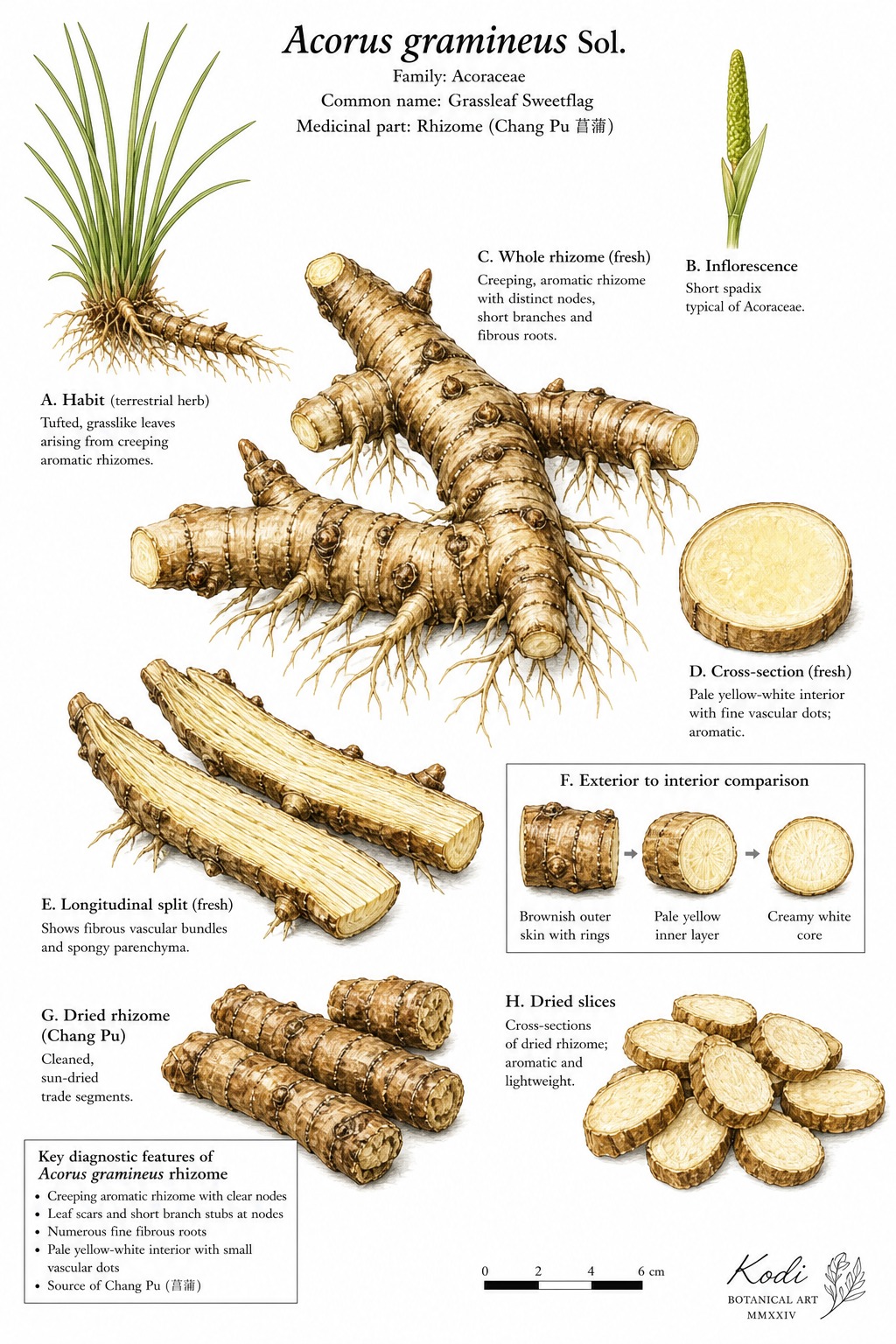
Known in TCM as Chang Pu (菖蒲), this acrid and bitter, warm herb enters the Heart and Stomach. Traditionally, it opens the orifices and transforms turbidity ... Chang Pu is used when clouded thinking, phlegm obstruction, dizziness, or confusion suggest that clear yang is not reaching the head well, most often applied for cognitive decline, insomnia, and epilepsy. Modern research has identified Alpha-asarone among its active constituents.
Part used: Rhizome
Also Known As
Latin: Rhizoma Acori Graminei | Pinyin: Chang Pu | Chinese: 菖蒲
TCM Properties
- Taste
- acrid, bitter
- Temperature
- warm
- Channels
- Heart, Stomach
Traditional Use
Primary Actions
- Opens the orifices and transforms turbidity ... Chang Pu is used when clouded thinking, phlegm obstruction, dizziness, or confusion suggest that clear yang is not reaching the head well.
- Calms the spirit and benefits cognition ... traditional use includes forgetfulness, poor concentration, fright, and restlessness when turbidity and dampness burden the Heart-mind.
- Transforms dampness and harmonizes the middle ... it also helps nausea, poor appetite, abdominal fullness, and foul turbidity affecting digestion.
Secondary Actions
- This page follows the imported Acorus gramineus or generic `Chang Pu` lane and should stay distinct from the already-live `grassleaf-sweetflag-rhizome` page, which the library anchors to the `Shi Chang Pu` or Acorus tatarinowii tradition.
- The overlap is real, but the species and naming lane matter enough that the distinction should be stated rather than hidden.
Classic Formulas
- Ding Zhi Wan-style pairings ... Chang Pu is used when phlegm-turbidity, fright, and forgetfulness combine.
- Orifice-opening combinations with Yu Jin or Zhu Ru ... classical logic when phlegm-heat and clouded consciousness travel together.
- Middle-burner aromatic formulas ... used when nausea and damp-turbidity accompany mental fog.
Classical References
- Traditional references describe Chang Pu as an aromatic warm rhizome that opens the orifices, transforms dampness, and benefits the spirit.
- In this library, the specific distinction from Shi Chang Pu is part of the record's value because source confusion is common.
Modern Research
Active Compounds
- Alpha-asarone and beta-asarone ... key aromatic phenylpropanoids associated with Acorus gramineus research
- Essential-oil fractions ... central to neuroprotective and cognition-oriented investigation
- Other volatile and phenolic constituents ... supportive bioactive compounds in anti-inflammatory and neurologic models
Studied Effects
- A 2022 review summarized the therapeutic potential of active components from Acorus gramineus and Acorus tatarinowii in neurological disorders, providing a modern bridge between classical cognition use and contemporary preclinical research (PMID 36628348).
- A 2020 review focused specifically on Acorus gramineus preclinical evidence for cognitive-function impairment and described multiple possible neuroprotective mechanisms (PMID 32908635).
- Modern interest in essential oils from aromatic medicinal plants also supports broader neuroprotective and anti-aging interest in Acorus-type aromatic rhizomes, though concentrated products are not equivalent to ordinary crude-herb use (PMID 28611658).
PubMed References
- Therapeutic Potential of Active Components from Acorus gramineus and Acorus tatarinowii in Neurological Disorders and Their Application in Korean Medicine. (2022)
- Extracts or Active Components from Acorus gramineus Aiton for Cognitive Function Impairment: Preclinical Evidence and Possible Mechanisms. (2020)
- Neuroprotective and Anti-Aging Potentials of Essential Oils from Aromatic and Medicinal Plants. (2017)
Safety & Interactions
Contraindications
- Yin deficiency with heat or dryness without damp-turbidity
- Use of concentrated volatile-oil products in place of standard crude-herb dosing
Cautions
- Acorus products rich in asarones deserve more caution than ordinary crude-herb slices or light decoction use.
- Because source confusion among Chang Pu materials is common, authenticated material matters.
Conditions
Frequently Asked Questions
What is Rhizome of Grassleaf Sweetflag used for?
Rhizome of Grassleaf Sweetflag is traditionally used to Opens the orifices and transforms turbidity ... Chang Pu is used when clouded thinking, phlegm obstruction, dizziness, or confusion suggest that clear yang is not reaching the head well., Calms the spirit and benefits cognition ... traditional use includes forgetfulness, poor concentration, fright, and restlessness when turbidity and dampness burden the Heart-mind., Transforms dampness and harmonizes the middle ... it also helps nausea, poor appetite, abdominal fullness, and foul turbidity affecting digestion.. Research has investigated its effects on: A 2022 review summarized the therapeutic potential of active components from Acorus gramineus and Acorus tatarinowii in neurological disorders, providing a modern bridge between classical cognition use and contemporary preclinical research (PMID 36628348).; A 2020 review focused specifically on Acorus gramineus preclinical evidence for cognitive-function impairment and described multiple possible neuroprotective mechanisms (PMID 32908635)..
What are other names for Rhizome of Grassleaf Sweetflag?
Rhizome of Grassleaf Sweetflag is also known as Acorus gramineus Rhizome, Chang Pu, Grassleaf Sweetflag Rhizome. In TCM: 菖蒲 (Chang Pu); Rhizoma Acori Graminei.
Is Rhizome of Grassleaf Sweetflag safe during pregnancy?
The safety of Rhizome of Grassleaf Sweetflag during pregnancy has not been established. Consult a qualified healthcare provider before use.
What are the contraindications for Rhizome of Grassleaf Sweetflag?
Rhizome of Grassleaf Sweetflag should not be used in: Yin deficiency with heat or dryness without damp-turbidity; Use of concentrated volatile-oil products in place of standard crude-herb dosing. Consult a qualified healthcare provider before use.