Rhizome of Gigantic Homalomena
- Pinyin
- Da Ping Si Yu
- Latin
- Rhizoma Homalomenae
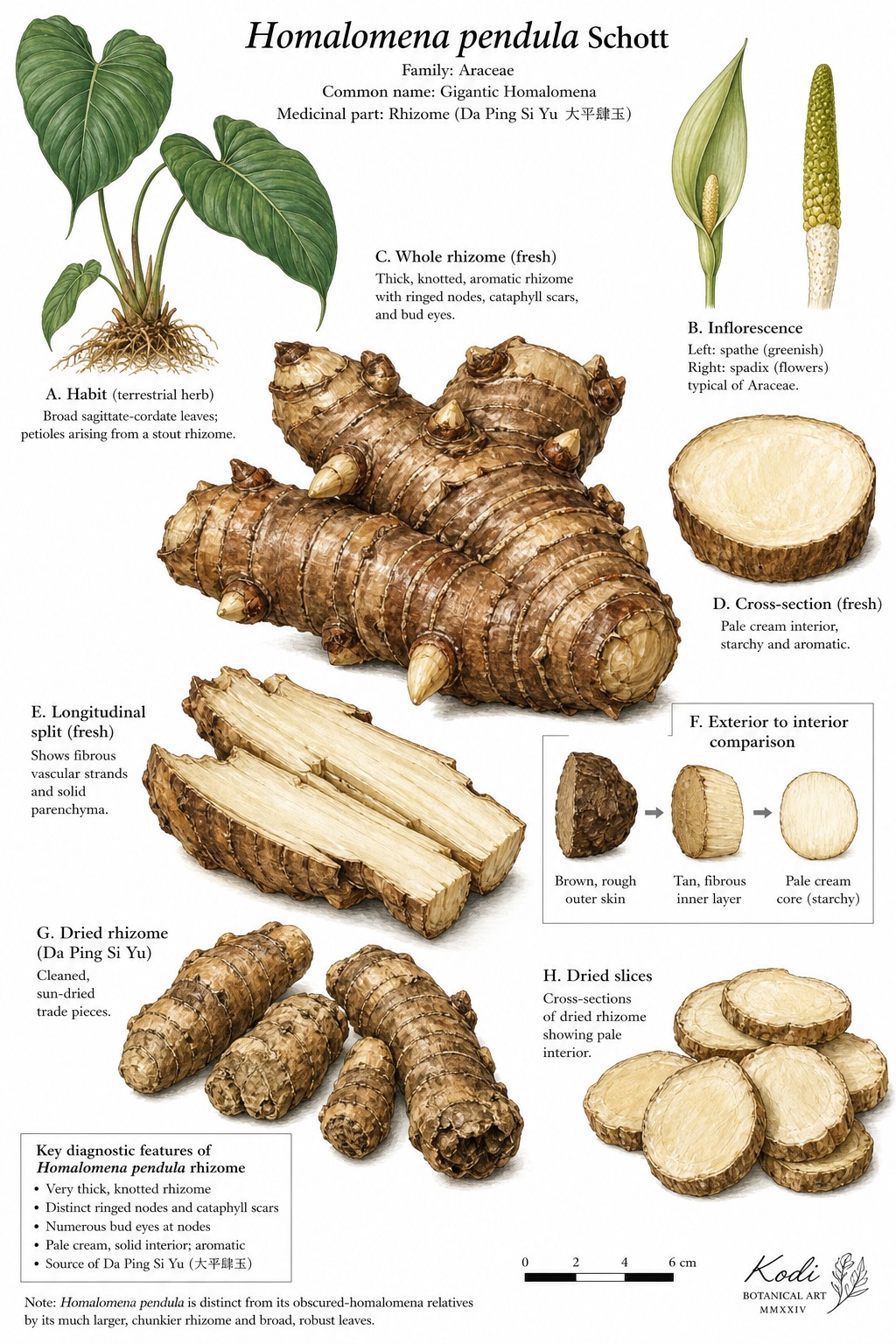
This acrid, warm herb enters the Liver and Kidney. Traditionally, it dispels wind-damp and relieves pain ... this aromatic Homalomena rhizome is used for painful obstruction, rheumatic aching, and stiffness aggravated by cold-damp conditions, most often applied for rheumatism, joint pain, and traumatic injury. Modern research has identified Sesquiterpenoids among its active constituents.
Part used: Rhizome
Also Known As
Latin: Rhizoma Homalomenae | Pinyin: Da Ping Si Yu
TCM Properties
- Taste
- acrid
- Temperature
- warm
- Channels
- Liver, Kidney
Traditional Use
Primary Actions
- Dispels wind-damp and relieves pain ... this aromatic Homalomena rhizome is used for painful obstruction, rheumatic aching, and stiffness aggravated by cold-damp conditions.
- Relaxes sinews and supports mobility ... traditional use includes lower-back weakness, chronic joint limitation, and post-traumatic soreness.
- Supports recovery from injury and hard use ... regional and folk traditions also remember the rhizome in trauma and fracture-associated weakness.
Secondary Actions
- This page should remain distinct from the still-stub `rhizome-of-obscured-homalomena` sibling ... both belong to the Homalomena family, but the source species and market lane are not identical.
- Modern inference ... because the published literature is much richer on chemistry than on large formal clinical use, the traditional section is kept conservative and musculoskeletal.
Classic Formulas
- Regional wind-damp pain combinations with Du Huo, Wei Ling Xian, or Sang Ji Sheng ... common logic when deep aching and stiffness dominate.
- Trauma and fracture-support traditions ... older use places this aromatic rhizome alongside blood-moving and sinew-strengthening herbs.
- Lower-back and limb-pain formulas ... used when cold-damp obstruction and weakness travel together.
Classical References
- Traditional regional use frames Rhizoma Homalomenae as a warming aromatic rhizome for painful obstruction, weakness, and stiffness.
- Its clinical identity is narrower and more musculoskeletal than the classic throat or detox herbs in nearby batches.
Modern Research
Active Compounds
- Sesquiterpenoids ... the dominant modern research focus in Homalomena pendula rhizomes
- Homalolide-type compounds ... characteristic identified constituents with anti-inflammatory activity
- Other aromatic rhizome fractions ... supportive components in cytokine and inflammation studies
Studied Effects
- A 2023 study isolated sesquiterpenoids from Homalomena pendula rhizomes and reported anti-inflammatory activity, giving a strong modern correlate for the herb's pain-relief lane (PMID 35337228).
- A 2025 study found that homalolide A and homalomenol A from Homalomena pendula inhibited pro-inflammatory cytokines, reinforcing the rhizome's anti-inflammatory potential (PMID 39565963).
- A 2024 report on new sesquiterpenoids from Homalomena pendula continued to expand the phytochemical map of this medicinal rhizome and supports the identity-specific chemistry of the page (PMID 35867000).
PubMed References
- Sesquiterpenoids from the rhizomes of Homalomena pendula and their anti-inflammatory activities. (2023)
- Inhibition of pro-inflammatory cytokines by homalolide A and homalomenol A isolated from rhizomes of Homalomena pendula. (2025)
- Homalolides C-D, two new sesquiterpenoids from the rhizomes of Homalomena pendula. (2024)
Safety & Interactions
Contraindications
- Yin deficiency heat or dryness without cold-damp painful obstruction
Cautions
- The evidence base is much stronger for chemistry and anti-inflammatory screening than for modern clinical trials.
- As with many aromatic warming rhizomes, this herb is a poor fit for hot inflamed patterns without cold-damp or weakness.
Conditions
- Rheumatism Traditional ★★★☆☆ JSON
- Joint Pain Traditional ★★★☆☆ JSON
- Traumatic Injury Traditional ★★☆☆☆ JSON
- Low Back Pain Traditional ★★☆☆☆ JSON
Frequently Asked Questions
What is Rhizome of Gigantic Homalomena used for?
Rhizome of Gigantic Homalomena is traditionally used to Dispels wind-damp and relieves pain ... this aromatic Homalomena rhizome is used for painful obstruction, rheumatic aching, and stiffness aggravated by cold-damp conditions., Relaxes sinews and supports mobility ... traditional use includes lower-back weakness, chronic joint limitation, and post-traumatic soreness., Supports recovery from injury and hard use ... regional and folk traditions also remember the rhizome in trauma and fracture-associated weakness.. Research has investigated its effects on: A 2023 study isolated sesquiterpenoids from Homalomena pendula rhizomes and reported anti-inflammatory activity, giving a strong modern correlate for the herb's pain-relief lane (PMID 35337228).; A 2025 study found that homalolide A and homalomenol A from Homalomena pendula inhibited pro-inflammatory cytokines, reinforcing the rhizome's anti-inflammatory potential (PMID 39565963)..
What are other names for Rhizome of Gigantic Homalomena?
Rhizome of Gigantic Homalomena is also known as Homalomena Rhizome, Gigantic Homalomena Rhizome, Da Ping Si Yu. In TCM: Rhizoma Homalomenae.
Is Rhizome of Gigantic Homalomena safe during pregnancy?
The safety of Rhizome of Gigantic Homalomena during pregnancy has not been established. Consult a qualified healthcare provider before use.
What are the contraindications for Rhizome of Gigantic Homalomena?
Rhizome of Gigantic Homalomena should not be used in: Yin deficiency heat or dryness without cold-damp painful obstruction. Consult a qualified healthcare provider before use.