Rhizome of Giant Typhonium
- Chinese
- 白附子
- Pinyin
- Bai Fu Zi
- Latin
- Rhizoma Typhonii
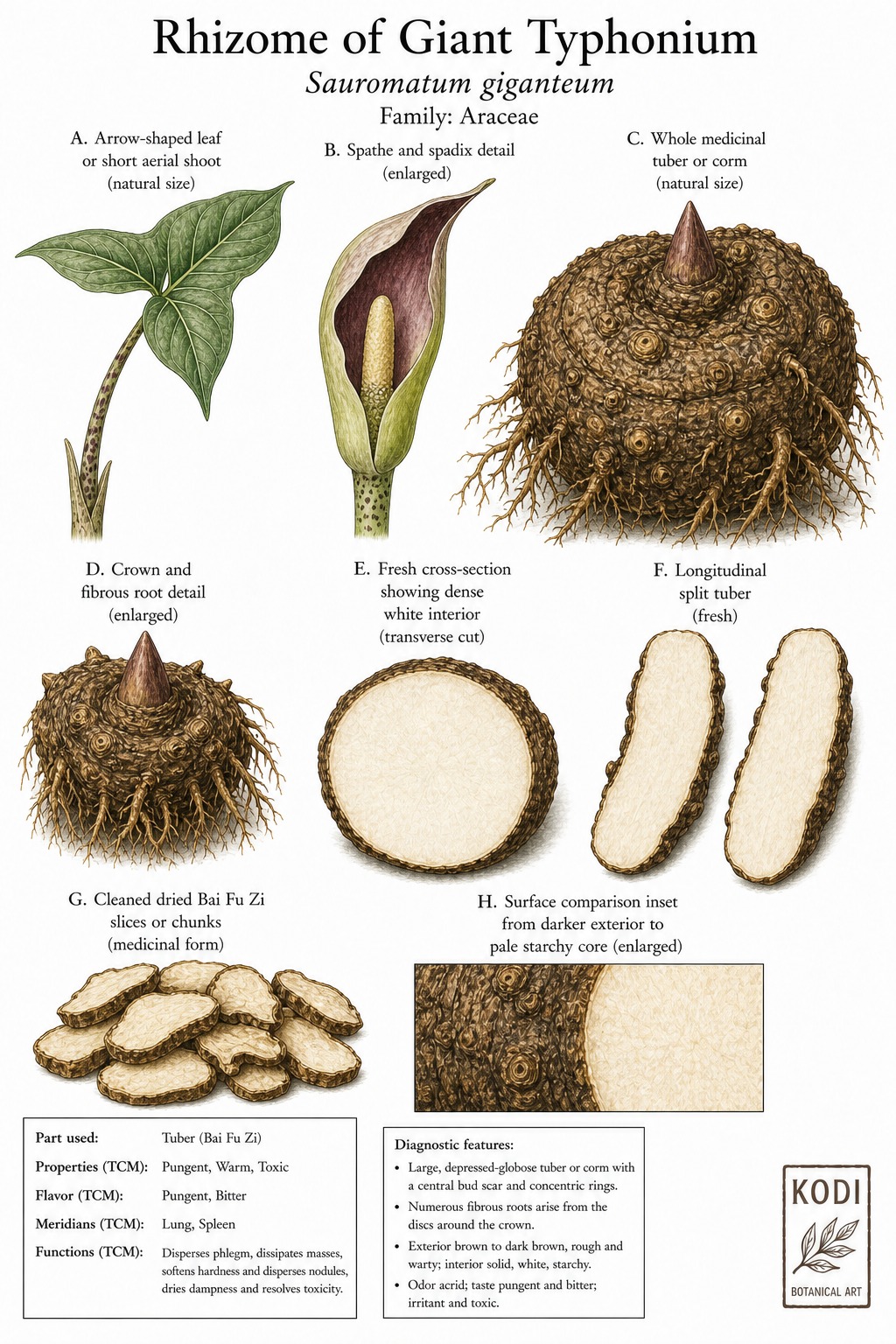
Known in TCM as Bai Fu Zi (白附子), this acrid and sweet, warm herb enters the Liver and Stomach. Traditionally, it dispels wind-phlegm and stops spasms ... Bai Fu Zi is used for facial paralysis, mouth-eye deviation, headache, and convulsive or obstructive patterns where wind and phlegm block the channels, most often applied for facial paralysis, headache, and scrofula. Modern research has identified Lectin among its active constituents.
Part used: Rhizome
Also Known As
Latin: Rhizoma Typhonii | Pinyin: Bai Fu Zi | Chinese: 白附子
TCM Properties
- Taste
- acrid, sweet
- Temperature
- warm
- Channels
- Liver, Stomach
Traditional Use
Primary Actions
- Dispels wind-phlegm and stops spasms ... Bai Fu Zi is used for facial paralysis, mouth-eye deviation, headache, and convulsive or obstructive patterns where wind and phlegm block the channels.
- Relieves pain and opens the channels ... it appears in stubborn headache and facial or jaw pain when phlegm-turbidity and obstruction dominate.
- Resolves toxin and dissipates nodules ... external and internal traditions include scrofula, toxic swelling, and snakebite-style applications.
Secondary Actions
- This Bai Fu Zi page is the giant-typhonium lane and should not be confused with aconite-family `Fu Zi`, even though the names can mislead newer readers.
- Because the raw aroid material is irritating and toxic, preparation and dose control matter much more here than with ordinary food roots.
Classic Formulas
- Qian Zheng San ... hallmark formula pairing Bai Fu Zi with Jiang Can and Quan Xie for facial deviation from wind-phlegm.
- Headache and facial-obstruction combinations ... Bai Fu Zi is used when phlegm and wind clog the channels of the head and face.
- Topical toxic-swelling preparations ... older use extends to nodules and venomous bites in tightly controlled applications.
Classical References
- Traditional materia medica describes Bai Fu Zi as acrid, sweet, warm, and toxic, entering the Liver and Stomach to dispel wind-phlegm and relieve spasm or pain.
- The name overlap with aconite-derived `Fu Zi` is important ... these are different herbs with different toxicology and therapeutic logic.
Modern Research
Active Compounds
- Lectin fractions from Typhonium giganteum ... highly bioactive protein constituents linked to immune and inflammatory effects
- Bioactive extract fractions from the tuber ... studied in inflammatory and antitumor models
- Other irritant and potentially toxic aroid constituents ... part of the reason raw material needs careful handling
Studied Effects
- A 2023 study on Typhonii Rhizoma in rheumatoid-arthritis rats reported protective effects through integrated metabolomics and network pharmacology, aligning with the herb's wind-damp pain lane (PMID 37161606).
- An earlier study found that a supercritical extract from Typhonium giganteum tubers induced apoptosis in hepatoma cells, illustrating continued antitumor interest in the plant (PMID 21959296).
- A lectin study showed pro-inflammatory signaling activity from a Typhonium giganteum fraction, reinforcing that strong bioactivity and toxicity concerns coexist in this herb family (PMID 28880234).
PubMed References
- Protective effects of Typhonii Rhizoma in rheumatoid arthritis rats revealed by integrated metabolomics and network pharmacology. (2023)
- SFE-CO2 extract from Typhonium giganteum Engl. tubers, induces apoptosis in human hepatoma SMMC-7721 cells involvement of a ROS-mediated mitochondrial pathway. (2011)
- Typhonium giganteum Lectin Exerts A Pro-Inflammatory Effect on RAW 264.7 via ROS and The NF-κB Signaling Pathway. (2017)
Safety & Interactions
Contraindications
- Pregnancy
- Any unsupervised internal use of raw or irritant material
- Inflamed mouth, throat, or gastrointestinal tract susceptible to irritant aroid herbs
Cautions
- Bai Fu Zi is toxic and irritating and should not be treated like a casual facial-paralysis home remedy.
- Raw aroid material can irritate mucosa and skin, and properly prepared dispensing material matters.
- Do not confuse this giant-typhonium herb with aconite-derived `Fu Zi`.
Conditions
Frequently Asked Questions
What is Rhizome of Giant Typhonium used for?
Rhizome of Giant Typhonium is traditionally used to Dispels wind-phlegm and stops spasms ... Bai Fu Zi is used for facial paralysis, mouth-eye deviation, headache, and convulsive or obstructive patterns where wind and phlegm block the channels., Relieves pain and opens the channels ... it appears in stubborn headache and facial or jaw pain when phlegm-turbidity and obstruction dominate., Resolves toxin and dissipates nodules ... external and internal traditions include scrofula, toxic swelling, and snakebite-style applications.. Research has investigated its effects on: A 2023 study on Typhonii Rhizoma in rheumatoid-arthritis rats reported protective effects through integrated metabolomics and network pharmacology, aligning with the herb's wind-damp pain lane (PMID 37161606).; An earlier study found that a supercritical extract from Typhonium giganteum tubers induced apoptosis in hepatoma cells, illustrating continued antitumor interest in the plant (PMID 21959296)..
What are other names for Rhizome of Giant Typhonium?
Rhizome of Giant Typhonium is also known as Typhonii Rhizoma, White Typhonium, Bai Fu Zi. In TCM: 白附子 (Bai Fu Zi); Rhizoma Typhonii.
Is Rhizome of Giant Typhonium safe during pregnancy?
Rhizome of Giant Typhonium is not recommended during pregnancy.
What are the contraindications for Rhizome of Giant Typhonium?
Rhizome of Giant Typhonium should not be used in: Pregnancy; Any unsupervised internal use of raw or irritant material; Inflamed mouth, throat, or gastrointestinal tract susceptible to irritant aroid herbs. Consult a qualified healthcare provider before use.