Rhizome of Gaint Knotweed
- Chinese
- 虎杖
- Pinyin
- Hu Zhang
- Latin
- Rhizoma Polygoni Cuspidati
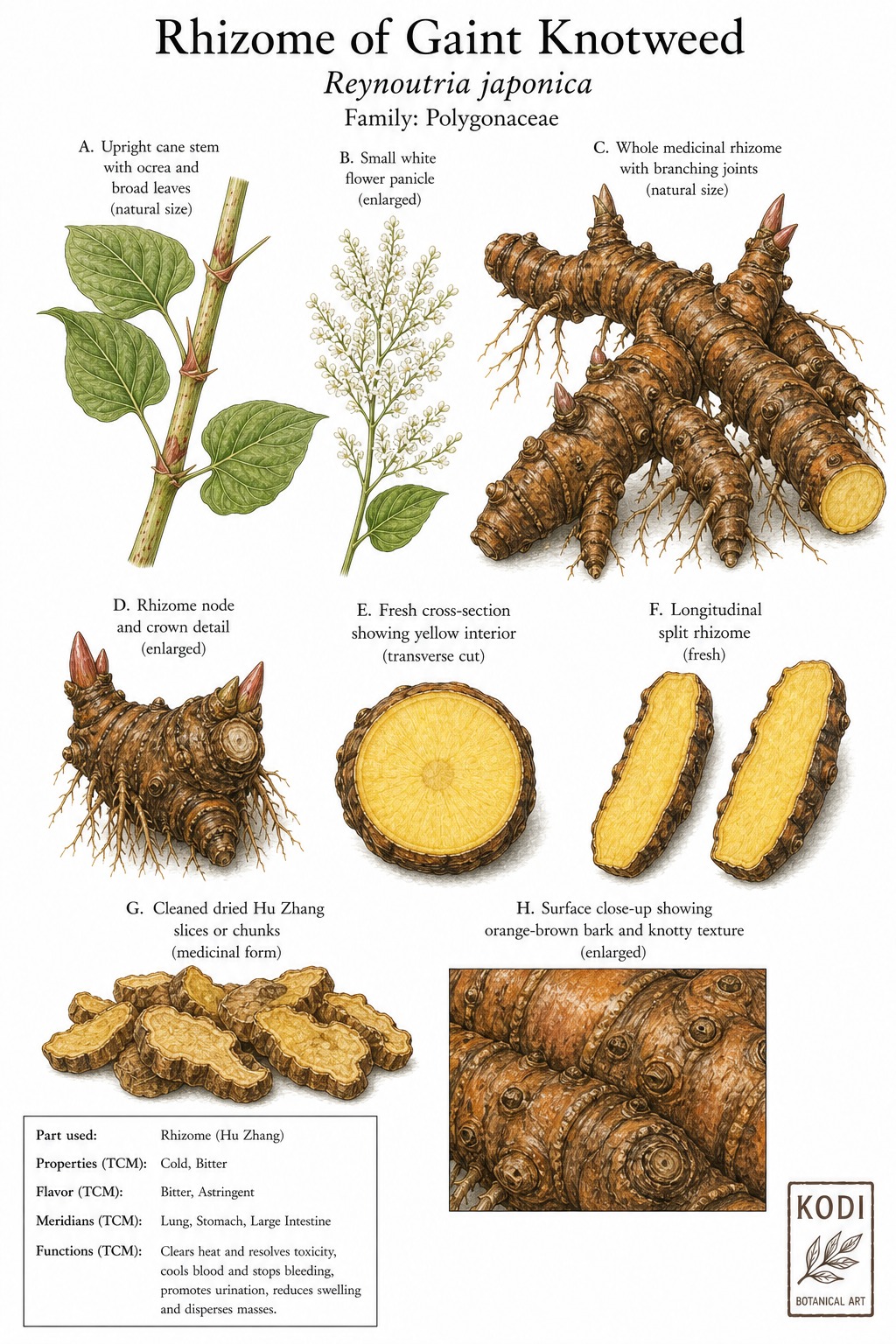
Known in TCM as Hu Zhang (虎杖), this bitter, slightly cold herb enters the Liver, Gallbladder, and Lung. Traditionally, it invigorates blood and dispels stasis ... Hu Zhang is used for traumatic injury, amenorrhea, fixed pain, and mass-like stasis patterns, most often applied for traumatic injury, productive cough, and hepatitis. Modern research has identified Resveratrol among its active constituents.
Part used: Rhizome
Also Known As
Latin: Rhizoma Polygoni Cuspidati | Pinyin: Hu Zhang | Chinese: 虎杖
TCM Properties
- Taste
- bitter
- Temperature
- slightly cold
- Channels
- Liver, Gallbladder, Lung
Traditional Use
Primary Actions
- Invigorates blood and dispels stasis ... Hu Zhang is used for traumatic injury, amenorrhea, fixed pain, and mass-like stasis patterns.
- Clears heat and resolves toxicity ... traditional use extends to damp-heat jaundice, hot sores, and inflammatory lesions.
- Transforms phlegm and stops cough ... it is chosen when Lung heat and thick phlegm produce productive cough or wheezing.
- Unblocks the bowels and drains dampness ... older use includes constipation and damp-heat obstruction when heat and stasis bind together.
Secondary Actions
- This page should stay on medicinal knotweed rhizome and not drift into generic resveratrol-supplement branding or ornamental invasive-plant discourse.
- Hu Zhang belongs to the blood-moving heat-clearing family and should be distinguished from tonic Polygonum or Polygonatum roots.
Classic Formulas
- Trauma and blood-stasis combinations with Ru Xiang, Mo Yao, or Yan Hu Suo ... common strategy for bruising and fixed pain.
- Damp-heat and jaundice pairings with Yin Chen or Zhi Zi ... classical logic when heat and dampness lodge in the Liver-Gallbladder system.
- Cough and phlegm combinations ... Hu Zhang can be added when productive cough carries an inflammatory heat component.
Classical References
- Traditional materia medica describes Hu Zhang as bitter and slightly cold, entering the Liver, Gallbladder, and Lung to move blood, clear heat, transform phlegm, and stop cough.
- Its blood-moving and heat-clearing combination helps explain why the herb bridges traumatology, hepatitis-jaundice, and productive-cough use.
Modern Research
Active Compounds
- Resveratrol ... the best-known modern constituent associated with Hu Zhang
- Polydatin ... a major glycosylated stilbene from the rhizome
- Emodin and related anthraquinones ... important anti-inflammatory and antimicrobial constituents
Studied Effects
- A 2022 systematic review evaluated Reynoutria japonica for acute respiratory tract infections, offering a direct modern correlate for Hu Zhang's Lung-heat and productive-cough lane (PMID 35281919).
- A 2022 review discussed Reynoutria japonica as a promising natural agent for cardiovascular and digestive-system illness, highlighting the breadth of modern interest in the rhizome's stilbene-rich chemistry (PMID 35770098).
- A 2021 review of Japanese knotweed bioactive compounds summarized the pharmacological potential of resveratrol, polydatin, emodin, and other constituents, reinforcing why Hu Zhang remains a major phytochemical source plant (PMID 34961091).
PubMed References
- Reynoutria japonica Houtt for Acute Respiratory Tract Infections in Adults and Children: A Systematic Review. (2022)
- The Invasive Species Reynoutria japonica Houtt. as a Promising Natural Agent for Cardiovascular and Digestive System Illness. (2022)
- New Approaches on Japanese Knotweed (Fallopia japonica) Bioactive Compounds and Their Potential of Pharmacological and Beekeeping Activities: Challenges and Future Directions. (2021)
Safety & Interactions
Contraindications
- Pregnancy without professional supervision
- Loose stool or chronic deficiency diarrhea
Cautions
- Hu Zhang moves blood and drains heat and is not a fit for already depleted or pregnant patients without clear oversight.
- Commercial resveratrol products are not equivalent to whole-rhizome Hu Zhang slices.
Drug Interactions
- Anticoagulant or antiplatelet therapy ... possible additive blood-moving effect
Conditions
- Traumatic Injury Traditional ★★★★☆ JSON
- Productive Cough Traditional ★★★☆☆ JSON
- Hepatitis Traditional ★★★☆☆ JSON
- Joint Pain Traditional ★★☆☆☆ JSON
Frequently Asked Questions
What is Rhizome of Gaint Knotweed used for?
Rhizome of Gaint Knotweed is traditionally used to Invigorates blood and dispels stasis ... Hu Zhang is used for traumatic injury, amenorrhea, fixed pain, and mass-like stasis patterns., Clears heat and resolves toxicity ... traditional use extends to damp-heat jaundice, hot sores, and inflammatory lesions., Transforms phlegm and stops cough ... it is chosen when Lung heat and thick phlegm produce productive cough or wheezing., Unblocks the bowels and drains dampness ... older use includes constipation and damp-heat obstruction when heat and stasis bind together.. Research has investigated its effects on: A 2022 systematic review evaluated Reynoutria japonica for acute respiratory tract infections, offering a direct modern correlate for Hu Zhang's Lung-heat and productive-cough lane (PMID 35281919).; A 2022 review discussed Reynoutria japonica as a promising natural agent for cardiovascular and digestive-system illness, highlighting the breadth of modern interest in the rhizome's stilbene-rich chemistry (PMID 35770098)..
What are other names for Rhizome of Gaint Knotweed?
Rhizome of Gaint Knotweed is also known as Japanese Knotweed Rhizome, Polygoni Cuspidati Rhizoma, Hu Zhang. In TCM: 虎杖 (Hu Zhang); Rhizoma Polygoni Cuspidati.
Is Rhizome of Gaint Knotweed safe during pregnancy?
Rhizome of Gaint Knotweed is not recommended during pregnancy. Hu Zhang moves blood and drains heat and is not a fit for already depleted or pregnant patients without clear oversight.
What are the contraindications for Rhizome of Gaint Knotweed?
Rhizome of Gaint Knotweed should not be used in: Pregnancy without professional supervision; Loose stool or chronic deficiency diarrhea. Consult a qualified healthcare provider before use.
Does Rhizome of Gaint Knotweed interact with any medications?
Rhizome of Gaint Knotweed may interact with: Anticoagulant or antiplatelet therapy ... possible additive blood-moving effect. Always inform your healthcare provider of any herbal supplements you are taking.