Rhizome of Figwortflower Picrohiza
- Chinese
- 胡黄连
- Pinyin
- Hu Huang Lian
- Latin
- Rhizoma Picrorhizae
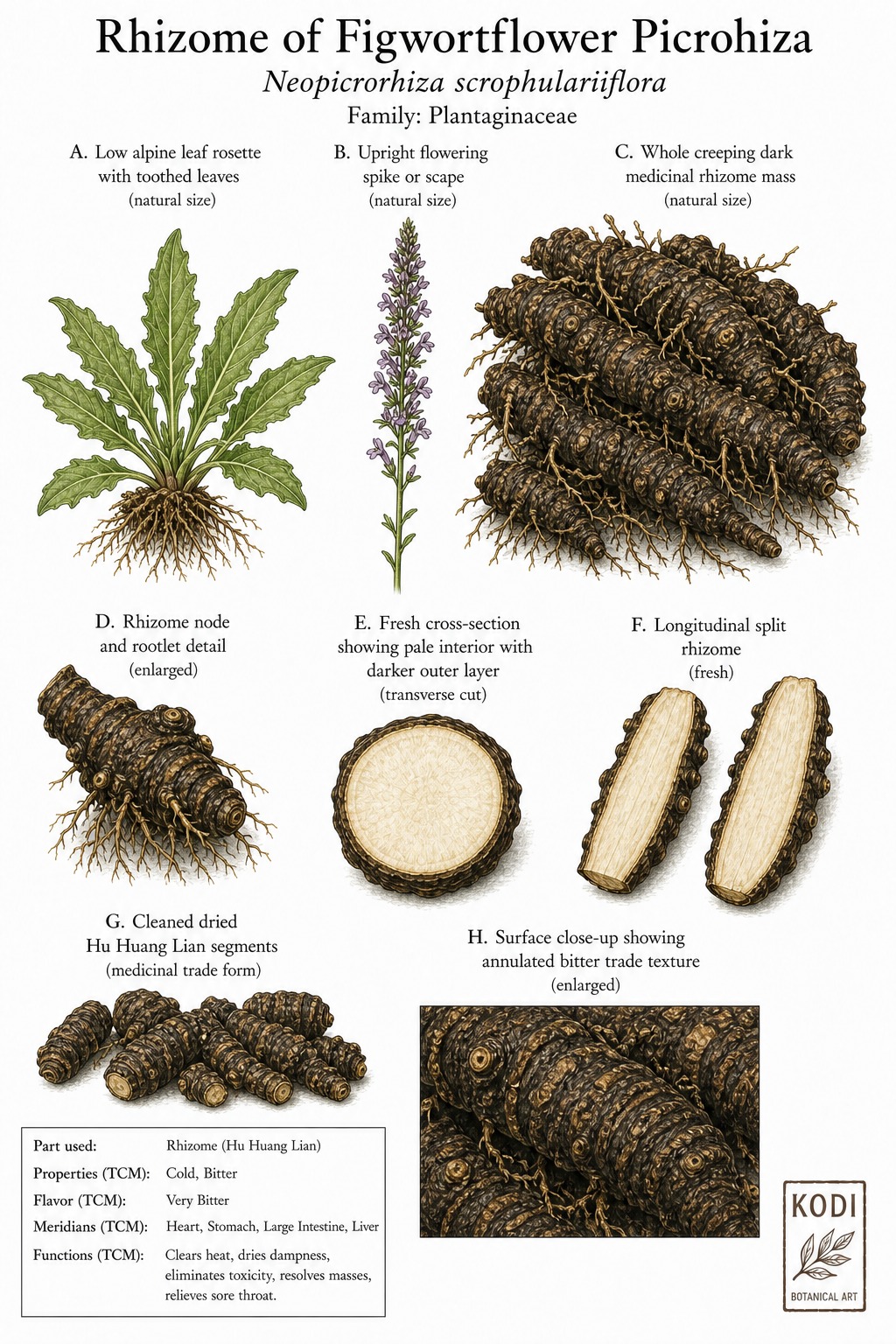
Known in TCM as Hu Huang Lian (胡黄连), this bitter, cold herb enters the Liver, Stomach, and Large Intestine. Traditionally, it clears deficiency heat ... Hu Huang Lian is classically associated with lingering fever, steaming heat, irritability, and pediatric malnutrition patterns that generate hidden internal heat, most often applied for fever, diarrhea, and hemorrhoids. Modern research has identified Picroside among its active constituents.
Part used: Rhizome
Also Known As
Latin: Rhizoma Picrorhizae | Pinyin: Hu Huang Lian | Chinese: 胡黄连
TCM Properties
- Taste
- bitter
- Temperature
- cold
- Channels
- Liver, Stomach, Large Intestine
Traditional Use
Primary Actions
- Clears deficiency heat ... Hu Huang Lian is classically associated with lingering fever, steaming heat, irritability, and pediatric malnutrition patterns that generate hidden internal heat.
- Clears damp-heat from the intestines ... it is used for diarrhea, dysentery, and hemorrhoidal swelling when heat and dampness lodge in the lower burner.
- Cools blood and resolves toxic-heat irritation ... older use extends to hot sores and wasting conditions where heat damage and inflammation coexist.
Secondary Actions
- Despite the name, Hu Huang Lian should not be collapsed into the true Coptis or Huang Lian lane ... this alpine bitter rhizome occupies its own deficiency-heat and intestinal-heat niche.
- The herb is especially remembered for children's `gan` patterns and for lingering rather than explosive excess heat.
Classic Formulas
- Fei Er Wan and related pediatric deficiency-heat traditions ... Hu Huang Lian is chosen when malnutrition, irritability, and hidden fever travel together.
- Intestinal damp-heat pairings with Huang Lian or Bai Tou Weng ... traditional logic when diarrhea or dysentery carries both toxin and heat.
- Hemorrhoid and lower-burner heat combinations ... older use includes swollen painful piles and hot bleeding from the bowels.
Classical References
- Traditional herb texts describe Hu Huang Lian as bitter and cold, entering the Liver, Stomach, and Large Intestine to clear deficiency heat and intestinal damp-heat.
- Its identity depends on staying separate from Coptis even though the name suggests a Huang Lian relationship.
Modern Research
Active Compounds
- Picroside I and picroside II ... major iridoid glycosides central to Hu Huang Lian chemistry
- Kutkoside and related glycosides ... important bitter marker compounds
- Broader iridoid and phenolic fractions ... supportive anti-inflammatory and hepatoprotective research components
Studied Effects
- A 2020 comprehensive review summarized the traditional uses, phytochemistry, pharmacology, and safety of Neopicrorhiza scrophulariiflora, including anti-inflammatory, antimicrobial, antidiabetic, and hepatoprotective lines of evidence relevant to Hu Huang Lian (PMID 31586694).
- A 2025 metabolite-transcriptome study clarified biosynthetic pathways for major iridoid glycosides in Neopicrorhiza scrophulariiflora, which is important for future quality control and authenticated-source work (PMID 39963531).
- Most modern evidence remains preclinical or phytochemical, so the classic deficiency-heat and pediatric `gan` indications should not be oversold as validated clinical uses.
PubMed References
- Neopicrorhiza scrophulariiflora (Pennell) Hong: A comprehensive review of its traditional uses, phytochemistry, pharmacology and safety. (2020)
- Integrative analysis of metabolite and transcriptome reveals the biosynthetic pathway and candidate genes for iridoid glycoside biosynthesis in Neopicrorhiza scrophulariiflora (Pennell) D.Y.Hong. (2025)
Safety & Interactions
Contraindications
- Spleen and Stomach deficiency-cold with loose stool
- Cold diarrhea without damp-heat or hidden fever
Cautions
- Hu Huang Lian is a cold bitter rhizome and can further weaken fragile digestion if used outside true heat patterns.
- Authenticated source material matters because the market can blur this herb with other bitter alpine roots or with true Huang Lian.
Conditions
- Fever Traditional ★★★☆☆ JSON
- Diarrhea Traditional ★★★☆☆ JSON
- Hemorrhoids Traditional ★★☆☆☆ JSON
- Night Sweats Traditional ★★☆☆☆ JSON
Frequently Asked Questions
What is Rhizome of Figwortflower Picrohiza used for?
Rhizome of Figwortflower Picrohiza is traditionally used to Clears deficiency heat ... Hu Huang Lian is classically associated with lingering fever, steaming heat, irritability, and pediatric malnutrition patterns that generate hidden internal heat., Clears damp-heat from the intestines ... it is used for diarrhea, dysentery, and hemorrhoidal swelling when heat and dampness lodge in the lower burner., Cools blood and resolves toxic-heat irritation ... older use extends to hot sores and wasting conditions where heat damage and inflammation coexist.. Research has investigated its effects on: A 2020 comprehensive review summarized the traditional uses, phytochemistry, pharmacology, and safety of Neopicrorhiza scrophulariiflora, including anti-inflammatory, antimicrobial, antidiabetic, and hepatoprotective lines of evidence relevant to Hu Huang Lian (PMID 31586694).; A 2025 metabolite-transcriptome study clarified biosynthetic pathways for major iridoid glycosides in Neopicrorhiza scrophulariiflora, which is important for future quality control and authenticated-source work (PMID 39963531)..
What are other names for Rhizome of Figwortflower Picrohiza?
Rhizome of Figwortflower Picrohiza is also known as Picrorhiza Rhizome, Neopicrorhiza Rhizome, Hu Huang Lian. In TCM: 胡黄连 (Hu Huang Lian); Rhizoma Picrorhizae.
Is Rhizome of Figwortflower Picrohiza safe during pregnancy?
The safety of Rhizome of Figwortflower Picrohiza during pregnancy has not been established. Consult a qualified healthcare provider before use.
What are the contraindications for Rhizome of Figwortflower Picrohiza?
Rhizome of Figwortflower Picrohiza should not be used in: Spleen and Stomach deficiency-cold with loose stool; Cold diarrhea without damp-heat or hidden fever. Consult a qualified healthcare provider before use.